Oxford PPE Application Part 1: UCAS

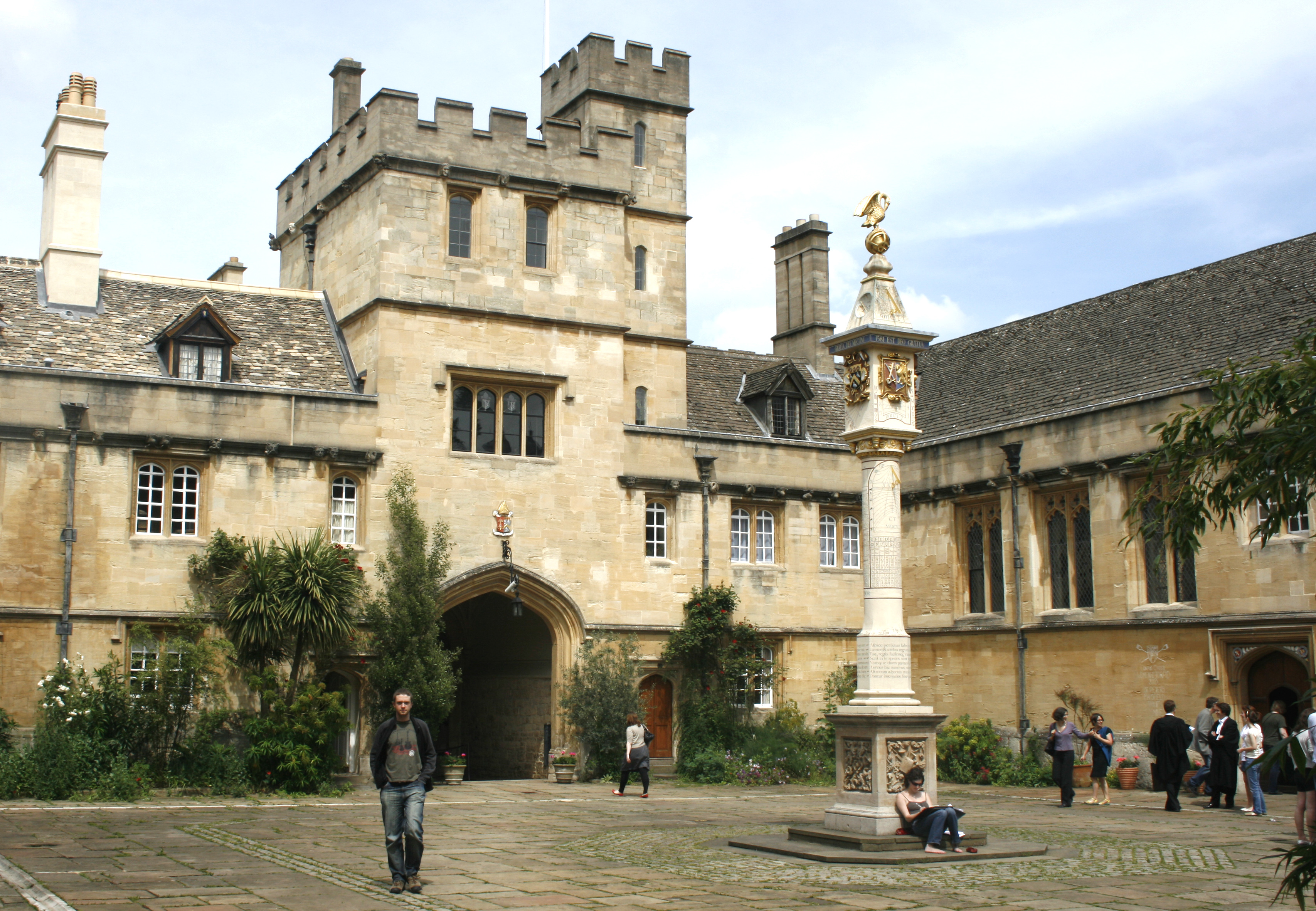
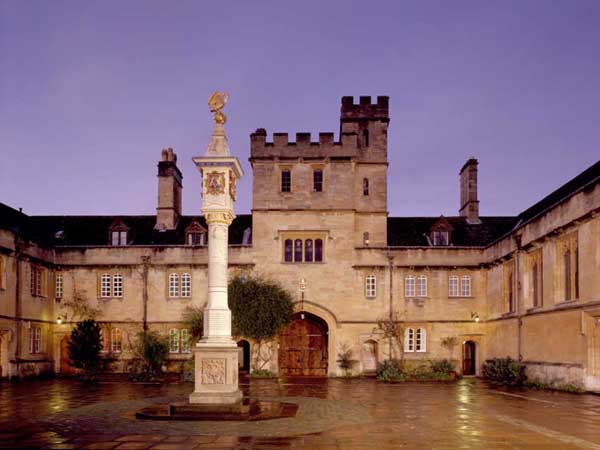
Corpus ChristiI’m Weiling from Port Dickson. I did A-levels at Inti International University, Nilai, and hold a conditional offer from Corpus Christi College, Oxford, to read PPE.

PPE stands for Philosophy, Politics, and Economics. I think my teachers, especially, are quite dismissive when I tell them I’m going to study a subject that isn’t hard science (or law), but they tend to soften when I say I’m going to Oxford to do it.

My sponsor (Bank Negara) stipulated that I must apply for pure Economics where possible. Oxford does not offer Economics as a standalone course, so I was permitted to choose PPE – it’s arguably one of the most famous courses here. (If you are under no such restrictions, please be aware that many universities offer PPE or variants of it! Applying for different courses in different universities may complicate your personal statement. If you prefer pure Economics, Cambridge has just such a course – you can choose it instead of Oxford.)

#

I was lost when people said “…of course, you apply through UCAS” because they never explained what it was. When I finally looked it up, I realised it was because they didn’t need to. If you don’t know what UCAS is, just google it and go to their website. They are obscenely clear about things.

You can and should apply for a maximum of five universities through UCAS (maximum of one Oxbridge university). You will have to fill in basic personal details, attach a reference letter from a lecturer or counsellor (who will also submit your predicted grades, if you don’t have your official results yet), and write one personal statement, which will be sent to all the universities you apply to.

… okay, that’s the only preface you need.

Personal Statement

What is it?

An essay that admissions officers will look at in deciding whether or not to offer you a place. Ideally it should explain why you’re interested and how you’re qualified. The personal statement needs to be 4,000 characters or under, including spaces. This is the part people worry about the most.

I won’t post my personal statement here in case someone gets the wrong idea. I got rejected by two very highly respected institutions: LSE and UCL. (Note: I applied for Economics to LSE, UCL, Warwick and Durham.) My essay was a strong PPE essay… with insufficient emphasis on Economics, according to LSE. When writing it, I carefully crafted it such that it would stress my passion for philosophy and politics, but related it to an all-encompassing theme of economics.

I only realised how much I was staking on Oxford when I got my first reply, about three weeks after my application was sent.

It was from LSE.

It was a rejection.

… Happily, Durham offered the following week, and Oxford shortlisted me for interviews the fortnight after.

Disclaimer: everyone has their own style of writing, and none is better than the other. This was how my personal statement went:

Introduction: I linked my life principles and childhood interests to “political economy, and the philosophies behind it” (Not-exactly-fun fact: Economics used to be known as “political economy”, and originated from moral philosophy.)
Body: The following paragraphs explained the parts I enjoy the most about economics – inevitably, its philosophy and uses in politics.

An excerpt:

“Questions of legislation and state intervention in the economy pique my curiosity. Equality and social justice are issues close to my heart. Growing up in Malaysia, a country distinctive for its affirmative action in favour of the majority race, has made me ponder the definitions of racism and secularism. The policies of my country have fostered division socially as surely as it has closed racial gaps economically. My experience working with the marketing department of my college has shown me that private firms must play by race in the market because of this. It has caused me to question the dynamism of democracy, and whether there truly are those who are “more equal than others”, as Orwell’s Animal Farm puts it.”

I basically explained what I liked and gave an example of it in Malaysia. Here I also linked it to working experience and a relevant book I’ve read. Some of it was unintentional – all of it came from the heart. And to be frank, “working with the marketing department” was being a part-time telemarketer who attended a marketing department meeting in college.

I wrote another two paragraphs detailing how I had important learning skills like critical thinking, problem solving, “mathsy” skills, self-discipline etc. It was linked with my school stuff (science stream, Scouting, debating, OMK, and I totally should have said chess! Why didn’t I?! Argh!) as well as stuff I did myself (reading, watching talks and debates).

Ending: A brief note on what I want to accomplish after my degree, and another mention of “political economy and the philosophy it operates on.”

Reference and Predicted Grades

I got my Physics lecturer to write about me. I didn’t read it.  Nevertheless, he was my favourite and my closest lecturer. And it was a last minute thing… So much for self-discipline. I did not know I had to request predicted grades from my faculty, or that it usually took three working days. I asked my Head of Programme to print one out on the spot. It was A*AAA.

Pro-tip: get it all sorted out at least a week before the deadline, which, for Oxford apps, is mid-October.

Review & Advice

In hindsight I could have done a much better job of applying. My application was sent on the day itself by my college – without my predicted grades. And as you can see, my grades were the bare minimum for those top universities I applied to (UCL may have rejected me for this). Individual universities requested my grades, except LSE and Oxford. If I was offered a place, it must have been based on my personal statement and relatively good academic track record.

I have some words of advice for future applicants:

DO set a much earlier deadline for yourself. I suggest starting a draft of your personal statement a few months in advance – don’t put it off! It may not be perfect at the beginning. Start early and you can take your time editing it.

“The old writer’s rule applies: Have the courage to write badly.”
– Joshua Wolf Shenk

A well-written reference letter is also very importa

nt, so choose your referee well and give them time!

DO look things up yourself – I hardly need to state this. If you’re really interested, you’d find out what there is to know about the application process, the university and/or course requirements, the style of teaching, scholarships etc. Websites like The Student Room (http://www.thestudentroom.co.uk/) are your friends.

*By the way, Durham accepts alternate personal statements in place of the one submitted through UCAS.

DO find someone to proofread your essays. Sometimes we get so caught up in our views, we forget that the personal statement is read by someone who has never met us and doesn’t understand us completely. That said, take advice discerningly. Someone I know had his friends read his personal statement and comment, only to edit it in a way that was not at all what they suggested. It is entirely possible that you may get some sort of an epiphany from your teacher/parents/friends’ comments, even if it isn’t what they mean.

DO make the personal statement personal. There is no fixed format – anything goes as long as it reflects YOU and YOUR passion. And is, preferably, easy to read.

DO what you want to do! Apply for your dream university, even if it isn’t the one your parents/teachers/friends want you to go to. Just make sure your personal statement is not specific to any one university.

DO focus on your exams as well – hence the “early deadline” advice. Don’t let your worry about meeting deadlines affect your exam preparation.

DON’T PANIC! (Actually I just put this here for Douglas Adams fans. But, well, try not to panic.)

And paradoxically… don’t take advice! Just read it, weigh it, and make up your own mind. Chances are, you’re a legal adult now, and fully aware of how much not-very-credible information is out there. Trust yourself.

May the force be with you.

Read Part 2 of this story HERE


Wei LingThe University of Oxford claims that BNM scholar Tay Weiling is sure to “achieve the required grades and subsequently enjoy” reading PPE there. Meanwhile she dabbles in everything from poetry to parkour to particle physics. You won’t find her easily – the wild Weiling is shy of strangers.

Is AAAB sufficient for Pharmacy in the UK?

Q:

I achieved AAAB in my AS Level. The three As’ are strong but I got a B in Physics since I am very weak in Physics. I am planning to pursue Pharmacy in the UK but I am worried that I will not receive offers. Should I defer to have more time to study and prepare since I am a MoE scholar, so I have limited choices to chose from?

A:

AAAB is sufficient to gain admission into University College London, King’s College London, University of Manchester and University of Nottingham, and all of them are in the MoE’s University List. You don’t really need to defer, just try applying first and see how it goes.

Answered by: Liew Zhen Yuan Gary who received offers from University College London, King’s College London, University of Manchester, but he has decided to pursue his Masters in Pharmacy in University of Nottingham (2+2 programme)

Q&A with the Cambridge Medic

Cambridge

What was included in the application process to your university?

From what I understand, UK unis do not accept any extra materials regarding your application. Stick to what is required, but make sure you do it well!

How did you write your personal statement?

The most important thing to show in your PS is your passion for the course that you have chosen. Hence write about how you first came to consider taking up that course, and any work attachments you have undertaken to further explore what interests you in your subject. I advise applicants to start writing their PS early on, as you will likely find that you have to make many corrections to your first draft. Don’t overthink the words that you put in, you’re writing to be accepted into uni after all; this isn’t an English test! Simple and straight to the point is good.

What do you think contributed to the success of your application?

Having a clear mind on what I wanted to do helped a lot, as admission tutors are experts at sniffing out applicants who do not really have a passion for the course. I wrote about my volunteer work at Hospis Malaysia (I was applying for medicine), and what I learnt from working there. Hospital attachments too.

Did you have to take any tests?

I had to take the BMAT to qualify for admission into medicine at Cambridge. I also took the UKCAT as a hedge. I highly recommend that you do not start preparations too early for the BMAT, about 3-4 weeks before the test date is good. If there is one tip that I may give you, it is that time management is of the essence! This goes for both admission tests. Other than that, complete all the past years available for BMAT, and make sure you familiarise yourself with the online calculator for the UKCAT.

How was the interview session?

I only attended one interview (Cambridge), and I must say, it was an unashamedly academically focused one. The questions aren’t as bad as everyone make them out to be, but you do have to give a considered, thoughtful analysis of the answers you provide your interviewer. Don’t be too caught up wondering whether your answers are wrong or right, as your interviewer’s main motive is to see your thought process and how you arrive at your answers. Try to treat it like an intellectual discussion with your interviewer.

What advice would you give to future medicine applicants?

Applications might just be the most stressful part of college life! Never doubt your ability to get an offer from a top uni. These unis are going to have to hand out offers to prospective students either way, and it might as well be you!


Teh Kuok Ren

Teh Kuok Ren is a fun-loving student who will be pursuing his medicine degree in Cambridge University under the Pama *joking* scholarship. When not diligently studying, you will find him shooting pool, at the driving range, or just on his bed taking a nap.

MyBrainSc Scholarship Process

http://my-scholarship.net/wp-content/uploads/2011/10/mybrain15_logo.jpg

I believe most of the people out there are not well-informed about this MyBrainSc Scholarship; Some even question if it even exists. It was introduced 3 years ago by the Ministry of Education (MoE) Malaysia, offering both local and overseas scholarships for Bachelor Degree/Masters/PhD level.  The scholarship is open to all Malaysians who are/will be enrolled specifically in the field of natural sciences, which include: Biology, Chemistry, Physics, and Mathematics.

As this scholarship is not as popular as the Maybank, Petronas, and Sime Darby scholarships, it may be quite troublesome to be able to grasp some information about it. Thus, I hope through this sharing of mine, more of you out there can have a better insight of it and will hence be able fulfill your dreams.

First Stage – Online Application

Similar to the other online applications that you’ve come across, you will need to fill in your personal details and also your preferable choice of course.  I’m guessing if most of you have the same concern as I had earlier, is it possible if I choose Chemical Engineering instead of Pure Chemistry since it’s related to Chemistry too? Or, Biomedical Science instead of Pure Biology perhaps?

Unfortunately, it’s a NO. You can’t.

Second Stage – IQ Test

A few months later, you will receive a phone text if you are eligible to proceed to the second stage.  Like most of the standard IQ tests, this online test consists of several sections, including arithmetical, verbal, grouping of objects with the same characteristics, spotting differences, defining English vocabularies and some general knowledge.

Applicants are not allowed to pen down anything during the test.  It wasn’t a tough one during my time; the key is to stay focus and make sure you get it done within the given time (which was 1 ½ hours if not mistaken). Time management is very important and it’s best to just leave the tough ones behind and tackle the ones that you’re more confident with. There’ll be no turning back to the previous page, so you’ll have to think fast and sharp in order to ace it.

Third Stage – Interview

You will be informed about the interview through phone text approximately after a month or two.  It’ll be a group interview with two applicants, and a panel of two interviewers. Applicants are not grouped according to courses nor categories (overseas/local).  On the other hand, the panel of interviewers may be professors of your related field or officers from JPA or MARA.

My interview started off pretty casual with some general questions like my family background, life experiences, visions etc.  I was also being asked about my opinions on recent issues like the MH370 tragedy, the Teluk Intan election, and the existing quota system in Malaysia.  All you need to do is to be frank and voice out your thoughts as this is the time where you will need to demonstrate your critical thinking skills and shine your personality to the panel.  If you have any working experience, do take the initiative to relate and share the lessons that have inspired you. They are looking for a candidate who is both intelligent and confident.  During my time, there weren’t any questions related to academics but still, it is possible to encounter one.  From the blogs written by the scholars from the past, I was acknowledged that some received questions like What is Chemistry? What are the leading contributions of Einstein? Getting some revision beforehand is a wise choice I’d say.

The interview was solely conducted in English in my case, then in Malay for my partner, a Malay girl who intended to pursue her studies in Mathematics locally. The whole session for the two of us took around 40 minutes, in which each of us was allocated 20 minutes with different sets of questions respectively. However, it’s also possible that you will be asked in English or Malay alternatively. Do try your best to answer in the language that the interviewers have proposed in order to show that you are flexible in conversing the two languages.

The result will be out in a month’s time, roughly around early July.

#

We all know that chances don’t just come along easily – Hardships there are, sometimes with a tinge of luck to complete the sum. Okayyyyy, this is getting a little cheesy and sentimental but here’s something that I’d really like to share.

It’s been a dream of mine to study abroad, but it was a dream too big to be achieved without additional financial support. It took me 3 years for this day to come, after several falls and discouragement along way, I’m now proud to say that it’s definitely worth the wait! As an ex-student of the Kolej Matrikulasi Kedah, I’m taking this opportunity to shout out to those who have chosen the same path as me, who once thought that the Matriks qualification confines our area of study only to the local universities and not overseas. It’s time to correct the mindset now. The truth is, there’s a whole list of UK and Australian universities like Imperial College London, University College London, University of Manchester, University of Melbourne etc. that accept the qualification. All you need to do is to find out the list from the KPM website, e-mail the universities’ admission team to acquire everything you need, and get your preparations started after you receive your first semester result.

Let’s say, you’ve gained the admission but have yet to receive a full scholarship (like me), maybe you can try to defer your entry for a year and give yourself one more year to keep on trying in scholarship applications. I’d written to corporates and universities, requested for funds, started my first year in BSc Dietetics at Universiti Sains Malaysia during the wait, and here I am, writing this article as one of the MyBrainSc scholars who will be flying to my dreamland. It has been a journey, a fruitful one indeed.  For which, I hope there are more of you out there who have a dream as big as mine to join along. Have faith, embrace the falls, and above all, never lose hope. Good luck and all the best!


Chong Hui Wen copyChong Hui Wen is a MyBrainSc scholar who will be pursuing Biology in the University of Manchester. She’s an enthusiastic part-time singer who can only sing to the bathroom walls. “To dream is to believe” has been her motto and she postulates that food has the magic to restore faith.

Neuroscience Personal Statement

This personal statement got her into Neuroscience courses at University College London, King’s College London, University of Edinburgh, University of Manchester and University of Bristol.


When I first attempted meditation, I was engrossed by the state of emptiness in my mind I was able to achieve, which led me to contemplate how the brain actually functions. Subsequently, I was exposed to the Buddhist view of perception and consciousness; as a keen scientific inquirer, this sparked my fascination towards investigating matters of the mind from a scientific perspective. From reading David’s Eagleman’s ‘Incognito’, the power of the subconscious mind in executing our auto responses left me enthralled and pondering upon the complexity of the neural processes that underpin our behaviour.

I chose to study Biology and Chemistry in IBDP in order to gain deeper understanding of the anatomy and the chemistry of the human body. The neurobiology option in Biology particularly interested me as it explores not only the structure of the brain but also how behaviour and cognitive abilities, to a certain extent, have been genetically predetermined by the process of natural selection. This led me to further inquire into the relationship between our brain and behaviour in my Theory of Knowledge presentation, in which I investigated the accuracy of our sense perception as a way of judging human behaviour from a neuroscientific viewpoint. In addition, I learnt in mathematics how the subject can be applied to problem solving in various instances; for example, the way in which graph theory can be used to map and model the vast network of neurons in the brain.

During the summer, I completed an internship at the School of Biosciences at Taylor’s University. I had the chance to work with postgraduate students of wide-ranging cultural backgrounds which provided me with an eye-opening experience of being immersed within the scientific community for the first time. Throughout my time there, I was required to independently carry out my own experiments using advanced lab techniques, which helped me to develop my investigative and analytical skills. I was also presented with the opportunity to attend an international food science conference, witnessing the exchange of scientific knowledge and opinions at a highly intellectual level.

Furthermore, I shadowed a pediatrician at a local hospital to find out more about the development of cognitive learning. Communication and interaction with the children and their parents helped hone my interpersonal skills in a new environment. Through discussions with the doctors and my own observations, I was intrigued to discover the different developmental stages of child behavior and how it relied very much on their innate gut responses more than reasoning or anything else. When I volunteer with Burmese refugee children who come weekly to my school, it is important for me to recognise the level of their learning abilities in order to organise educational activities suitable for them. Although language and cultural barriers make it more challenging, being able to make an impact in their lives is truly rewarding.

By constantly being active in various cognitive activities, I allow my brain to retain its neuroplasticity and improve my everyday life. I am involved in cross country, badminton, taekwondo and also serve as the captain of my school’s basketball team. I embrace my creative side as yearbook designer and occasionally writing press articles for newspapers. I am also part of the school’s string ensemble and performed in various shows and concerts in and out of school. My engagement in the student council as senior committee leader and the organising committee of my school’s first MUN conference allowed me to develop my time management and leadership skills.

I wish to pursue a research career in neuroscience in order to explore the myriad of other possibilities of the brain. Besides understanding neurological disorders such as Alzheimer’s, I believe that greater research into the brain’s potential of enhancing learning and behaviour can also help advance the lives of the neurologically healthy.


DISCLAIMER: The personal statements on this site are strictly meant as a starting point to give an idea of how successful personal statements look like. There is no surefire formula to writing good personal statements. COLLEGELAH IS STRICTLY AGAINST PLAGIARISM OF ANY KIND. UCAS employs a plagiarism check system that checks applicants’ work against other published writing so please DO NOT PLAGIARISE.

Economics Personal Statement

This Economics personal statement got her the opportunity to pursue Economics at London School of Economics, University College London, University of Edinburgh and University of Manchester.


Fairness in the economic world? Non-existent, full-stop.  The richest 1 percent control 39% of the world’s wealth, according to CNBC’s website.  Splurging and squandering of wealth is an everyday affair without raising an eyebrow in some societies. Contrast this to the millions for whom paradise means a decent meal. Why does this indecent disparity occur? This gnawing question has been with me since I was old enough to witness the differences among people. A random read on macroeconomics opens up answers which have long evaded me and suddenly it dawned on me that this is the path that I want to take, and become a respected, innovative economist researching uncovered fields for the betterment of mankind.

The beauty of Economics lies in its intricate self-explanatory diagrams, simple yet powerful assumptions and complex yet precise mathematical models; all invaluable to fully understand the key concepts. Why does a senior citizen pay lesser than I do for a bus ticket ?  Why do flight tickets cost more at peak seasons? Learning the reasons behind these price variations and elasticities in Economics and their potent effect in increasing total revenue makes me appreciate the practicality of Economics in our daily lives.

In the book “Maonomics” by Loretta Napoleoni, the Chinese have successfully devised a framework of “capi-communism”, applying capitalist principles to overcome the imperfections of communism and I believe this has propelled China into a major economic powerhouse. However, China’s increasing rich-poor divide is now a matter of concern as it will create adverse implications on the social well-being of its citizens and present future economic problems that will have to be tackled. The book “Adapt” by Tim Harford suggests that success always begins with failure; but I am of the view that although experimentation is vital in a business’s success, careful and strategic planning will minimise this.

The satisfaction I derive from proving complex equations and solving demanding problems fuels my interest in Further Mathematics. This led me to the National Mathematics Olympiad Competition where I represented my school. The brilliant manipulation of areas on the Lorenz curve diagram and the use of statistical approach to find the Gini coefficient, a measure of income inequality show the immense contribution Mathematics makes to the study of Economics. Econometrics is the area that particularly interests me due to my penchant for Mathematics-related studies and because I find using statistical models to provide empirical evidence to economic theories intriguing. A brief job attachment at an accounting firm has provided first-hand knowledge of how each cost factor impacts the final cost on production and services. Furthermore, by working with the accountant on a company’s profit and its tax obligations, I learnt the correlation between tax rate and productivity; lower tax rate will fuel productivity but a higher tax will be needed to cover revenue for development and welfare programmes, therefore a fine balance needs to be worked out.

Being an athletic person, I have actively participated in numerous marathons and charity runs which have instilled values of perseverance and discipline in me. Volunteering at various Children’s Homes has given me experience in dealing with children with different needs, requiring different approaches, akin to using myriad methods when dealing with challenging economics problems. As chief editor of my school’s Golden Anniversary magazine, I led various teams in the evaluation of articles, designs and costing in coming up with the exclusive issue within a challenging time frame. The project provided me with useful lessons in team work and time management.

As a government-sponsored student, I value the opportunity given to me to read economics in the United Kingdom, where I will be able to study economics from an international perspective.


DISCLAIMER: The personal statements on this site are strictly meant as a starting point to give an idea of how successful personal statements look like. There is no surefire formula to writing good personal statements. COLLEGELAH IS STRICTLY AGAINST PLAGIARISM OF ANY KIND. UCAS employs a plagiarism check system that checks applicants’ work against other published writing so please DO NOT PLAGIARISE. 

Top Tips for Scholarship Interviews

Interviewing_Tips_LFCC_Workforce_Solutions

Ahh, the season of scholarship interviews. Since most scholarships are going to have their assessments/interviews in this time range, I’ll try my best to give some advice on what to do in an interview. First, I would like to clarify that I am by no means a professional interviewer, and my advice may or may not be something that you would agree on. Nonetheless, I want to share these tips as they have certainly helped me in all of my interviews, so take them with a pinch of salt, will ya.. 😉

So here’s a basic guideline on what to prepare for an interview (Longkang Mee style).

  1.  Prepare an outline for your interview speech.

Scholarship interviews are pretty standard and you can pretty much predict the questions the interviewers are about to ask. The first and most fundamental question for all interviews is the “Can you tell me about yourself?” Yes it’s the ultimate cliche question, and many of you may or may not know how to approach it. I used to answer this question with really mechanical answers like my name, where I go to school, where I live, how many siblings I have, and etc. Now that I think of it, I would like to facepalm my past self. When you’re asked this question, try to focus the topic on yourself. After all, the interview is a process to extract the most interesting facts/stories about you. So, before your interview, prepare your cheat sheet (mentally or on paper) of your “Tell me about yourself” speech. Try to come out with interesting points about yourself, something only a few people know, and something that makes you unique. If you’re having a hard time figuring out stuff to talk about, you may want to start by talking about your hobbies, and go on from there.

  1. Don’t be nervous

Every normal human being will tend to feel a tinge of nervousness in an interview. So don’t fret if you’re dripping cold sweat or having raging butterflies in your stomach right before one. One of my favorite advice that I always tell people is to treat the interviewer as your relative. Okay, turn on your imagination gears and picture this scenario. Here’s your relative, an uncle/aunty that you’re really fond of. He or she lives out of town and you have not seen him/her for quite some time now. You finally meet him/her and you’re bursting with stuff to tell him/her. And as you start talking to your beloved uncle/aunty, you just can’t stop talking while your eyes light up with enthusiasm. In an interview, you might have an urge to tell the interviewer your biggest achievements – listing them one by one so that you appear as the crème de la crème, the top pile of the competition. But this kind of interview speech only bores the interviewer and shows that you’re just like the rest. When you’re giving your speech, do it more to express rather than to impress. When you’re talking to your relative, do you really want to impress him/her, or do you simply want to express your thoughts and share your experiences? Once you get rid of that psychological barrier of “trying to impress,” you will find that you can articulate yourself better, and your enthusiasm will take over.

  1.  Always and always tell the truth.

Though this might seem like the natural thing to do, I find that most people (including myself) try to exaggerate our achievements in order to put ourselves on top of the interviewer’s selection list. Truth is, once you’re telling something that is not entirely true, it greatly affects your flow of speech and you’re forced to keep track of what you have said (or, should I say, lied about) earlier. This can vastly affect your speech (leading to stuttering), body language, and pupil movement. All these signs can easily be interpreted by the interviewer that you’re not telling the truth and your previously good impression instantly goes down the drain. Unless you’re the ultimate con artist, don’t try to lie in an interview to place yourself higher on the podium. For example, if you placed second in a competition, don’t say that you placed first; instead, try to explain why you got second and how you learned from that experience. Remember that the interviewers are humans too and that they might relate to you on a deeper level if you actually are speaking sincerely.

  1.  Keep eye contact and give a firm handshake.

When meeting the interviewer, just give him/her a firm handshake followed by a short greeting of “good morning/afternoon.” You don’t need to be like super polite and ask, “May I take a seat here?” if there’s obviously only one seat. I mean, if I were the interviewer, I would be like, “you don’t say?” and might think you’re being superficial and someone you’re not. When talking to the interviewer, always try to look into the interviewer’s eye. Don’t go looking into the ceiling or at your hands/table/whatever. If looking into an interviewer’s eye gives you butterflies, try making some small finger movement with your thumbs, or tapping your toes to help ease the nervousness.

  1.  Always ask questions after an interview.

Usually after an interview, the interviewer will promptly ask you if you have any questions for him/her. Here’s your opportunity to ask anything you want to know about the interviewer and your chance to exchange the role of interviewee and interviewer for a brief moment. You can now be the interviewer and be the boss, you can ask anything about the interviewer, the company or anything in general. Do not let this chance slip away by just replying “no.” By asking questions, it shows your confidence and your interest in the specific company.

Here are a few questions that I have asked in an interview (out of my own curiosity about the interviewers):

  1.  What do you (interviewer) do in your daily job? And how do you like working in ___ company? (Axiata)
  2.  Which do you think is more important? Academic grades or communication and networking skills? (The Star)
  3.  Why should I accept this scholarship if I were selected? (Lion-parkson)
  4.  How many hours do you sleep at night, and do you think you are getting enough sleep? (Khazanah 2nd stage)
  5.  I used to think that I am unique, that when I sit in a car, I pretend that there’s an imaginary runner beside me jumping over lamp poles and trees. I later found out that there were many people just like me. Is there a characteristic that you think you have that is so unique that no one in this world shares? (Khazanah 3rd stage)
  6.  What is your motivation to be on the board of directors of Khazanah? (Khazanah 4th stage)

Last but not least, I will try to publish a sample outline of the interview speech that I used in all of my scholarship interviews. After preparing an outline, try to practice it with a friend/teacher/lecturer. Also, by applying for more scholarships, you will eventually go to so many interviews that it would feel like second nature to talk about yourself.

If you’re too lazy to read my whole post, here’s a summary of it.

  1. Prepare your speech.
  2. Pretend the interviewer is your relative.
  3. Tell the truth.
  4. Keep eye contact.
  5. Ask questions.

A blogger at http://longkangmee.blogspot.com/, Dylan Ler Hong Jing is a student in University of California, Los Angeles. You contact him at dylanlerhongjing@gmail.com if you have any questions regarding US, UK applications or anything related to education and scholarship.

Steps to Reading Law at Cambridge

http://en.wikipedia.org/wiki/File:Facinterior.jpg
Interested in studying in Cambridge’s Squire Law Library?

1. What do I need to do to apply for Law at Cambridge?

All UK universities go through UCAS, which is the standardized university application service provider. The process includes the submission of the standard personal information (name, address, etc), along with the all-important academic grades as well as a personal statement. These are essential, but, in terms of the application, are rather standard and don’t require too much fuss, so I won’t go too much into that.

Cambridge, however, has an additional application called the COPA (Cambridge Online Preliminary Application) which is for international students only. The most important thing to note about this is that there are extra short essays. They are optional, but it’s good to fill them out if you can. Why miss out an opportunity to let them get to know you better? The first essay is an optional personal statement, which provides an opportunity to talk specifically about why you are applying to Cambridge in particular. I think this is important because this is the only chance you get to do this. There are lots of good universities, so why Cambridge? A good way to answer this question is to ask yourself what draws you to it compared to, for example, Oxford. Next, is a question about specific career plans, followed by a question on how you have kept up your interest in your subject, and one for “anything else” that you want to add. It isn’t compulsory to fill them out, and you don’t have to know what you plan to do for the next ten years of your life, but if you do have specific plans, it would be good to tell them about your plans. A word of warning to students, especially those without prior scholarships: when you submit the COPA, you will have to pay a fee of £30 (roughly RM150).

The Cambridge UCAS application is usually due in mid-September, and the COPA a month later in October. You will also have to submit the SAQ (Supplementary Application Questionnaire), which all applicants (not only international students) submit. If you are already submitting the COPA though, don’t worry about the SAQ, as it’s quite similar. A few weeks after I submitted my COPA, I was emailed with an interview invitation, which is a normal and vital part of the application process. Candidates can choose to be interviewed in Cambridge itself or Malaysia; I chose the latter. If you are being interviewed in Malaysia, you will need to pay a fee of around RM600 (all fees are paid by credit card online). Some courses require additional tests, and as I applied to read Law, I had to take the Cambridge Law Test (CLT). I had both my interview and the CLT in the same day. All tests administered by Cambridge are taken on the same day, and some people have their interview and test on different days (though within the same few days).

2. How did you write your personal statement?

The personal statement is one of the most important parts of the application, and also one of the most harrowing. I wrote over ten drafts in total, and my final draft is a far cry from my first. I can still remember staring at a blank screen in the middle of the exam period wondering what I was doing, and if I should be studying instead of working on yet another draft… Quite a horrible experience at the time, but looking back, I appreciate that learning process.

In my statement, I wrote mainly about my motivation for reading Law, and brought in ECAs that related to my subject. Using this, I was able to elaborate on both key experiences, and the skills needed to study Law. I also ensured that I wrote about my A Level subjects, and brought in how they have made me even more interested in studying Law. In short, I made sure that everything was relevant to reflect my interest in Law, and showcased the qualities I have that will make me a good law student!

While writing, I asked trusted people for help, including the lovely people in my college, and used their criticisms and opinions to fine-tune my statement. The last few drafts were tough, as I had to cut out something I thought was absolutely essential. This risk, however, clearly paid off.

3. Did you have to take any admissions test? If so, how was it and how did you prepare for it?

I had to take the Cambridge Law Test (CLT) a few hours after my interview. To be honest, it was quite hard! There are three types of questions that can be asked: Comprehension Questions, Problem Questions, and Essay Questions. What you receive can depend on your college, and I received a Problem Question. You can find out more about the CLT here: http://ba.law.cam.ac.uk/applying/cambridge_law_test/ (there are sample questions too!)

I prepared by reading several law articles, as recommended by my Head of School in KDU University College. For the CLT, they don’t expect prior legal knowledge, so you don’t have to go into hardcore study mode for it. If you’re not taking Law as an A Level subject, don’t worry – they say that that isn’t a factor, and I didn’t take it either. The most important thing is to hone in on certain skills, namely critical thinking, a sharp, discerning mind, and strong logic to be able to apply what you are given. I concentrated mainly on my upcoming AS exams, as the subjects I took were helpful for the CLT, in terms of skills needed.

4. How was your interview session?

Cambridge law interviews in Malaysia are generally done on a one-to-one basis. I was first asked a fairly technical question, but most of the interview was based on a case study. Using the scenario (which was actually a real case), my interview asked how I would argue if I were the prosecutor, the defence, and finally, what I would decide if I were the judge. This gave me the opportunity to see both sides of the story, before coming to a decision of my own. There was quite a lot of interaction as I worked through the questions, and I found my interviewer friendly. The interview was definitely intellectually demanding, but I found it enjoyable as a whole.

I think what helped me through was that I exhibited a strong desire to learn, and I actually had fun during the interview too. I read that Cambridge interviews are like mini-supervisions, so I decided to treat mine as such, and saw it as a glimpse into how learning in Cambridge would be like if I did get accepted. Because of that, I was able to absorb as much as possible, and tried my best to show my enthusiasm for knowledge.

I prepared for my interview and the CLT simultaneously, so please refer to the above section for general preparation. There were, however, several things I did specifically for the interview. My college arranged for a mock interview through MABECS, which I found really helpful. The questions were very different, but it was good to have a test run before the actual thing. I also read through my personal statement again (and again) to make sure I could elaborate on everything there (and also remind myself of why specifically I want to pursue law), and thought about a few questions I thought might be asked.

Cambridge recently published a post with tips on the interview, which can be viewed here: http://www.becambridge.com/blog-guest/2014/08/04/interviews-behind-the-scenes/

5. What do you think contributed to the success of your application?

That’s an easy one: lots of prayers and hard work!

I think what made me stand out was that I had a strong opening line to catch their eyes, and had a solid conclusion as well. In terms of my content,  I also sought a lot of advice. I strongly believe that getting the opinions of others is very important, but don’t try to please everyone. It’s your personal statement, and ultimately your chances at going to a good university after all.

Another vital thing was the recommendation letters from my college. I made sure to participate in activities when I could, and was vocal (aka loud and asked weird questions) in class. This was of course part of the A Level learning process, but I also think it helped my college to write strong letters for me, as they had more material to work with.

6. I’m applying to read Law at Cambridge this year. Can you please give me some advice?

Just do your best! Try not to have regrets in the end, and work so that you are giving your all at any point in time. I certainly didn’t expect to be given an offer by Cambridge, and when I applied, my attitude was to do my best so that even if I wasn’t accepted, I wouldn’t have any regrets, and wouldn’t think “oh, maybe if I had put this in and said that in the interview instead… Maybe if I had listened to X about putting this in…”

For your personal statement, make sure that it’s you. Try this: if you stick in someone else’s name instead of your own, does it still fit? If the answer is yes, then you should probably work on it more until it finally sounds uniquely you. You don’t have to say that you admire a particular person or book just because everyone else is doing so (unless you really do and have a unique reason). Be yourself, and not anyone else.

For the interview, think aloud. They want to know your thought process, and it’s fine if you get answers wrong (and anyway, if you are asked your opinion in a law interview, there’s no right and wrong, though there is a better argument). It’s the journey that counts, not so much the destination, especially in this. Demonstrate a strong desire to learn, and be teachable!

Also, pick your Cambridge college carefully. Some, like mine, require written class work to be submitted. I found this something I liked, since I had essays with solid marks, and as I applied for law, I wanted them to see the quality of my written work. These colleges provide alternatives if your subjects are not essay-based, but this is something to take into account, as if you submit written work, it will form part of your application, and contribute to the final decision.

Once you have done your very best, then just pray very hard, and leave the rest to God.


Alicia Loh

Alicia Loh is a Bank Negara Kijang Emas scholar who will be reading Law in the University of Cambridge. She gives all glory to God. She can usually be found with a book and lots of pink, and blogs at http://www.alicialoh.com, where she writes important things about life (such as her furry baby’s first time walking on grass).

Should I study Economics?

Q:

How do I know if I should go for Economics? Does it involve a lot of mathematics? If I dislike numbers but really like the qualitative part of economics, should I still go for it?

A:

Economics is highly mathematical in prestigious universities like Cambridge, LSE, UCL, Warwick etc. A LOT of statistics will be involved. In the US, the course is more flexible in the sense that we get to choose if we want to do more maths or otherwise. However, some statistics and mathematics will be involved. You should check the course structure of different universities to get an idea of what an Economics major actually studies. Politics, Philosophy, Economics (PPE) is a course which you could consider if you prefer to do less maths. You can find out more here.

Answered by: Cheah May Lyn, who will be will be pursuing her Economics degree in University of California, Berkeley fall 2014.  


I think to put things into perspective, the LSE Economics course is probably as mathematical as it gets. Aside of course if you would like to take up mathematics and economics as a degree.  An example of universities which employ a more qualitative approach to Economic would probably be unis like Nottingham, Oxford, Manchester and perhaps Durham. So you may want to aim for those universities if you think you would prefer a more essay rigorous course.

Answered by: Kaelan Ong Wei Ern is an incoming second year Economics student at the London School of Economics. At present, he holds the position of Equity Analyst at Global Platinum Securities, an Ivy-League long-only investment fund and is Vice President of the LSESU Emerging Markets Society.

How to write application essays to get into Actuarial Science programs in US?

Q:

I am a corporate scholar currently doing ADP (1+4 program) in Taylor’s University. I am doing Actuarial Science and I plan to apply to UPenn (The Wharton School) and University of Wisconsin-Madison. May I know what is the best approach to the admission essays in order for me to get into these school?

This reader wishes to pursue Actuarial Science at UPenn (Wharton) or University of Wisconsin.

A:

Hello! It seems that we share a pretty similar Pre-U background. First of all, it’s quite difficult for me to give you good advice on how to approach the essay without knowing the question. Why don’t you come back to us when the questions or prompts are released?

Secondly, essays are not all there is to your application. Don’t forget about SAT 1 and 2, because your scores in these tests matter a lot too, especially if you’re applying to competitive universities like the Ivy Leagues. And It’s not just the Ivy Leagues, there are a lot of stuff you have to pay attention to in order to get into any school: SAT 1 and 2 scores, TOEFL/IELTS scores, the essay and the interview. Without a decent score for SAT 1 or TOEFL, your admissions chances will be dented even if you have a good essay. By the way, your sponsoring body will not allow you to go abroad if you do not get the CGPA (in ADP) required if I am not mistaken. If you have already sat for TOEFL, SAT 1 and 2, and you are happy with your scores, I don’t mind finding current students from UPenn (Wharton) to help you with applications! I’ll be very happy to help another Malaysian student get accepted.

I am very pleased to know that the University of Wisconsin-Madison is in your list of schools too. My big advice on this school is to apply as early as possible because there are lots of applicants and admissions might not have the time to read yours. This incident happened to me and my friend. Most of their admitted students have SAT scores between 1810-2000. Furthermore, SAT 2 is not a requirement for Wisconsin! How awesome is that?

Oh! And are University of Michigan-Ann Arbor, Pennsylvania State University – University Park and University of Illinois – Urbana Champaign in your list? These public schools have excellent actuarial science programs too. Do update us if you have any more questions!

Answered by: A corporate scholar who is currently pursuing a degree in Actuarial Science at Pennsylvania State University after completing the ADP (1+4 track) at Taylor’s University.


Hi. I just wanted to add that your intended major might not matter as much as your passion, personality and opinions (collectively known as “who you are”) when writing your college essays. Speaking from my experience applying to the University of Michigan, Ann Arbor’s Actuarial Mathematics major (I eventually got admitted), I didn’t even touch on my intended major in any of my essays. I wrote 3 essays for UMich, and they are the Commonapp essay that is sent to every school you apply to via Commonapp, and 2 more essays just for UMich. The Commonapp questions are very personal and don’t explicitly ask why you chose your major. For example, last year they asked applicants to write about their failures or a defining event in their lives, among others. The prompts should remain the same this year. The UMich questions were about my identity and the standard “Why our college?” What I mean to say is, don’t worry too much about your major when writing your essay, and just be yourself, no matter how cliched that sounds.

Answered by: Yeong Wern Yeen, a JPA scholar, will be going to the University of California, Los Angeles (UCLA) this fall. She just finished Cambridge A Level at Taylor’s College Subang Jaya.


Syaza Nazura, an Actuarial Science student at University of Wisconsin, Madison, also wrote an article on how to approach the US application essays, in response to this reader’s question.