CollegeLAH is a website by the students for the students, featuring the honest story of applications and university life as told by Malaysians. It’s a non-profit social project to help Malaysian students to achieve their higher-education dreams and inspire them to reach their full potential.
Imagine yourself going through an interview. The first question the interviewer may ask is, “why did you apply for that specific job, course, etc?” The same goes for a personal statement; hence it is crucial to answer this question first with specific supporting details (i.e. how you developed that passion or why you took the mission) before moving on to something else. For me, I wrote on my passion for maths and the reason behind it, so I focused on my exposure to the elegance and usefulness of maths (heck, we can even use maths to calculate degree of procrastination and perfect ratio of a face, not forgetting its already mind-blowing application on quantum physics and computing!).
Secondly, after sufficient elaboration on your reasons for picking the course, you can include activities that you carried out to showcase your passion or curiosity. These activities could include frequent reading on related subjects, competitions that you participated in, and practicals or experiments you did on your own. In my case (BEWARE! Math geekiness ahead!), I focused on how I spent part of my free time deriving the math formulas in and out of A-levels syllabus, and developing an intuitive understanding on the equations taught in class rather than using them on the exam papers like a zombie (you know what I mean). Besides, I also included my favourite mental sport, which is creating unusual problems (like finding number of rectangles in a large rectangle made up of individual squares and looking for number of possible arithmetic progressions within a series of integers), and solving them in order to improve my creativity and problem solving skills.
Thirdly, if you think your passion also gives you non-academic insights, do include them as well. Such examples would be “years of indulging myself in maths taught me we can always view a problem from a different perspective in case we are stuck,” “engineering made me realise that there are no unsolvable problems, only problems yet to be solved,” or “through my experiences in studying accountancy, I understand the importance of accuracy and consistency,” and so on. Of course, briefly mentioning them is not enough, so elaborate accordingly. However, do remember to be authentic. Faking these personal insights would seem very unnatural.
Last but not least, I would like to share a tip my friend told me on how to elaborate things nicely. We have lots of events and experiences going on in our lives but the most important things are what we learnt and how we grew mentally. Hence, while mentioning those events, emphasise on the learning outcome instead of the details of the events. The following are 2 short paragraphs for comparison.
Paragraph 1:
“Cycling has always been one of my favourite pastimes as it gives me lots of fun and lessons. I started off using a small bicycle with 2 supporting wheels for balancing and I would spend hours a week practicing it. After a few months of training, I could finally remove the supporting wheels, and though I fell several times afterwards, keeping the balance is now no longer an obstacle on my cycling quest. Reflecting on my cycling journey, I deeply understand the importance of effort and sacrifice.”
Paragraph 2:
“Cycling has always been among my favourite hobbies which provide me both leisure and lessons. The process of starting cycling with 2 supporting wheels to removing those them is analogous to learning to overcome fear and stepping out of current comfort zone. After removing the supporting wheels, I fell a few times, but perseverance served me well, as weeks of practicing completely erased the problem, and my confidence grew. Soon I realised that cycling is just similar to life: we may face setbacks and sometimes have to sacrifice a few things for the intended result, but what differentiates success from failure is one’s perseverance, effort and willingness to explore the unknown. Although cycling may seem trivial, this journey is always a good reminder for myself on my path towards my goal.”
I believe the difference in maturity is pretty clear between these 2 paragraphs and you know which one to choose.
Alright, before I finish off here, let’s have a summary on the important things.
Write on your reasons for choosing the course. Passion/Mission/Vision?
Include activities that showcase your passion or curiosity.
Add in any non-academic insights you gained after indulging in your passion.
Focus more on mental growth/change/ learning outcome of events instead of details of the events.
All the best in your future university applications, and don’t get too stressed out because of it!
Wong Wen Jian is a math and gaming enthusiast who will be pursuing his maths degree in Imperial College London under the JPA scholarship. He is mostly seen either with a pen and paper full of equations, researching about ancient alien theory, performing some crazy experiements or glued to a computer screen playing strategy games.
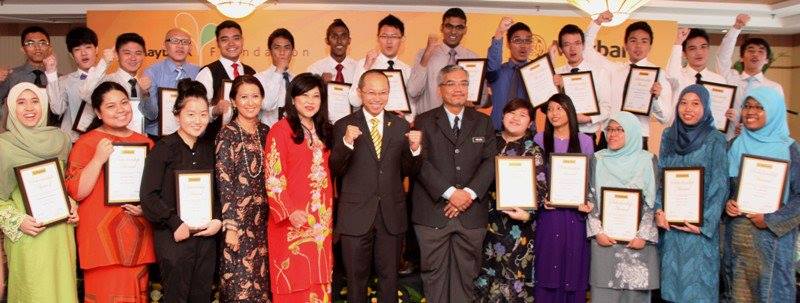
Veno, 2nd row and 4th from the right, during the Khaznah Scholarship on boarding session
It was that time of the year again when everybody is scouring through the internet searching for some sort of help or some sort of salvation. In my case, I was looking for a MIRACLE. Honestly speaking, I wanted somebody, anybody really, to document his/her Yayasan Khazanah Global Scholarship Programme (YKGSP) journey to the dot. Although there were many blogs describing their experiences, I felt as though there was something missing. So in order to fill the void that you might be feeling, I hope I’d be able to vividly describe my experience and share as much as I can so that your “insatiable” thirst for information would be quenched (to a certain extent, I hope).
The general rule of thumb for any scholarship application: BE YOURSELF! These people interviewing you might be your future employer and you always want to sell yourself in the best way possible. Now, let’s get down to business. YKGSP consisted of 5 stages in total.
1st stage (Online Application)
You have to fill up the online form and together with it you have to attach an essay. The title given to me in 2014 was “Why Khazanah Scholarship is for you and how you can contribute to the good governance practice and leadership development of Malaysia.”
I personally feel that YK is searching for an individual who comes across as confident (not to be mistaken with headstrong). Write a splendid essay that portrays your beliefs, and stand in life. It requires conviction and I assure you that you’re on the right path.
2nd stage (Online IQ Test)
The dreaded IQ test. During this test, time will be your worst enemy and you will have to come to terms with your shortcomings. The test is divided into 5 different components.
Abstract reasoning test which tests our ability to relate statements e.g. mammal, dog, animal. Here you should be able to deduce that all dogs are mammals and all mammals except humans are animals. Then, you will have to pick a Venn diagram that perfectly suits this statement.
Understanding logical process tests on your ability to reason the statements given e.g.
“The Jones live three floors below the Smiths.
The Smiths are not living at the topmost floor.
The Youngs are right above the Smiths.
There are only four floors in the flat.
Which floor are the Summers staying in?”
Spatial reasoning test is where you’re tested on your ability to detect simple figures in a very complex diagram.
Social context on the other hand, tests your creativity. You will be given sets of four pictures and you have to rearrange them to form sensible comic strips. Beware! There are no dialogues and everything depends on how you decipher the pictures.
Numerical reasoning is where you put your (I bet by this time) super rusty maths skills to test. Personally, I found this to be the easiest as it was only a number sequence test, but there’s a caveat! You only have 11 minutes (I think, if my memory serves me right) to complete 40+ number sequences.
Remember, for all these tests, you will be given a certain amount of time to complete as many questions CORRECTLY. And these examples are just testers. The real questions were slightly tougher. I do hope that Yayasan Khazanah does not change the format of the IQ test. But, always bear in mind that practice makes perfect so DO SEARCH FOR FREE IQ TESTS ONLINE AND TRY THEM OUT!
3rd stage (Assessment Camp)
The 3rd stage was definitely nerve-wracking to say the least but it definitely was more of a learning experience for me. It was held at Corus Hotel, KL and it was divided into 2 sessions (the case study/presentation and personal interview).
Always remember, that in any scholarship interview, may it be a stress interview or a formal interview, the interviewers will always want to bring out the best in you (at least, that’s what I believe). In this case, the personal interview had a more laidback feel to it and the room was filled with a palpable lightness that I enjoyed.
Remember, interviewers will definitely ask generic questions like “Tell me about yourself,” “Why this course?”, “What have you learnt from your mistakes?”, etc, but it’s really up to you to make the conversation interesting. Give them something to ponder upon; tell them your point of view on life and motivations to give your interviewers the impetus to ask you more questions. That gives the whole conversation a purpose and there wouldn’t be silent awkward moments.
Besides that, don’t be afraid to ask the interviewers’ opinions. One last tip for interviews, it really doesn’t hurt to read up on current issues so that you can initiate discussions regarding them as the interview progresses.
Next up, case study. Our case study heavily revolved around the usage of facebook in the workplace. I forgot how the questions went but the gist of it was that we (you’ll be divided into teams) were to give a presentation on whether to ban or allow Facebook in the workplace. Don’t fret if you have no idea where to begin because you’ll be given palm cards that contain vital points that should be taken into consideration.
You’ll be given a time limit to come up with a power point presentation and you’ll have 5 minutes to pitch your idea. It is important for you to speak out during the discussion and don’t forget to be an opportunist.
After the presentation, there was a short Q & A session. They won’t bite but they will surely make you ruminate on whatever you’ve said earlier so the best advice here is to THINK BEFORE YOU TALK.
After the group Q & A, we were asked to do two fun activities that put our critical thinking skills to test. For the first part, we were given a questionnaire with a few sections from A-G, all regarding the day’s assessments. Then, we were given a card containing 5 questions which we had to answer within the time limit of 20 minutes.
e.g “Based on section A (of the questionnaire), question number 14, 15, 18 and 20, do you think that the questions have achieved their aim of gauging the students’ performance for the day?”
For the second activity, we were given a piece of paper containing 12 pairs of answers, with the questions spread all over a table within each group’s vicinity according to numerical order. We had to move from table to table in search for the questions and full descriptions of the answers (both were placed together), then tick our choices onthe piece of paper. We were given 20 minutes for this too.
e.g. In the midst of making a decision, a senior director gives his decision. What would you do?
o Adhere to his idea due to seniority but if it doesn’t work, propose another idea to the board.
o Resign as a sign of protest against his idea.
We also had a group interview regarding the topic of Facebook. For this session, each of the members in the group was given a card. On one side of the card, a myth regarding Facebook was printed on it. On the other side was a fact. For my card, under the category of socializing, I was to choose between “connects” or “disengages”. The other four members got different categories (which I can’t recall). The panel consisted of 2 members (they were not the friendliest) who asked me to explain me choice. I personally believe that for this section in particular, there is no wrong or right answer. It’s really how you convince them and sell your idea. BE INFECTIOUS!
4th stage (individual interview)
Well, if you’ve come this far you can definitely breathe a huge sigh of relief and take a breather. This stage will be more of an individual discussion with the YK Board, mainly Mr. Kamarul Bahrein (Director of YK), Mdm Intan Zalila or Mdm Emilia Maizura. They were really genuine and friendly. So my advice for this stage is don’t be too pretentious. Just be yourself. And be prepared to answer the typical interview questions;most of them will be based on your ECA and your experiences.
Don’t feel stressed if they put you out there and ask you something out of the blue. Just stay calm and composed. Don’t ever be fazed by questions that are thrown at you. My interview lasted for 30 minutes and the questions ranged from personal questions regarding my family to the degree I planned to pursue. Show them that you’ve done your homework and read up about the foundation, its core values and try to relate them with what you’re passionate about.
5th stage (Final Interview)
This is more of a confirmation stage where you’ll get to meet the cream of the crop (all the scholars that survived the gruelling process YK selection). As I have mentioned earlier, this interview was really laid back. It’s more of a conversation with your future employer. Don’t be shocked if it only lasts for 5 minutes and they ask questions regarding your favourite football team. But always be prepared to answer questions that may or may not be of the norm. This session was held at the Mercu Uem building at KL sentral. We were interviewed by the Board of Director of Khazanah Nasional and it was a brief session.
Venoshini Sevalimgam is an optimistic person who believes that education is a right, not a privilege. She is heading to the University of Manchester to pursue a degree in chemical engineering sponsored by Yayasan Khazanah. Definitely a pop culture aficionado!
Kyle, at the back row and 4th from the left, standing alongside his fellow Maybank scholars
The Maybank Overseas Scholarship awards only 20-odd places to the thousands of applicants each year. Offering a full education financial assistance from pre-university to degree level, it covers tuition fees, a laptop, accommodation, and a very handsome living allowance. To prepare scholars for a successful career with Asia’s leading financial service group, a career preparatory suite consisting of internships, business assignments, presentation impact, and effective communication will also be provided during the scholarship tenure.
Do you think you have what it takes to be a Maybank scholar?
Let’s find out.
The Maybank scholarship assessment comprises 5 progressive stages.
Stage 1 – Submitting the scholarship application form.
You will never be a scholar if you never give yourself the chance by not submitting your application.
It does not matter if your grades do not match your peers or the smartest person in your school. It does not matter if you do not hold as many leadership positions as the most active guy/girl. And it certainly does not matter what others think about you in regards to your ‘chance’ of getting the scholarship.
As long as you meet the minimum requirements, just SUBMIT IT. You lose 100% of the chances if you do not try. It is up to Maybank to decide if you are their ‘(wo)man’.
Stage 2 – Online Assessment
You have hit ‘send’. Now, check your email regularly. You will not want to regret missing out on the next stage simply because you did not check your emails for reasons unknown.
One thing you should know is that Maybank handles the applications in batches. So not everyone will be at the same stage at a point in time. Do not worry if you have not heard from them while your friends have. They do it in batches. Be cautiously optimistic.
However if you do not hear from them in two months, then consider the possibility of your application being unsuccessful as they only respond to successful applications. (At least you tried – no regrets there!)
If you are successful, you will be asked to complete an online multiple-choice assessment. There are two parts to it: Mathematics and English.
You will not need to memorise any formulas or theories. Just have a few sheets of plain paper, a pen/pencil, and a calculator ready on your table.
The questions asked are mostly logical, aimed at assessing your analytical skills, critical thinking, and time management. However, it is a timed test and there are a lot of questions to complete in that time frame. It would be good for you to only attempt it when you are fresh and undisturbed. In this case, time is literally gold. Better mute your phone and stay off Facebook.
Do not take too long answering the questions though. Skip any you are unable to complete, proceed to the next question, and only return if you have time left. It is not the end of the world if you are unable to complete the assessment. You do not get through by finishing it the fastest. You qualify through meeting a certain number of correct answers. Again, if memory serves correctly, only successful candidates will be notified.
Stage 3 – Interview
If you get through, prepare for an individual interview session at Menara Maybank. You will probably be interviewed by high management level staff(s). It will be good for you to do some research on Maybank beforehand.
It is perfectly normal to feel nervous and edgy. Do your best to minimise this by taking deep breaths, thinking happy thoughts, and striking conversation with your fellow applicants in the waiting room. It does not hurt to make a few friends while calming down the nerves. Chances are, they could be nervous as well.
During your interview, just be yourself and let your personality be known. Be prepared to defend your credentials listed in your application, as certificates will not be enough. Maybank wants to see you for the person that you are and not for what was written on paper. Here, titles are nothing but for the lessons you’ve learned while obtaining them. Answer follow-up questions as concisely as possible. Speak in a calm and professional manner. Above all, be truthful. Do not lie. They will know. After all, you will not be the first person they have interviewed in their lifetime. You should be notified of the decision a few days after the interview or, if you’re lucky, immediately.
Stage 4 – Individual Presentation and Group Discussion
The finish line is nearing, and there are just a few more obstacles left for you to overcome.
The first is in the form of an individual presentation of a case study. Here, you will probably be given a case study and tasked to solve a certain problem in relation to it. Your decision-making skills are put to the spot as you will be given a number of possible solution and asked to choose what you consider most suitable. Time will be allocated for you to prepare before you are to present it to a panel of judges. Be as clear and concise as possible during your presentation. Follow-up questions will be posed, so get ready to defend your case.
Immediately following that is a group discussion related to the case study you did with other candidates who also made it to that stage. This will not be the same scenario given from the individual presentation, but related to it. Being a team player will be a vital as you discuss and negotiate the possible solutions given by the judges.
Stage 5 – Pray
In all stages, do to the best of your abilities. Now, the only thing you can do is pray. Things are now beyond your control. Let God do the rest. If it is meant to be, it will happen for you. If you do not get it, do not be discouraged. Rejections happen. It is part and parcel of life. When one door closes, another opens. Do not blame yourself too hard either. Sometimes, it is not because you are not good. Different companies have different qualities that they look for when giving scholarships. To each its own, as they say. If it makes you feel better, you may try asking them for feedback.
As it has been some time since my application, the stages may have changed without my knowledge. It would be best to take things with a pinch of salt and be prepared for anything they can throw at you, including essays.
During my time, essays were included in the application stage, but this has since been removed. Brace yourself for the possibility of being asked to write something in regards to yourself, your CV or leadership at any point after Stage 1. As a general rule, be concise and think out of the box to catch Maybank’s attention.
All the best in your applications people!
So do you have what it takes to be a Maybank scholar?
If you do, I’ll see you soon. 😉
You don’t need a state-of-the-art equipment to locate him, just look for his shiny head! Student leader, writer and Maybanker, Kyle Chan Wei Ren believes that making a difference starts with yourself. A firm believer of Gandhi’s phrase, an eye for an eye makes the world blind, he prefers writing, debating and diplomacy to warfare. He has been offered a place to read Accounting and Finance in the London School of Economics and Political Science, pending A-Levels results in mid-August.
Applying to Korea (South Korea, of course) is slightly different from applying to the UK or the US. Luckily, Korea also has an online application system. In fact, they have three, but the one you are mostly likely to use is Uway. Uway is the sole online application system for most universities across the K-pop nation, and is used by the top universities in Korea, known as the “SKY” universities, which are seen as the “Ivy Leagues” of Korea. These SKY universities are: Seoul National University, Korea University, and Yonsei University.
Korea is recognized for its rigorous academic system and top-notch engineering and medical department. Examples include KAIST (Korea Advanced Institute of Science and Technology) and Seoul National University. The number of courses conducted in English are growing every year in order to attract foreign students, and the quality of education, regardless of which course you will take, is guaranteed to be of good standard.
All universities in Korea work roughly the same. I applied to Ewha Woman’s University and Yonsei University, so the application process and whatnots I will be talking about will apply to a lot of the other universities in Korea.
Before you apply, it’s important to remember the following:
DEADLINES ARE IMPORTANT. Make sure you check the website for the International Undergraduates deadline for the admission period you are entering. There are usually two: Fall and Spring admissions. It’s important because, like any other university in the world, there are often different deadlines set for different types of applicants. Make sure you know which one you are! Also, there are different deadlines for different universities.
WHAT LANGUAGE IS YOUR COURSE IN? Not every university in Korea offers all their courses in English. Depending on your level of Korean proficiency, you could opt for a course of your choice in Korean and get on well if you’d like.
FEES.Their fees are given in Korean Won. Do not let the fees keep you from applying. There are scholarship opportunities available if you work hard for it! Plus, there are so many opportunities in Malaysia. From personal experience, I found it difficult to look for the tuition fees on any of the Korean university websites. Do not hesitate to email and inquire the university.
Personal Essays
Each university in Korea has their own essay questions. They do not necessarily have to be 1500 words. Most universities have two essay questions, sometimes followed by a short set of questions. The first question is almost always about why you chose the course and why this university. The second question is usually something that they look at to see how you demonstrate your level of thinking and what kind of a person you are. This could be questions such as “What is your philosophy on life?” (Korea University: 고려대학교), “ What will be the most challenging for you when you arrive in Korea? What do you admire about Korean culture, tradition or lifestyle?” (Yonsei University: 연세대학교). Do not overly pepper your essay with flowery words, as it can be an obvious result of trying too hard.
They will look for how passionate you are about the course you chose to be enrolled in, and most importantly, your goals. To show your passion, they want to clearly see you state what you will be doing with the degree. This also links to your goals. The type of goals they are hoping to hear about are specifically what you want to achieve in the future, how you will contribute to the world and why would it be beneficial to society. You could also include how you intend to climb to your achievement with a degree from the university.
How do they assess you?
A lot of the time, Korean universities evaluate their candidates by their grades and exam scores first. Extra-curricular activities and achievements come second, then the essays. You will be “competing” with other international students around the world.
It is highly unlikely that you will be invited to an interview, but this can differ from course to course. I applied for Economics in both universities, and I did not require an interview to be accepted.
Additional tests?
With us being Malaysians, we are considered as International Students. Korean universities usually ask their applicants to demonstrate their English language proficiency through their TOEFL or IELTS scores. Some universities such as Ewha Woman’s University will not ask for it if you have achieved a certain level of grades for your English exams or have been attending an english conducted school for seven years or more. Some universities might even ask you to demonstrate your Korean language proficiency. This is compulsory if you’re willing to take your course in Korean, or your course involves the language.
I did not have to provide evidence of my English proficiency through TOEFL or IELTS because my IGCSE and IB scores did the job. Also, Economics at Yonsei and Ewha is thankfully conducted in English, so no need for a Korean language test either!
Additional documents/materials?
They will ask for your passport as well as your parents or guardian’s passports, your passport sized photo, birth certificate, proof of achievements and awards, transcripts, etc. The university will provide a list of documents they will need for the course you are applying in their application guide. Make sure you have photostated them all. I don’t think you will need to upload additional materials onto the online application since it’s meant to be posted with the forms.
Things to watch out for:
THEIR WEBSITES ARE SLIGHTLY DIFFICULT TO NAVIGATE. A lot of their information is either written in Korean or difficult to find. I remember clicking on several links that lead to “further information,” only to find myself facing a page fully written in Korean. Also, I found it really hard to find information on tuition fees. If you can’t find the information you want, always contact the university through email or use their search bar.
Uway’s main interface is unfortunately only available in Korean, but do not be put off! Usually, there will be a link from the university’s website that takes you directly to the application part of the Uway site, which will (thankfully) be in English. The next time you would like to enter the site to track your application i.e. payment status, all you’ll have to do is login and click the logo of the university you’ve applied to.
INTERNET EXPLORER IS THEIR CENTRAL WEB BROWSER. For a country so advanced in technology, I never stopped wondering why they never allowed their online payment websites to open through Chrome or at least Firefox. This is difficult for an Apple user like me. I literally had to scavenge for someone with a Windows computer so I could make my payment (not many people I knew had a PC). If you can’t open a website and a Korean notification error pops up, it’s most likely asking you to open the site with Internet Explorer.
PAYING CAN BE FRUSTRATING. I don’t know how it was for other people, but I was one of the very few unlucky people who had a lot of trouble going through the payment process, which has to be done on the online application hub. I tried to pay my admission fees with the credit cards I have, and none of them went through, and it wasn’t a problem with the cards. It was a financial security problem on the website. If you do come across this problem, email the university immediately so they can help you arrange a bank transfer instead. From then on, you will not need to use the website.
THEY PREFER POST. Although there’s an online application hub, each university still requires you to fill their respective forms and post it via mail. The online application hub turned out to be just for payments, yet they still ask you to fill in the forms online prior to paying (it’ll be a matter of copy and paste if you’ve filled the form on your computer).
*You do not post your application until you have paid the admission fees on the online application hub (Uway). To avoid missing deadlines, try to get this sorted at least a week before the deadline, so there is room for technical mishaps and such.
What to do after you apply?
Wait. Wait until they release their confirmation on their successful applicants. Sometimes, it is the applicant’s duty to track whether he/she has been accepted or not, as the university may not send an email telling them so. Yonsei University, for example, has a log-in portal for their applicants to check their status. The applicant will either see “Accepted” or “Fail” with no reason given why if they are put in the latter.
Ewha Woman’s University, on the other hand, sends you an email notifying so, as well as a list released on their website of the applicant numbers that have been accepted.
After you know when you’re in, they will guide you through steps that need to be taken to get you fully enrolled at the university.
IN A NUTSHELL
Download the up-to-date university’s application guide.
Highlight the deadlines relevant to you & bookmark the essential documents page.
Start writing the essays. Proof-read. Grammar-check. Make it spotless.
Gather essential documents and fill in the forms on your computer.
Proceed to apply through the website indicated on the application guide and make admission fee payment.
NOW you may post your application to the stated address in the guide.
Wait.
Future applicants, I advise you all to thoroughly read the application guide for the university you are applying. Some of them want you to do something a little different (e.g. Yonsei requests you to write your applicant number on the front of the envelope before you post it, which you will receive after you make the admission payment.)
Do not give up! May the hallyu spirits be with you, and GOOD LUCK! 🙂
Eliana Sulaiman has applied to Ewha Woman’s University and Yonsei University in Korea amidst her other applications, but has chosen to major in PPE (Philosophy, politics, economics) at Lancaster University in the UK. She is often found with a yellow ukulele and is all about organic soap.
Step 1: Discover what’s your future dream job and what’s the degree that will get you there
Step 2: Research on which university meets your needs best (cost, duration, location, reputation, etc).
Check the prerequisite qualification for your course.
Minimum number of A’s, and number of subjects.
The Law National Aptitude test (LNAT) may be needed for law; the UK Clinical Aptitude Test (UKCAT) and BioMedical Admissions Test (BMAT) may be required for medicine.
English language test(s). The IELTS (International English Language Testing System) is recommended. Scores needed depend on the course and university.
If you are taking courses such as medicine, engineering, or law, you have to find out whether your future qualifications will be accredited in the place that you are going to practice it.
Some universities have their own written tests and interviews as part of their application process as well (e.g. Cambridge & Oxford).
If you’re a scholar, you also have to check if your sponsor agrees to the university you want to attend
Step 3: Apply on UCAS. You can send in your entry starting mid-September 2014 for 2015 applications.
It is better to start early, and fill out information as you get them but prior to submission (such as test results and IELTS results if you already have them).
Some courses (especially the critical field) and some universities (e.g. Oxbridge) have their own separate closing dates. You should check at the university’s website.
Plan and think hard about your personal statement (4,000 characters including spaces).
Step 4: Wait for offers. They should come no later than May of the following year (some universities specify their decision dates). After you receive your replies, you’ll be dealing with the universities directly thereafter.
My Personal Experience
July 2012 – June 2013
I started out in a pre-university college taking Cambridge International AS and A Levels. It is possible to apply to UK Universities with other qualifications, and hence the onus is on you to check the university you wish to enrol in as to whether they accept your pre-university qualification.
I have the impression that A levels and International Baccalaureate are widely recognised. I took 4 subjects, and they were Accounting, Economics, Mathematics, and Law. I was in the science stream back in high school and realised that it didn’t fit, so I made the jump to the arts in college, and have never regretted a single day. Mathematics and Economics were pretty much essential and I took Accounting and Law because I was split but interested in both. I ended up applying for Accounting & Finance as my degree course.
Before deciding on my degree course, I attended talks and seminars organised by my college about both of these subjects, and the profession that will follow. I think the only way to find out whether you really like doing something for the majority of your life is to actually try it out.
I suggest any part-time job or internship (paid or unpaid) for the sake of the experience. It will be an eye-opener for sure, and I regret not getting a taste of what it would be like, but have already committed myself to this course for the next 3 years which would determine my job (first one, at least) for possibly the rest of my life.
On selecting which university to attend, my factors were only (1) sponsor’s approval and (2) university reputation/ranking. Being a scholar means that I do not have to worry about the cost of the degree, but in my case, I have only 4 universities to which I can apply.
July – November 2013
The IELTS appeared to be the only other qualification I needed to apply for my course. I took this in July 2013, and started my UCAS application around this time. Sign up and fill in your personal details, academic qualifications, etc. UCAS will ask you how you are applying and in my case, I applied through my college and the buzzword was provided by my college.
This is because my college, together with an agent, will be responsible for my references required (lecturers’ testaments, forecast results etc), and final checks before sending off the application to UCAS. If you are applying as an individual, you may have to obtain these documents yourself.
The most difficult part would be the personal statement, and I took a month or more to write and rewrite, to check and re-check, because it is that important. I will even say that it is more important than your academic results, provided that you meet at least the minimum academic requirement of the course. You will need passion, inspiration and knowledge to produce a good one.
It is recommended that about 60-75% of your personal statement be about your academic interests, and the rest showing evidence that you can cope with the challenges that university life brings. I believe that it will be easier if you had the working experience in the related field, because how do you express ‘academic interest’ and the rationale when you do not know what your course is all about, and what you are going to make of it? If you do not have that experience, you should do lots of reading on what the course is about.
You can also check the traits and attributes that your universities are looking for and which you can emphasise on your personal statement, backed with evidence, of course. I refrained from reading examples of personal statements until I had a few drafts of my own for fear that I may subconsciously copy.
I submitted my application by the end of November, as stipulated by my college, as they had to check further and attach their reference. The actual due date for my course was 15th of January, 2014. My A2 results were automatically sent to UCAS when they were released later that month.
After November 2013
Waiting for offers and answering to the universities directly. I wish you all the best in your application!
Andrew Low Chern Hong will be studying for a Accounting & Finance undergraduate degree this coming September in the University of Warwick, Coventry, under a Public Service Department Scholarship. His love for Pusheen annoys those around him tremendously.
How to write the essay that will gain you admission to UCLA?
I have been asked to help proofread a few US college application essays. I have a few things to say and would like to help spark your inspiration. 🙂 Of course, this is just my humble opinion. I am in no way a professional essay writer, a spy in the admissions office, or an expert psychologist who happens to know how the admission office thinks.
These tips and opinions are based on my own experience in writing the application essays, and feedback I got from other people. In short, it’s just my own collective perspective about the US college application essay. I hope that after reading this post, you will have the inspiration to write a piece that is one-of-a-kind, and truly yours.
1. It’s about you
I feel that an essay should first and foremost describe you as an individual. If you find yourself describing and explaining about another person (your family member, some professor you admire or some famous movie star) more than yourself, I suggest to take a step back and restructure your essay. After all, colleges want to admit you, not someone else. If a stranger can pick up your essay, and, after reading it, give a 5-minute introduction about you, then you know you’re good to go.
2. Uniqueness
How do you write a non-cliché essay? After reading your own essay, you should be like “is that really me? That’s kinda embarrassing/weird/etc, but it is undeniably me” kinda thing. Don’t assume that everyone out there is the same as you. Many people have always regarded the things that they do as normal and hence feel reluctant to showcase themselves in their genuine form. It is the things that seem normal to you that might turn out to be the most interesting. For example, I may find that making bubbles in the bathroom to be normal. Of course, I would later find out that the movement of the the colors on the surface of the bubble is somehow connected to the weather patterns of other planets.
My point is, try to write about your normal daily life and don’t try too hard to portray what you want people to think about you. There are far too many essays like that, sculptured with hand-picked words to meticulously describe yourself as if you are an object. After all, the essay is to provide the “human” factor in the application. Have fun with it and go with the flow.
3. Honesty
Honesty is the best policy! Sometimes, really amazing essays comes from telling a secret. Something that you wouldn’t tell your best friends or even your parents. Some things like how whenever you tell your parents that you’re going to the gym but actually go bicycling in the back alleys of your neighborhood that your parents have explicitly told you not to. And later on, you make friends the beggars of the streets, the 20-sen-tissue-sellers, the aluminium-tin-can-collector and how those people that taught you to appreciate yourself and the life you have. Or how you actually unconsciously critique people’s clothing choice and you secretly want to have your own clothing line because there’s just too many people out there who don’t know how to wear matching colors. Sometimes, plain brute honesty will bring out your personality in your most genuine form.
4. The classic “show, don’t tell”
If you have a hard time following this, try to write an essay without using the adjectives you want to describe yourself. Let’s say you want to describe yourself as a hard working, determined and patient person. Do this by not writing those words in your essay. That way, you will somehow force yourself to show your characteristics through an incident. For example, if you want to portray curiosity and innovation. Don’t say that “I am curious and innovative because…”; instead, try to show it by writing an essay about drinking Chinese tea. And that when you stir the tea, you observe that the tea leaves swirl around the cup and will only stop in the middle of the cup. You then take this idea and observation to the next level and invent a water cleaner which uses the same concept. Well, you get the picture.
With all these things combined, you will ultimately end up with an essay that isn’t like any other on the planet. Who else in this world blow bubbles when they’re bathing, invents a water cleaner, critiques people’s fashion, and personally know the alleys of their neighborhood inside out? The answer is you, and only you can come up with an essay like that.
I hope this post will help all of you to write great essays. Enjoy the application process: it’s a time of self-reflection, and a time to get to know yourself better. Take your time, question yourself and most of all, have fun!
Wishing all who are applying the best of luck and may the odds be ever in your favor. And don’t forget to proofread your essays!
Cheers.
A blogger at http://longkangmee.blogspot.com/, Dylan Ler Hong Jing is a student in University of California, Los Angeles. You contact him at dylanlerhongjing@gmail.com if you have any questions regarding US, UK applications or anything related to education and scholarship.
1st Oxford Physics Skype Interview (Conducted by Physics tutors from University College, Oxford)
I applied to University College (informally known as ‘Univ’) at the University of Oxford. And as part of Oxford Physics Department admission process, I was interviewed twice, once by Univ and another interview by a second randomly assigned college (for my case, Pembroke College). Unlike the University of Cambridge (where interviews can be conducted in Malaysia or in Cambridge itself), Malaysian applicants to Oxford can only choose to either fly there for the interviews, or have their interviews through Skype. I opted for Skype interviews. My Univ interview lasted for about 45 minutes, and revolved around interesting problems and phenomena about Physics and Mathematics.
An integration problem with a nice clever trick.
After receiving this math problem, I thought of the standard substitution method, and told my interviewers about how it works. Unfortunately, while working through the question using the substitution method, I realized that the steps were longer than expected. Out of my curiosity, I asked my interviewers for hints whether there were other approaches to this problem, and I was shocked at how elegant and simple my interviewers would have otherwise solved it. Here’s the hint (spoiler alert for people who is trying to solve this!):
I was awestruck at how simple this hidden pattern is! This approach was much shorter and more beautiful.
In case you haven’t realized it, the integrand (which is the thing you’re supposed to integrate) simply has (1/x) as the numerator, and the differentiated form of (1/x) which is (ln x) as denominator. When you have integrands in the form of f’(x) / f(x), the integral (result of integration) will be ln ( f(x) ). Don’t worry if you don’t quite get this. It is actually in the Cambridge A Level A2 Maths syllabus.
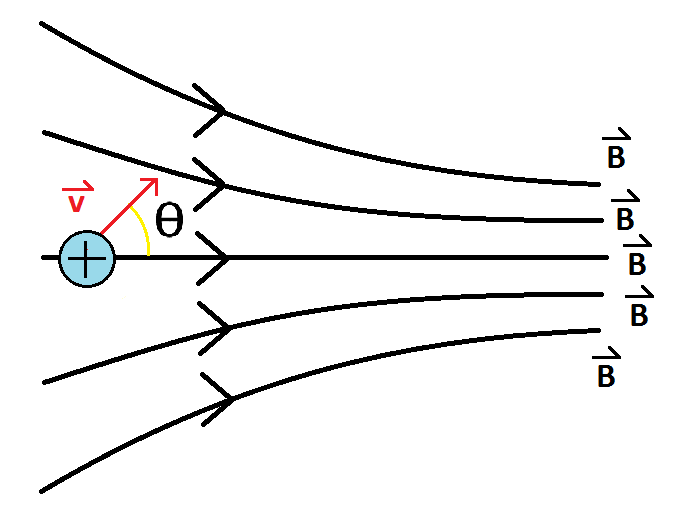
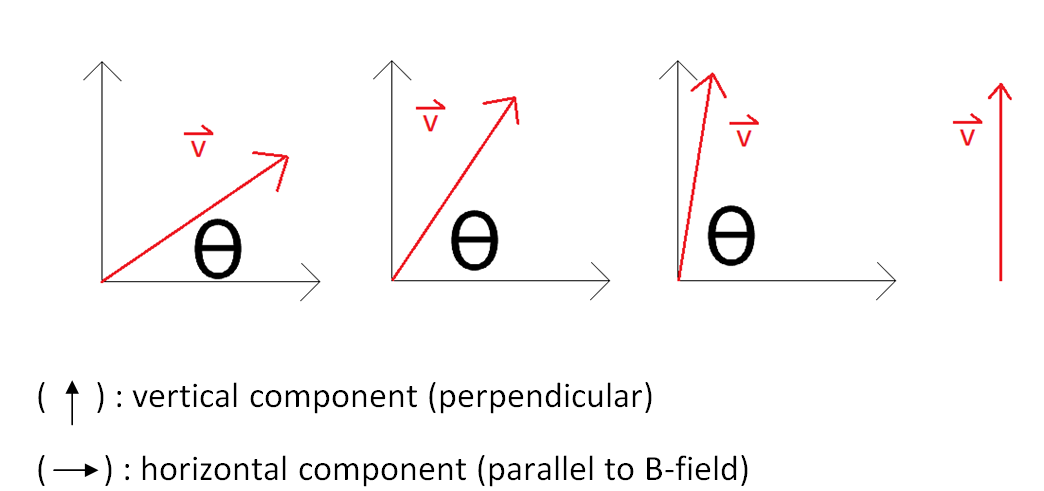
After several Maths problems, the interviewers moved on to a Physics phenomenon: moving charge in a magnetic field. The interviewers didn’t just ask about the issues and problems that could be found in the A-Level syllabus; they went beyond and tested me on how much I could adapt and solve the unknown. The interviewers started with the standard A Level magnetic field case, where the moving charge is moving perpendicularly to the magnetic field, in a circular pattern. Then they moved on to moving charges moving at an angle (not perpendicular as in the first case) inside a uniform magnetic field. It’s not covered in the A-Level syllabus but if you break down the velocity into its horizontal and vertical components, you will realise that the component perpendicular to the field will move in a circular motion while the parallel component will move with constant velocity, which results in a helical motion. Then came the tough bit, the last interview question that I spent almost 10 minutes struggling to understand:
Predicting the motion of moving positive charges in a converging field
The problem was about predicting the motion of positive moving charges coming at an angle inside a converging field. In the previous 2 cases, I only dealt with uniform magnetic field, and now I was asked about what would happen to the motion and trajectory of a moving charge coming at an angle to a converging magnetic field (see pic above). This was a rather strange physical phenomenon where I had never thought about it before and found it interesting to speculate the motion of the moving charge. First, I stated that the magnetic field strength is increasing (since the field is converging) but I struggled (in a rather unfruitful direction) for the first five minutes on this problem. Finally, I asked for a hint, and it’s this one hint, that led the way to understand and solve this problem. The hint was: The Lorentz force acting on the positive moving charge, in real mathematical form, is the cross product of qv and B ( F = qv x B). While this hint was obvious to me, I never thought that it would be useful in handling this problem. Then, I came out with a sketch of my solution while explaining verbally what was going on (see pic below):
The hint that led Brian to solve the complicated problem
This is on why the hint was useful:
As you can see, the cross product will change the component of the velocity perpendicular to the magnetic field, and since the field strength is increasing, it will “attract” the vector of the velocity towards its perpendicular component. But the cross product constraint will require the magnitude of the velocity to stay the same and hence it results in a rather weird helical motion which will eventually result in a circular path that stops going forward. See following 2 paragraphs for further explanation.
As the converging magnetic field implies that the magnetic force (which acts in the direction perpendicular to both magnetic field lines and velocity) is increasing, this will thus increase the Lorentz force on the component of velocity perpendicular to the field lines. The direction of Lorentz force (which is always perpendicular to velocity) will have some complicated change in direction due to the change in velocity and increase in magnitude of the force, so I will not show the details here but just the big picture. This perpendicular Lorentz force is like centripetal force acting perpendicularly on velocity – stronger centripetal force will cause the moving charge to move in a spiral. This is because stronger force leads to higher acceleration, which leads to greater change in the perpendicular component of velocity.
If the spiral motion was in only 2-D, the magnitude of velocity increases due to increasing centripetal force (centripetal acceleration = rw2, so while circular radius, r, decreases, w needs to increase more than r in order to account for increasing centripetal acceleration. This leads to increase in perpendicular component of the motion of charged particle in converging magnetic field). But in this case which is 3-D, the Lorentz force is cross product of velocity and field line, plus, magnitude of speed needs to be constant. In order to accommodate the increasing perpendicular velocity component, the horizontal component of velocity needs to be reduced to keep the magnitude constant.
I spent around 10 minutes speaking out my thought process, assumptions and reasoning to the interviewers on this problem and realized that I enjoyed the experience and learnt new physics along the way! (For those who are interested to further understand the mathematical details of this phenomenon, it’s called Magnetic Mirror and you can find out more by googling.)
2nd Oxford Physics Skype Interview (conducted by Physics tutors from Pembroke College, Oxford)
My 2nd Skype interview was held 2 days after my first interview. In comparison with my first interview, I would say that this interview was much ‘quirkier’ in a sense that the questions were rather open-ended and required general mathematical aptitude rather than specific mathematical techniques. Of course, in this section, I’ve handpicked interesting problems as well to present my interview experience. Here’s one of the weirdest interview questions:
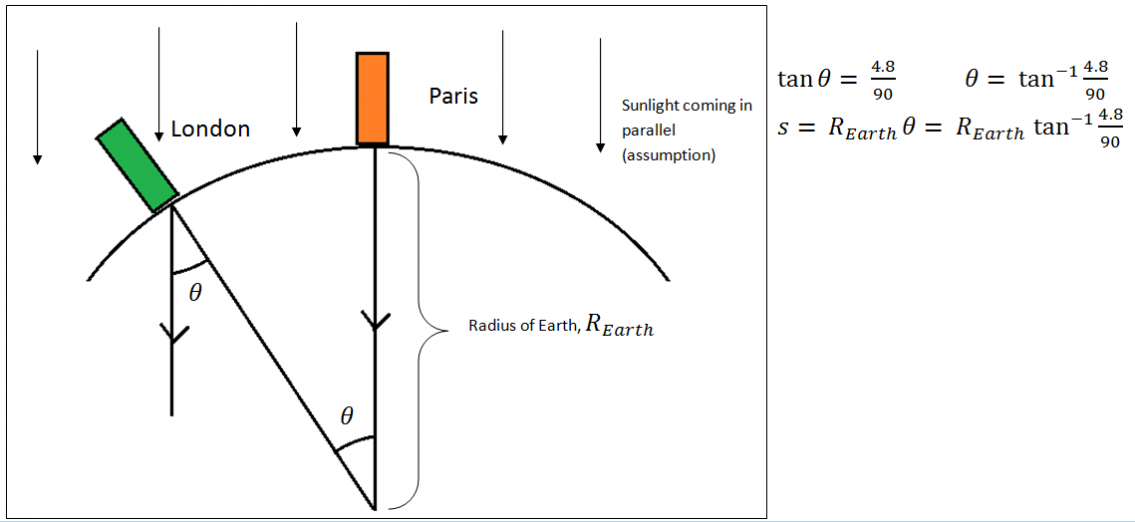
There’s a 4.8m shadow in London and none in Paris. What’s the distance between London & Paris?
At first, this problem appeared to be too broad and I thought of too many approaches (that didn’t work out that well, somehow). I didn’t know where to get myself started so I made some assumptions. I clarified that the sunlight shines at some small angle to London while it’s directly above Paris and assumed that the distance between the city is just a tiny minor arc of the earth surface (and can be approximated as a straight line) and the interviewers immediately corrected me on these 2 faulty assumptions. So, my corrected assumptions are as below:
Sunlight is assumed to come in parallel straight line
Earth is perfectly spherical and 2 cities are located at 2 points on the minor arc (see pic below)
The solution
After being corrected on my assumptions, I was immediately enlightened about the right approach to this problem. By utilizing the general geometry principles about parallel line, I could work out the length of the arc (which is the distance between London and Paris).
Brian’s second problem at his second Skype interview
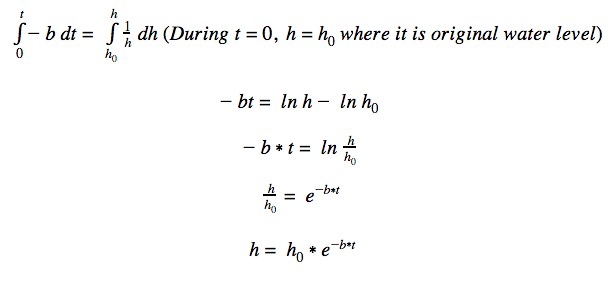
This is a big problem with 4 sub problems, but I have only selected the interesting pieces to discuss here (2 of the 4 sub problems). While I was unsure about the term ‘Flux’ in the context of the problems, the interviewers clarified it and in a more mathematical language, it was simply the rate of change of volume (flow rate). After clarifying the word ‘flux’, I went on to solve this problem by modeling it using differential equation. In case you are interested in how h(t) can be obtained, here’s the solution:
Integrating it:
After solving it, I immediately realized that it was a negative exponential function and went on to solve the 2 subsequent sub-problems during the interview. The interviewers’ final question (arguably one of the toughest) was:
Sketch the HEIGHT OF WATER against TIME for the 2nd Jar.
I was asked to sketch the height of water against time for the 2nd jar. While I struggled to imagine the general picture of the curve, the interviewer once again enlightened me by asking me 2 questions:
What happened to the beginning of the curve and how it should look like?
When almost all water from the 1st Jar has been transferred to the 2nd jar, how should the water level on the 2nd jar drop?
For the first part, I figured out that it would look almost like some sort of increasing exponential shape and for the second part I figured that it would look almost like a negative exponential graph (not exactly because while water is filling up the 2nd jar, water is flowing out at the same time so the exact curve shape and equation will be different) and here’s my sketch (of course, my assumption was that when water level is falling exponentially it will come to a point where it can be approximated as 0):
The soulution
After sketching the graph, 30 minutes had passed and the interviewer ended the interview. In general, I love the kind of intellectual conversation going on in both interviews and I couldn’t wait to see myself engage in this kind of conversation in my next 3 to 4 years in the Oxford tutorial system. These problems, once again, broadened my problem solving perspective and I must say that I love it.
Conclusion
I will advise and say that the best form of preparations to get into Oxford are:
Not being afraid to explore and think about new ideas and issues
Learn to communicate clearly and clarify your thoughts during the interview
Mostly important, apply to the course you’re really passionate about! As the famous saying goes “Love what you do, or leave.” I believe this doesn’t apply just to scientists but also to all of us in general.
And, all the best! Give yourself a try, and you might not know some of your best efforts will pay off. Links which you may find useful:
Brian Khor Jia Jiunn, a National Scholarship holder and an aspiring physicist is one step to achieving his dreams by pursuing Physics in the University of Oxford (did you know that Stephen Hawking was from Oxford too?). With his immeasurable passion, he will definitely go far in the field and be part of ground-breaking findings.
Do you remember the last time you felt relaxed and went jolly after an examination? Happy, excited, overjoyed, free? I felt that way after my AS examinations – except that those feelings didn’t last very long. University applications came hurling at me and before I know it, I was checking entry requirements, keeping track of the deadlines, editing my personal statement and filling up loads of forms.
UCAS & The Personal Statement
The UCAS form is pretty simple. It is just an online form where you have to provide your personal details, qualifications etc. If your current pre-university college is not aiding you in filling up these forms, there is a step-by-step guide available online.
Now, for the most time-consuming part of the UCAS application- the personal statement! You would have heard that your personal statement should include both academic and non-academic related content. However, do remember that you are going to university to study, so your personal statement should be more about your chosen course than it is about your co-curricular activities.
For the academic side, I believe that it is extremely important to highlight your passion for your chosen subject. As a maths applicant, my personal statement includes the areas of mathematics that interest me most, the nature of the subject that I enjoy and how I feel about them.
Meanwhile, for the non-academic side, I include both mathematical and non-mathematical activities. Mathematical activities can be any mathematics competition you have participated in (eg: Euclid, OMK), your experience as a maths tutor or even your STEP preparation. For the non-mathematical ones, you can highlight how those activities help you develop values needed in a mathematician or how they help you grow as an individual. For instance,
“Apart from my studies, I play chess and have participated in district, state and national tournaments. In addition to the sophisticated structure and logic of the game, I enjoy playing chess because it has taught me how to plan strategies ahead, recognise patterns and analyse problems, all of which are vital skills in the art of problem solving.”
“I am also currently participating in the Duke of Edinburgh Award Scheme which encourages me to thrive through discipline, motivation and determination.”
I also believe that a personal statement should sound like the writer. If you have a vast vocabulary, feel free to make use of your ability in your personal statement. But if you don’t, it would be best if you don’t push it. Using a new word found on the thesaurus can appear awkward if you are not familiar with its usage. I am not a good writer (and never was), so I kept my personal statement simple without those so-called ‘bombastic words’.
In early July, I started drafting my UCAS personal statement and (of course) since it is called ‘the first draft’, it was horrendous! To all future applicants, I would suggest you not to worry if you feel that what you have written is not well-structured, lacks content or is very juvenile compared to what the others have written. You can always get help from your experienced teachers, tutors and even professionals like MABECS. Don’t give up on your personal statement and polish it until you are happy and contented with it.
Cambridge Online Preliminary Application (COPA)
So, if you are applying to the University of Cambridge and would like to have your interview here in Malaysia, we are in the same boat again! However, that also means filling an extra form called the COPA. The first few parts of the COPA are very similar to that of the UCAS (We have to fill in our personal details, qualifications etc). Then there are spaces for an additional personal statement and some questionnaires. These questionnaires are optional so it’s up to you if you want to answer them. As for me, I filled in a few and left a few of them blank.
Cambridge Interview
The invitation for a Cambridge interview usually knocks on your inbox approximately two weeks before your interview. It is entirely up to you how you want to prepare for the interview. I’ve heard stories of people pulling all-nighters and of people not preparing at all. Though they may seem extreme, some are successful candidates. As for me, I practiced some STEP questions, tried some BMO questions, kacau-ed teachers and seniors for help, get enough sleep and pooffff! Two weeks passed just like that.
The interviews were held in a 2-day period and the written test was held the day after. I was interviewed by Dr Stuart Martin from Magdalene College in Cambridge and the whole 30-minute interview felt like a tutorial. He started off by asking me a few informal questions such as “How do you find Further Maths?” This was presumably to break the ice and to make me more comfortable. And after more casual talk, we proceed to the more serious part where Dr. Martin asked me two questions, one on curve sketching and another on a puzzle.
Jasmine was asked to sketch this curve in her interview.
Honestly, when the questions were presented to me, I had no immediate answer in my head. But I have heard beforehand that the interviewer is more interested in the way I think rather than the final answer. Dr. Martin guided me by giving me tips along the way and giving me some time to think on my own. I tried to voice out what I was thinking, asked some questions about some information he told me and after I finished answering the questions, my time was up.
Cambridge Written Test
The next day, I sat for a 2-hour maths test in Sunway College. There were two questions. Question 1 was made up of ten parts, all of which were short and consisted of various topics such as complex numbers, trigonometry, projectiles etc. The suggested time for question 1 was one hour and all candidates were required to try as many as they can. Question 2, on the other hand, had six longer parts and all candidates had to choose only two. Don’t worry if your school has not covered the Further Maths syllabus as most of the questions are very STEP-like and all can be answered without any Further Mathematics knowledge.
Wait for replies…
So, that basically sums up my Cambridge application process. Remember that all these may seem really tedious at first, but when you are done with everything and you look back, it is not that bad.
Thank you for reading my ramblings (I know how hard it is :/) and I wish all Malaysian applicants out there all the best in their application and may all of you gain admission into your dream universities.
Law Chiw Fern Jasmine is a half Penangnite-half Kedahan who received a conditional offer from the University of Cambridge to read Mathematics. She is sponsored by the Malaysian Public Service Department and is currently in love with food.
Every year, more than 250 Malaysians apply to the University of Cambridge, each and every of them willing to sacrifice that one spot in their limited UCAS applications to study in one of the most prestigious universities in the world. If you are reading this, you are probably one of them and applications may seem tedious and daunting. Therefore, this article will provide you with a simple overview of what to expect throughout the Cambridge application process.
Choosing a College
One thing that makes the Cambridge application different is the collegiate system. Cambridge is made up of 31 colleges, all different and special in their own way. So, what is a college? Basically, a college provides you with the accommodation, place to eat, a library, recreational facilities, pastoral care and supervisions (small group teachings). Meanwhile, lectures and exams are carried out by the university. So, don’t worry; you will have plenty of time to mingle with students from other colleges during lectures and club activities.
When choosing a college, take note that some colleges admit only mature students (Wolfson, Hughes Hall, Lucy Cavendish, St Edmund’s), postgraduates (Clare Hall, Darwin) and some admit women only (Murray Edwards, Newnham, Lucy Cavendish). Also, do check whether the course you are planning to study is available at a particular college as some colleges do not offer certain subjects. Other factors you may want to consider include location, (you can search for the university map online and estimate the distances from a college to your faculty building, university library, town etc.), facilities (dark room, music room, gym etc.) and admission criteria (if you want to be interviewed in Cambridge. as interviews in Malaysia are conducted irregardless of your college). If you have a chance to visit Cambridge, your instincts may also guide you to the college that fits you best.
If you can’t make up your mind about choosing a college, you can always submit an open application where a computer program allocates you to a college. Chances are that you will love your college anyway.
UCAS
As most of you may already know, all applications to UK universities are made through UCAS. You will have to fill up the UCAS application form and this includes your personal details, qualifications, personal statement and details on other supporting documents. Filling up all these isn’t all that difficult as there is a step-by-step guide available in the UCAS website. Fret not as the UCAS application for Cambridge is very similar to that of other universities, except that you have to specify the college you wish to apply to, and that you have a much earlier deadline. Yes, no time to be sad about an earlier deadline; start filling up your UCAS form and start writing your personal statement ASAP!
Cambridge Online Preliminary Application (COPA)
If you choose to be interviewed in Malaysia, you will have to complete the COPA form where you will have to fill in your personal details, application details, qualifications (yes, your UMS :/), topics you have covered in your Pre-U studies etc. There will also be some space for an additional personal statement and questionnaires which you can make use of to highlight your passion for your chosen course, your future career plans and other information you may not have the chance to mention in your UCAS personal statement.
Supplementary Application Questionaire (SAQ)
If you choose to be interviewed in Cambridge, you will have to complete the SAQ which is very similar to the COPA. Nothing to worry about, all you need to do is to provide your COPA reference number.
The Interview
The Cambridge interview is highly academic and is more often viewed as a mock supervision. It may sound weird at first, but the interview is supposed to be enjoyable as one will get the chance to discuss about a subject one is passionate about. The interview usually starts with some informal questions to break the ice before proceeding to the content where you and the interviewer engage in discussions. Below are notes collected from current Cambridge students, teachers, previous applicants and miscellaneous resources, which you may want to keep in mind when the interview invitation knocks on your inbox.
Pre-interview:
Read over your personal statement and any written work submitted as you may be asked questions based on them.
Revise what you have learnt in your Pre-U studies as you may be asked to develop ideas from your existing knowledge.
Do a little bit of extra reading about your course to have more topics to talk about in the interview.
Know why you applied for that course and why you applied to that particular college (if you did select your college).
Attend mock interviews
For your attire, just wear something smart, reasonable and something you feel comfortable in. Seriously, you don’t want to wear something so tight that you can’t breathe.
You don’t have to wear a suit but if you want to, feel free to do so.
Have enough sleep the night before the interview to keep your mind sharp.
During the Interview:
Be polite and smile to the interviewer (Yes, do it even if you are a nervous wreck who sweats due to anxiety). Neither you nor the interviewer will enjoy the interview if you look like you want to hurry out the room the next second.
Think before you speak. Take a brief pause before replying.
Ask the interviewer to repeat the question if you don’t understand it.
Think out loud as the interviewer will want to know how you think.
If you don’t know the answer to a question, don’t panic. Be polite and ask for assistance. Again, the interview is supposed to be a mock supervision. Thus, the interviewer will want to know how well you adapt to the Cambridge learning system.
Move the conversation along (eg. Don’t give one-word answers). An awkward silence will be just… well.. awkward.
Keep in mind that the interviewer is trying to get the best out of you.
Post-interview:
It is very common to think of all the mistakes made during the interview and all the ‘what I could have done’s. However, since the interview is over, try not to worry and to focus on whatever is coming up like an admission test, a second interview, a semester exam next week, your next dental appointment etc.
Remember that the interview is just a part of the holistic Cambridge application process. So though you may want to get all fiery and geared up for the interview, you may also want to take note that it is not the end if the interview goes badly. Who knows- your admission tests, grades, reference or personal statement may be your knight in the shining armour. 😉
Written Test
If you choose to be interviewed in Cambridge, do check your college’s website if you have to sit for any written tests.
If you choose to be interviewed in Malaysia, you will have to sit for a 2-hour written test, usually a few days after the interview. The only exceptions are those applying for Medicine and Veterinary Medicine. More information about the written test will be emailed to you together with the details of your interview.
So that basically sums up the Cambridge application process. If you end up with an offer in early January, congratulations and all the best in meeting the requirements to be a Cantabrigian. If the odds aren’t in your favour, do remember that you have tried your best. Most of those who did not receive offers did enjoy the application process in one way or another. Some find the interviews very enlightening and some believe the extra reading help develop them as students and as individuals. Therefore, best of luck to the future and current applicants. Be yourself and enjoy the ride. 😀
Law Chiw Fern Jasmine is a half Penangnite-half Kedahan who receives a conditional offer from the University of Cambridge to read Mathematics. She is sponsored by the Malaysian Public Service Department and is currently in love with food.
Sharyn Wong holds an unconditional offer from University of Cambridge to read law.
According to the official University of Cambridge brochure for applicants, ‘successful applicants achieve academic results in the top 1-2% of their year’. If I were you, a fresh-faced student secretly harbouring hopes of frolicking on the lush, green grass in Cambridge, I would quit reading this and start perusing my books Right Now.
In all seriousness, you probably have the grades, the charisma, the IQ and a freshly-pressed suit – ironed 6 months before your interview. You’re here because you want to know what it’s going to be like.
I won’t go into the nitty-gritty of form-filling, let’s delve straight into the process itself.
Let’s face it: you have a reason for choosing Law as your degree. You’re extremely passionate about the law and no one could make you give up your dream even if they offered you a million dollars. Why else would you spend the next 40 years of your working life looking at pages upon pages of statutes? Internalise that passion, and you’re on your way to a winning personal statement.
What next? Oh, just the interview. You’re a future award-winning lawyer, this should be easy-peasy. Come here, let me give you a tip or two.
Whoops, trick question! Lawyers don’t need tips. You’re perfectly capable of answering any question thrown at you because your charisma and confidence makes everyone believe what you say. Keep it that way.
Okay, one tip: My magic formula for measuring success in an interview is simple; if I go in smiling and I come out without any changes in my facial muscles, I consider it a success.
Unless a monster mauled my face in there. But rest assured, the Cambridge interview has been tested as 100% safe by numerous eyewitnesses who have survived with flying colours.
As you emerge with nary a speck of dust on your tailored suit, you will be whisked away to a huge hall of sweaty, nervous students to sit for the Cambridge written test. Naturally, you will have cooling pads hidden underneath your clothes as you breeze past the competition.
The questions revolve around solving a hypothetical case and answering one essay question. If you don’t know how to answer these questions with the logic and innate legal abilities that you have possessed since you were in the womb, maybe it’s time to reconsider that dream career.
At last! The final hurdle. (Drumroll.) Wait, there’s one more? Of course, dear, it’s called your A-Levels. Remember the opening sentence of this essay? ‘Successful applicants achieve academic results in the top 1-2% of their year.’
I hope you learned a lot from this essay. It’s always my pleasure to help people achieve their dreams. :’)
This advice just cost you $100. I shall be sending the legal bill to you soon.
Disclaimer: The author does not accept any responsibility or liability for the advice contained in this article. Follow at your own risk.
Sharyn Wong Yi Jien is a student who will be pursuing her law degree in the University of Cambridge.

























 CollegeLAH