CollegeLAH is a website by the students for the students, featuring the honest story of applications and university life as told by Malaysians. It’s a non-profit social project to help Malaysian students to achieve their higher-education dreams and inspire them to reach their full potential.
Jansen is one of the 9 students awarded the Yayasan Sime Darby Scholarship out of 1800 applicants
Eighteen hundred applicants took up the challenge to fill up the online forms by the end of September 2012 but only nine were selected to be Yayasan Sime Darby scholars early in January 2013.
“What is the secret?”, comes the typical question. Truth to be told, there is no secret but I shall share some insights of my application process that may aid a pleasant journey through your scholarship applications.
First Stage – Online Application
Simple biodata, activities and leadership positions you once held will be required of you. Then come a few short essays. Honestly, I have forgotten the questions but what is important is that you should try to make your essays unique and more personal. Remember, the assessors are screening through hundreds if not thousands of applicants. How would they pick yours out of the many? Be UNIQUE!
Second Stage – First interview & Proficiency Test
During the morning session, the applicants were given a topic to speak about with some preparation time, for example regarding their ambitions, which country they intend to study in etc. The assessor would question you after your verbal presentation, like an oral test I guess. The first screening was to identify those who have good verbal skills.
The afternoon session was the Maths and Linguistic proficiency test. If you make it through the morning stage, you will be asked to move into a computer room to answer Mathematics and English questions. For Maths, graphs and tables were given and analytic skills came into play here; for English, we were required to compare two different sources and answer questions based on them. The time provided was 4 minutes per passage so time management was extremely important here.
Remember to put everything on a scale, to decide quickly which questions you should give up in order to solve easier questions. However, if you can solve all without a hitch, kudos to you ;D
Third Stage – Case study and Second Interview
The case study session is where I believe that your skills in management and decision making are tested. In previous years, the case study was done in groups. However, in my batch, we were given the case individually and were asked to present our solutions after 40 minutes of preparation. My case was about choosing a location for a new building for the headquarter. I had to weigh the logistic prospects as well as many other factors to justify my choice of location. We would need to think out of the box as the statistics given only covered a few aspects and it was up to me to use my general knowledge to further boost my justifications.
The second interview was basically about the experience I had picked up in my life. Expect to be asked about your weaknesses, strengths, visions, lessons learnt from problems etc. This is the stage where they evaluate your personality so remember to always speak the truth. Assessors will be able to pick out hints of lies or exaggerations. Be yourself but pick those incidents that truly impacted your life- incidents where you learnt a great deal of life skills.
Fourth Stage- Final Interview
During this stage, I was interviewed by the CEO of Yayasan Sime Darby, the Human Resource Manager from Sime Darby Corp. and an expert in my field of choice. There was only little similarity between the questions directed to different applicants. They may ask you about the tenets of the Sime Darby family but the main questions were based on my essays, personality test, future visions and dedication.
I did not put in an A to Z guide for this scholarship. I’m just giving a rough skeleton to ease your way through the process slightly. Remember, this journey varies by individual. Just be awesome and be yourself. God bless and all the best!
Interview tips:
DO NOT, i repeat, DO NOT try to memorise answers to interview questions. You can go over some questions that you predict might be asked to smoothen your conversation but memorised answers will just send your efforts South.
Be flexible- know when to be professional, when to joke, when to bring out those raging emotions. It’s all about the right timing when expressing your feelings alongside your words.
Be confident, not cocky. Be outspoken but not overbearing
Research about the company. For my Sime Darby application, I found out what they do, their history, current developments and future plans. Show them that you are as committed to their goals as they are
Put yourself in their shoes; think of what aspects they look for in you, and express them out.
Jansen Teng Weng Nang, a student par excellence, will be pursuing his degree in Biotechnology and Management at Imperial College London under the Yayasan Sime Darby Merit Scholarship. Living up to the maxim of “Scientia potientia est”, he believes that learning never ends- and so does living.
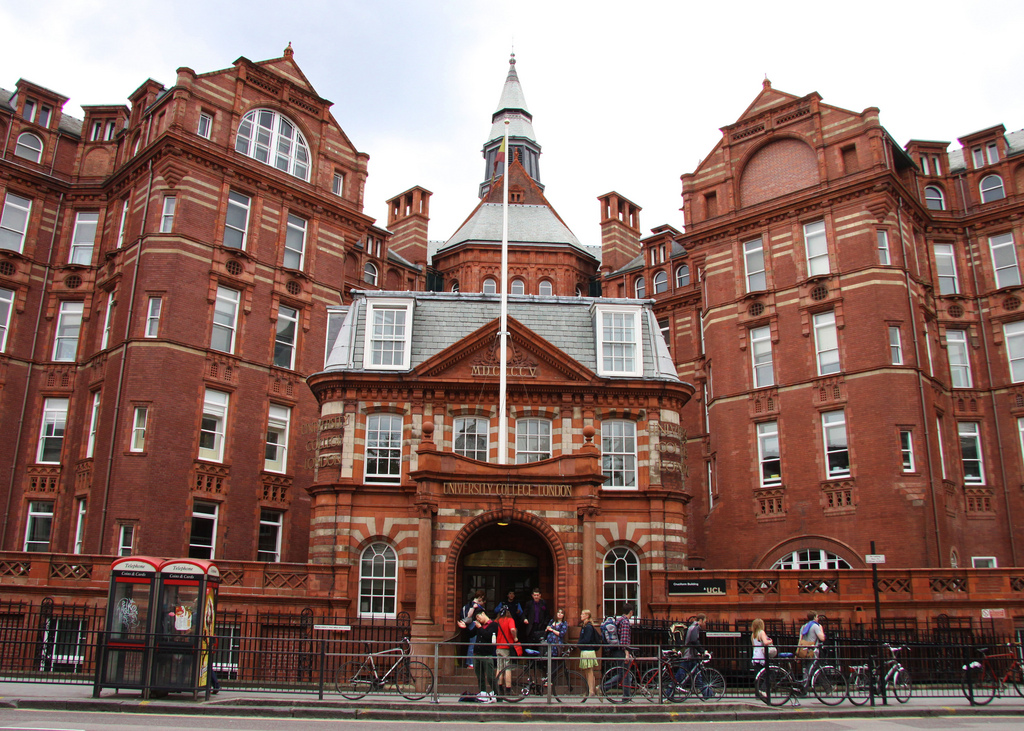
Kai Xiang will be reading Psychology in University College London
According to QS World University Ranking by subject, Psychology in University College London is ranked No. 9. Kai Xiang is a proud offer holder to read Psychology in UCL. Read about his application journey…
The application process for psychology was not the toughest part. The most difficult part was to gain my father’s support. Due to his lack of understanding regarding the course, he preferred me to choose other popular courses which have better prospects such as engineering, medicine, dentistry, pharmacy, and the list goes on.
I had to read more about psychology in order to convince him. I borrowed and read psychology books from the library, subscribed to channels pertaining to psychology in Youtube and consulted counsellors in college who are psychology graduates. It was a great achievement for me to finally gain his support after lots of heart-to-heart discussions.
The application part was not troublesome. UCAS enables us to apply to a few universities simultaneously. Basically I just had to key in my details and personal statement before submitting the application. After that, some universities sent me emails to sign up for student portals or request for extra information. No interview is required for most of the psychology courses in UK universities (except Oxbridge).
Psychology is closely related to biology, which is one of the subjects I took in A-Levels. In my personal statement, I included my appreciation of the subject and how it links to psychology. Being a broad subject, psychology also covers the brain and the way it works. I wrote about the learning tips that I applied from Tony Buzan’s books about mind maps, which are related to psychology too such as the process of formation and storage of memories.
Kai Xiang and his friends with Dr. Peter C. Doherty, a Nobel Laureate
Apart from that, the experience of joining a research workshop in my college offered me an opportunity to conduct a research related to music therapy. I also represented my college to attend an international student research conference. The experience and exposure that I gained when performing research was written in my personal statement too. I also included my experience of volunteering in a hospital with a charity organisation with my insights and its impact on my decision to pursue psychology.
I am a National Scholarship holder awarded by the Malaysia’s Government. Mentioning about the scholarship was another plus point. I did not join a lot of club activities in college, hence I wrote about the ECAs I joined in secondary school. I briefly wrote about my achievements and elaborated more about some life lessons and good values that I had learnt.
I requested for my friends and lecturers to proofread my personal statement and asked for their opinions. Then I made amendments and repeated the process before submitting it via UCAS.
Undoubtedly, applying for a course in university seems troublesome for some of us. However, it allows us to learn something new and explore more about ourselves.
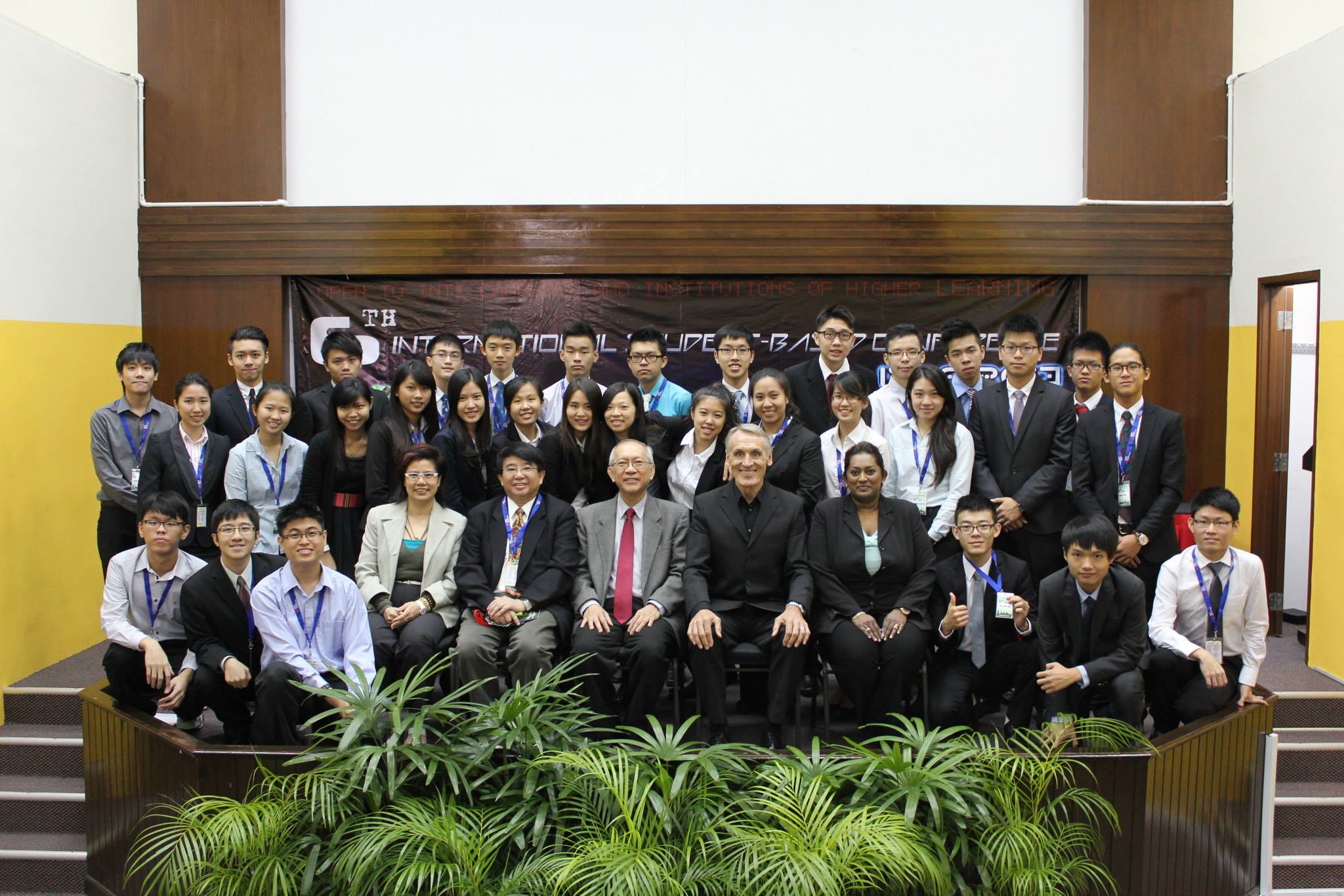
Kai Xiang (First row, 3rd from the left) at the 6th International Student Based Conference- something he included in his personal statement
Lim Kai Xiang holds a conditional offer to read Psychology in University College London under the JPA scholarship. He always uploads photos of his pets in Facebook, unless he is meditating in the Himalayas.
I was recently asked this question by a junior of mine. Having gone through the application process not too long ago with the memories of endless sleepless nights spent to complete the application still vivid in my mind, I jokingly told her that she would have to first come into possession of superpowers like those of the Powerpuff Girls to be able to survive this process unscathed.
Now come to think of it, getting accepted into medical schools is not that much different from creating Powerpuff Girls. What you need to succeed is basically a mixture of “sugar, spice and everything nice.” Sweet compassion to serve (sugar), strong desire to preserve the health of patients (spice) and other exemplary attributes (everything nice) such as empathy and truthfulness. Not to miss out is the extra something similar to the chemical X used in creating Powerpuff Girls to give you the edge over the other equally qualified candidates.
So what is the X factor required to succeed? Here comes the tricky part as, to be honest, I have no idea. I am still grappling with the fact that I did actually receive offers. So, what I shall do is that I will guide you through the application process, highlighting some mistakes I previously committed and tips I deem useful along the way, to enable you to start your quest to seek that X factor early.
Choosing the right university
You are going to spend your next five or six years there, so it makes sense that you should choose wisely after considering all the factors. A few things to ponder before making the final decision: location, course structure, cost, and reputation.
Is problem-based learning your cup of tea?
Think if you would prefer living in a vibrant city, always feeling the bustle and excitement or taking a slower pace at an idyllic countryside with lush greenery? As for the course structure, keep in mind that different universities, although offering the same subject, may approach it differently. Do you prefer the traditional approach (think Oxbridge) where medicine is taught primarily through lectures and tutorials/supervisions, or problem-based learning (i.e. University of Manchester), which depends on group efforts which are supervised by a facilitator?
Try to research about the tuition fees and calculate an estimated living cost to see if it fits your budget. Reputation, especially in the form of university ranking, though a good reference for you to make comparisons between universities, should not be taken as the sole indicator for judgment. The university which tops the list may not necessarily be the best fit for you.
To maximise your chances of success, you should also apply according to your strengths. Different universities are looking for different qualities. Some universities prefer candidates with academic prowess, while some may favour applicants with active participation in co-curricular activities. For example, the University of Cambridge expects applicants to submit their UMS scores. So if you have high UMS scores, apply to Cambridge! It is also worth taking note that certain universities impose a UKCAT threshold score. Candidates with scores lower than that will not be called for interviews. I was once told by a senior that if I were to get a high UKCAT score, I should try applying to the following universities: Glasgow, Manchester and Newcastle. I did not apply to any of these universities, so I do not know if his advice holds water.
Clinical attachment
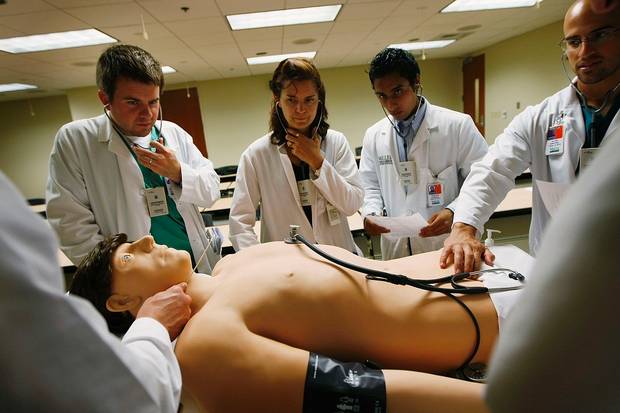
To ensure that you have a clear idea of what being a doctor entails, you should do at least one clinical attachment before you come to a firm conclusion that medicine is the correct course for you. You can choose to shadow a GP (general practitioner), serve as a porter at the Emergency Department, or even volunteer at a local hospice.
It is not necessary for you to confine your option to doing an attachment at large central hospitals. Don’t get me wrong: an established medical centre is a great place for you to do your attachment. Not only do you get to shadow doctors from different specialties, but if you are lucky enough, you might also get to observe how surgeries are being carried out in the operation theatre. However, do take note that a placement at one of these hospitals may be hard to attain. These hospitals receive hundreds of applications from prospective medical students all over the country for only a few limited slots; hence, keep in mind that the waiting list can be notoriously long.
You are most likely to be asked about your shadowing experiences during the interview. So be prepared to talk about what medical procedures you have seen, how do doctors and other medical personnels work together as a team, etc. Bring a notepad along so that you can quickly jot down anything you deem interesting. You should be proactive in talking to the patients (of course not in an intrusive manner) at appropriate times, and take the initiative to ask for explanation of diseases or treatments used. If you ask in a polite manner and when they are not overly busy, the doctors and nurses are usually more than willing to explain them to you.
Personal Statement
My advice is to START EARLY. Don’t leave it until last minute or you face the ramification of having to submit an unpolished piece. Aim to complete your personal statement one month before the deadline so that you would have the luxury of time to have people proofread for you. However, do understand that your personal statement can never be deemed “perfect” by each and everyone you show it to. Learn to make a prudent judgment to determine if the ideas supplied are suitable and coherent with the overall theme of your personal statement. Don’t feel compelled to incorporate every suggestion that you have received. Too many cooks spoil the broth!
Most personal statements share the same structure, starting with reasons for choosing medicine, followed by experience during clinical attachment and achievements that they have accomplished, before ending it with how committed they are towards the goal of becoming a doctor. Hence, to make your personal statement stand out, you will need two key ingredients: details and personal reflections. Incorporate in your personal thoughts to give your personal statement a distinctive “flavour.” A common mistake that many applicants are guilty of committing is to just list down all their accomplishments without making a link between how those activities shape their personalities or make them suitable candidates to pursue medicine with the accolades they have won. Admissions tutors are more interested to know what you have learned rather than what have you achieved.
UKCAT & BMAT
The 600 UKCAT book that Nixon found useful
The UKCAT & BMAT are university entrance tests for medicine and dentistry courses used by some institutions in the selection process. For undergraduate entry medicine (A100), universities which use BMAT include: Cambridge, Oxford, Imperial College London, UCL, University of Leeds, and Brighton and Sussex Medical School. The rest of the medical schools pretty much fall into the UKCAT cohort. However, there are some universities which are exceptions in that they use neither BMAT nor UKCAT. They are Bristol, Birmingham and Liverpool.
I shall not delve into the individual components of BMAT and UKCAT as there many articles/blog posts/student forums explaining them in great depths available online. You can also visit the official websites to find out how these tests are being conducted. Instead, I shall share with you same tips on how to prepare for them.
UKCAT:
Register early. You may miss out the date that you prefer if you register late. In the worst case scenario, if all the time slots have been taken, you will have no choice but to take the test in a different country.
Practice using the computer’s calculator as you are not allowed to bring in your own calculator.
I prepared by doing questions in the 600 UKCAT book. You should definitely try getting yourself a copy of that book. The book provides you with an overview of each component tested before giving you some ideas on how to tackle each section. That being said, as I only used 600Q and some free online resources, I am not entirely sure if that book is the best in the market.
For those who have attempted questions in that book and are now a little despondent on getting a high UKCAT score, a piece of good news for you: the questions in it, especially those in Quantitative Reasoning (QR), are harder than those in the actual test.
BMAT:
I personally find that BMAT requires more time and effort to prepare. As BMAT usually takes place at early November when most of the candidates will also be having their AS exams, it pays for you to start preparing early to avoid having to burn the candle at both ends.
Make it a habit to read. You will need all the facts and information to help substantiate your arguments when you write the essay.
Download all the past year papers and aim to complete them. Take note that there is a trend of questions of getting more difficult in the recent years. In that sense, timing becomes more important. Try answering the questions under timed conditions every time you practice to train yourself to think and answer under time pressure.
You are not allowed to use a calculator. Practice calculating using mental arithmetic.
Interview
The way an interview is conducted can vary considerably from one institution to another. It can either be in the form of MMI (which stands for Multiple Mini-Interview), or in the traditional way of panel interview. I have not experienced any MMI before, so I am not exactly sure how they are carried out. All the interviews that I attended were traditional panel interviews. A typical panel interview involves an applicant being interviewed by several admission team committee members at once. The panel can be formed from a combination of admission tutor, doctor, head of departments, researcher and final year medical student.
You must be eager to find out what questions could be asked during the interviews. Hence, I have kindly compiled a list of most basic questions that you can expect to be asked during a medical school interview.
Why medicine? (Rest assured, this question will definitely be asked. I was asked this at each and every interview I went to.)
Why this particular medical school?
Tell me about your work experience/hospital attachment.
What is the most common disease in your country?
Have you done any volunteering works? Tell me about them.
From my personal experience, I find out that most questions you get at interviews are stemmed from your personal statement. So, go through your personal statement at least once before any interview. Be sure about the details of stuffs you have written down in your personal statement. Also be prepared to do some research and background reading about NHS and medical ethics. Information and articles about NHS are aplenty in the Internet, do take some time to understand the function and basic structure of NHS. You don’t have to be an expert on medical ethics, but you absolutely must know the four ethical principles of Medicine: autonomy, beneficence, non-maleficence and justice. These principles will come in handy when you are asked to discuss and analyse ethical scenarios.
After The Interview
Yay! You have cleared the last hurdle on your path towards becoming a medical student. Maybe it is still too early to throw confetti and celebrate, but do give yourself a little pat on the shoulder for all the efforts you have done. Avoid falling into the pitfall of feeling exceedingly remorseful over the mistakes you have committed along the way. Don’t cry over spilled milk. Focus on your studies/family commitments/etc instead. (Reminder: A-Level finals coming soon!)
Just take a seat, lean back, relax (by doing A-Levels past year questions) and wait for the offer letters to come with fingers crossed.
Nixon Phua Cher Yang is a determined dreamer who will be pursuing his medicine degree in University College London under the National Scholarship. He is a caring person with a soft spot for adorable animals. He would like to have a Hippogriff or Puffskein as pet.
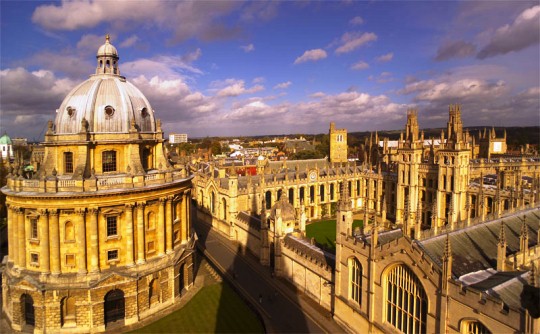
Brian Khor will read Physics in University of Oxford- the city of dreaming spires
UCAS Personal Statement
For my personal statement, I mainly wrote about my passion in Physics and what the aspects in physics that excite me are. I think the most important message for prospective applicants to include in their personal statements is to demonstrate their interest for the course they are applying to. Do take note that literally writing down “I’m interested in Physics” and demonstrating passion in your personal statement can be two different things.
Read around your subject and discuss them in your personal statement
My personal statement utilized a few aspects to demonstrate my passion and aptitude for Physics. I wrote about how my interest in Physics started when I watched MIT Physics lectures and how those counter-intuitive and cool demos by Professor Walter Lewin challenged my intuition and imagination about the world around me. (You’ll probably want to watch his demos as they are simply mind blowing!)
I went on to write a bit more about my leisure readings related to Physics outside of standard school syllabus, and discussed a bit on “The Fabric of the Cosmos” (semi-academic book by Brian Greene, intended to spread ideas like quantum mechanics to the layman audience) and how this book stirred my curiosity and led me to keep questioning everything around me.
The next thing I wrote about was my involvement in Science and Maths-related activities and achievements, and how these experiences convinced me that Physics is the right thing for me to pursue at the Undergraduate level and beyond (I aspire to be a research physicist one day). I mentioned Mathematics competitions, and how solving those “unusual” problems compared to problems in standard school curriculum sharpened my creativity, and changed my perspective about problem-solving in general. My involvements in the Math Club and peer tutoring programs were my channels to spread my passion and love for Physics and Mathematics to peers around me.
While I think this is optional, applicants perhaps can include activities not related to their intended major, but care must be given not to write too much about, say, your achievements in football, to the extent that it strays from original purpose of the statement, which is to demonstrate passion for the course you are applying for.
To sum up, the UCAS personal statement is about one thing: showing your passion.
Admission Test
I wrote this part exclusively for application to Oxford. For most UK universities, submitting the UCAS online application is sufficient, but Oxbridge has written tests and interviews as part of their selection process. Engineering, Material Science and Physics applicants to Oxford will need to sit for the PAT (Physics Aptitude Test).
I sat for PAT in early November 2013. In preparation for it, my advice is somewhat generic: practice PAT-style problems (from past PAT papers or British Physics Olympiad (BPhO) AS Challenge Problems)
*Note: Just a bit of extra info, the Oxford Physics Department is responsible for selecting British students to represent the country for IPhO at the international level. Thus, they set national level Physics Olympiad problems and the ‘flavor’ of BPhO AS Challenge problems are very similar to what you’ll expect for PAT*
As for the level of physics you need, I will advise those who have not attained enough prerequisite knowledge to do some self study before the test (sufficient level of preparation for physics is up to core syllabus of A2 Physics for Cambridge A Level). For the maths part of PAT, you need to know your AS level Mathematics as well as how to solve some probably unusual problems.
So, the best way to prepare is: practice.
Interviews
Here comes the part of the application process that I enjoyed the most: the Oxford Physics Interviews (and probably the most important part in your application).
For those who have achieved a passing score for PAT (Oxford shortlists from over 1100+ physics applicants to about 500 applicants for interview, and you can refer to Oxford Physics admission statistics for further info), you’ll be emailed and called for interview(s). For those who have arrived in this stage, well done, and reward yourself with some cookies!
Here are some general interview advice for Oxford interviews. I will also be pinning down the details of my personal experience for Oxford interviews.
General Interview Tips
Here are a few personal qualities that are important:
Demonstrating passion and clarity of thoughts. Essentially, you will need to show that you’re really excited about the course that you’ll be studying at university. While the personal statement is a way to show passion, I think it’s also important to show that you love your course and to show that you’ll be able to think critically about your subject through the interview. During the interview, a great way to break the awkward silence is by thinking aloud, presenting your thought process, why you are arguing in the particular way, and how you arrive at the conclusion. Ultimately, the interviewers are not interested whether you arrive at the correct solutions. Instead, they are more interested in your thought process, and the way you build up your arguments and reasoning. Also, speak out any assumptions that you’ve made in your reasoning.
Potential. During the interview, it’s much more important for you to show your potential than to tell them your achievements thus far (you’ve probably included your achievements in your personal statement so it’s best probably not to duplicate information while wasting your interview time). The tutors and interviewers are more concerned about how much you can grow and learn from them than how much you have achieved, which leads me to the next point.
Being teachable is really, really important. The interview is actually very similar to how tutorials are conducted at Oxford, so the tutors are essentially choosing the students they will love to teach for the next 3 or 4 years. If you enjoy the interview, you will probably enjoy the next 3 to 4 years of intellectual conversations with your tutor at Oxford. I treated my Oxford interview as an opportunity to learn Physics from world class physicists, and that alleviated my nerves and kept me excited before the interview. Of course, you must be able to communicate your ideas clearly, and don’t be shy to ask for hints in the case that you’re stuck.
Don’t freak out if you are unable to answer interview questions. Oxford interviews are meant to push students beyond their limits and boundaries, so that the tutors can assess the potential of the students and to what extent students can be stretched. This is what the tutors actually aim to do, to see how far students can handle unfamiliar scenarios.
Brian Khor Jia Jiunn, a National Scholarship holder and an aspiring physicist is one step to achieving his dreams by pursuing Physics in the University of Oxford (did you know that Stephen Hawking was from Oxford too?). With his immeasurable passion, he will definitely go far in the field and be part of ground-breaking findings.
How did you approach your search for the right uni? How did you organise your university prospects?
I always assumed I was going to the UK, as it was the easiest and most direct for me financially and logistically. I went to a few different UK university fairs to look at what the universities had to offer pertaining to my interests, and from all the information I got, I organized them into the ones most applicable to my needs, into 5 universities.
What were your criterias when choosing your universities?
I was looking towards doing something related to journalism, be it literary or multimedia journalism. I looked at the reputation each university had on the specific course. For example while Derby is not particularly ranked high nationwide in the UK, it has specialized courses relating to journalism, while Kent, a university ranked higher, is not well known for journalism. I am already familiar with the education system and the living aspects of the UK, so that was one thing welcoming me there.
How did you finally decide on the uni you are attending?
I thought later on that focusing on only the UK was limiting my chances, so I decided to look into two other countries, Singapore and Australia. The living costs and the competitive nature of both countries turned me off, along with the lack of opportunity to explore a completely new society. I only ended up with Canada, and the University of British Columbia (UBC), due to them having a presence at my school. In the end, after looking further into UBC, its the only other university I applied to outside the UK.
Did you face any difficulties during your decision process for choosing unis?
My parents’ only problem with Canada was its distance and cost. The costs were quite high initially, but lessen over time. Of course, the university’s reputation and the country itself convinced my parents that UBC was a better choice than the other universities in the UK I got accepted into.
What were your expectations like for entering your dream uni? Did you have any back up schools?
My insurance choices were in the UK, and expectations were achievable for me. I didn’t expect to get accepted into UBC, due to how they compare to my UK choices. UBC is heaps better than the UK choices. Being accepted was a relief for me, to say the least.
What was your game plan to enhance your admission chances?
I had no game plan, honestly. I simply applied to anywhere that appealed to me and pick the best of the bunch.
Do you think you chose the right university?
UBC is no doubt the right university for me. No regrets whatsoever.
He may not sound like it, but Syed Mustafa can be quite creative with words when the need arises. You might just stumble upon this guy who will be pursuing the Bachelor of Arts in the University of British Columbia on the streets of Vancouver with some weird camera taking photos, and if you’re lucky, he’ll take a picture of you too!











 CollegeLAH