Natural Sciences in the University of Cambridge

http://www.youtube.com/watch?v=-l1mNRarrE8#t=54

Image Source

Before you start reading about my experience, I do have a reminder. Personally, I think that some parts of my experience should be an example of what NOT to do throughout the application process, as opposed to what you SHOULD do or CAN do.

CHOOSING A COURSE

Many students have a problem deciding what to study because they are not sure if they are suitable for that particular course or if they are interested in that field. I myself had a hard time trying to decide which course to study. My decision to study Natural Sciences in the University of Cambridge was actually a last-minute decision. Before I made my final decision, I talked to two of my lecturers who did similar courses to the ones that I was interested in and also had discussions with my dad. From those conversations, I understood more about those courses, including: in-depth information about the course outline and content (which may or may not be available in the university website), the obstacles I may face as a student in that particular course, the job opportunities available for a fresh graduate and a rough idea of the expectations of employers. I finally made up my mind and decided to go for Biochemistry.

My suggestion is:

If you really do not know which course to do, you’d first have to figure out exactly what your interest is and shortlist a few courses that you will have the passion to study for the next 3 or 4 years. Then, gather information and understand more about these courses (the university website and brochures will be a great help). Up to this point, if you still cannot make a decision, try talking to a senior or a teacher/lecturer who studied the course and has personal experiences. This helps a lot in determining if you are suitable for that particular course, especially if that person knows your potential really well. Of course, you have to keep this in mind at all times:

YOU ARE THE ONE WHO MAKES THE ULTIMATE DECISION.

No one can make that decision for you because that is your future that we are talking about.

UCAS APPLICATION

Before I continue with my own experience, I would like to share a friend’s case. He applied for two different but similar courses in the same university in his UCAS application, which means out of the 5 university options, 2 of them were the same university but different degrees. You can only upload ONE personal statement so if anyone of you decides to follow his path, make sure that you seek advice before you do so (the counsellors from MABECS are very helpful). You wouldn’t want to simply waste a chance, would you?

My UCAS application was rather easy, credits to Taylor’s College Placement Centre. The most difficult and tedious part was definitely my personal statement (PS). Now please be aware that this is one of the parts where future applicants should NEVER EVER FOLLOW. As I mentioned earlier, my decision to apply for Natural Sciences in Cambridge was a late decision. When I started looking into application deadlines, it was about two or three weeks from Taylor’s College’s internal deadline for Cambridge applications. I had not even started writing my PS at that time, and I totally freaked out. So PLEASE DO NOT LET THIS HAPPEN TO YOU.

I wrote about applying for Biochemistry in my PS since I plan to choose Biochemistry as a specialism for my Cambridge Natural Sciences degree. For my first PS draft, I followed the guidelines provided in the UCAS website as I had no idea where to start. (UCAS PS guide: ) I emphasized a lot on ECA and personal qualities, and only mentioned a bit about my passion in Biochemistry and how I maintained it. Until today I cannot forget what the counsellor from MABECS said to me after reading my first draft:

‘Dear, your PS is actually very good and strong for all the universities, except Oxbridge.’

She gave me some ideas on how to change and restructure my PS. Her advice was:

  1.       Shorten the part on my ECA and personal qualities;
  2.       Elaborate on my passion in Biochemistry;
  3.       Apart from telling them how I enjoy science and its classes, I have to show that I am doing extra work outside of class that relates to my interest in Biochemistry, such as participation in activities and most importantly, extra RESEARCH (reading scientific journals for example). That is extremely important as the university wants to see that you are doing extra work in keeping up with your passion (She said something like that; I don’t remember the counsellor’s exact words).

Those were basically the guidelines for my following PS drafts. Every time I corrected my PS, I sent it to MABECS, my dad and a few of my lecturers for checking and advice. After I had my PS done, I moved onto completing the application details and submitting my application.

And just to mention a bit about English qualifications, I did not include any other English qualifications like IELTS or TOEFL in my UCAS application. All I mentioned was my English 1119 result. I decided not to take the IELTS test until I received my conditional offer (CO) as my college counsellor mentioned that if the university wants me to have other English qualifications besides English 1119, they will state it as a condition in my CO and it will not be too late to sit for the test then. What matters the most at that point were my results, forecasts, testimonials and so on. It turned out that in my CO they did not require me to sit for other English qualifications.

Suggestions:

Always keep track of application deadlines and spend more time on your PS (I am an EXTREMELY BAD EXAMPLE in this case). If you do not know where to start, refer to the general writing guidelines provided in the UCAS website. Get different people to read your PS (they can be counsellors from MABECS, your teachers/lecturers, parents, seniors etc.). They can give ideas about how to improve your PS and correct any possible grammar mistakes (there must be zero/minimal grammar mistakes in your PS). And the golden rule: it must be YOUR OWN WORDS. Don’t even think about copying a single sentence or phrase from other sources, that is the biggest taboo. Also, avoid referring to other applicants’ PS if you’re worried that you might copy their ideas or sentences unknowingly.

As for the application details, I think it will be good to go through it first and find out what information/additional documents you may require. You can complete the online application form within a day if you have those information ready. Before submitting your application, you can ask a counsellor from your college to check your application details, just in case there are any mistakes (that was what I did).

COPA and SAQ

All Malaysian Cambridge applicants are required to complete the COPA after submitting their UCAS applications. COPA is similar to the UCAS application, but it has additional questions which are not included in the UCAS application, such as your financial sources, extra PS etc. I mostly wrote about my ECA achievements that I did not include in my PS, and talked about my ambitions in detail.

Also, you are required to explain why you chose to apply to that particular Cambridge college in your COPA, unless you put in an open application. So here’s the second BAD EXAMPLE from me. Last-minute decision meant that I didn’t really have much time to research on the colleges. Of course, I did look into the colleges in Cambridge earlier before I had that dilemma of choosing a degree, but that was more of a general understanding rather than in-depth research. So when I read more about the colleges within that limited time, I couldn’t decide which college I prefer. In the end, I put in an open application. Of course, I was very lucky as I was allocated to a college which I think has great facilities and tutors (and location too), but it will definitely be good if future applicants can choose a college. Even if you are not accepted by that college, you still have a chance to enter winter pool.

And another tip for completing the COPA: although there are some questions that are not compulsory to answer, it is advisable that you try your best to answer every relevant question. Therefore, spend some time completing the COPA as it is slightly different from normal application forms. In a way, I thought that it actually felt like writing a second personal statement. So do not rush over the COPA, as it obviously plays a significant role in your application to Cambridge. And same rule – try to ask someone to check it before submitting it. You definitely do not want any unnecessary mistakes.

As for the SAQ, Malaysian applicants are required to submit it, but technically there is nothing that you need to do. All you have to do is provide your COPA reference number (or something like that), which is given to you after you submit your COPA. Also, you are required to submit your High School Transcripts – a certified copy of your SPM certificate (if you sat for the SPM), both the original copy and a translated copy. You can get the translation template from your college counsellor if possible (Taylor’s students can get it from Placement Centre). Or if you want you can drop me an email at nicole_shujing@hotmail.com and ask for it.

INTERVIEW

Cambridge conducts one-to-one interviews in Malaysia, so most Malaysian applicants are interviewed here as long as you put your preferred interview location as Malaysia (although some colleges do require you to go to Cambridge for the interview, it really depends). As a matter of fact, I got to know that Cambridge tries their best to interview as many applicants as possible, so every applicant has a high chance of being invited to an interview. Although the email regarding the interview is only received a few weeks before the interview, you can still properly utilize that two to three months to prepare for your interview. Continue ALL the extra research that you’re doing and if possible, start new ones too. For those two months before my interview, I continued reading journals and news articles and watched documentaries on Youtube.

Cambridge interviews are fully academic-based, I will say. Before going for the interview, you have to be very familiar with your current syllabus and you will have an advantage if you have extra knowledge or more in-depth understanding of what is not in your syllabus. Like many have said, the interviewer tends to push you to your limits and ask you questions that may be out of your syllabus, but don’t worry, it’s totally normal. I believe that what the interviewer wants is to see the potential in you, to determine if you are suitable for the tough academic system and syllabus in Cambridge. If you really get stuck and fail to answer the question, just tell the interviewer that you do not know the answer and they will guide you from there. And another tip, if you’re unsure about the question, ask the interviewer to repeat the question. Don’t simply say something that is not what the interviewer is asking for. The interviewer may give extra explanations about the question, so feel free to ask the interviewer if there’s anything that you want to know or would like further clarification on. What’s most important is to try to calm down during the interview and give it your best shot. It doesn’t matter if you can’t answer the questions, you might still pass. Oh yes, and about dress codes. Even though they mentioned that you can wear whatever you are comfortable with for the interview, I think you should dress smart and comfortable. It is still an INTERVIEW.

I was lucky as my interview was dated a day or two after my Biology and Chemistry papers, so whatever I had to know was still fresh in my mind. I did go through the topics that my lecturer covered for A2 syllabus, just in case. My interviewer, Dr. Richard Barnes started the interview with a simple self-introduction and briefly explained how that interview was going to be like. He then asked me to introduce myself, followed by some general questions like my studies and interests, along with a question or two regarding what I wrote about my future plans and ambitions in my PS.

Then the ‘real’ interview began. Since I was still at AS Level during the time of the interview, Dr.Barnes assured me that he will give questions accordingly. I can’t remember the exact questions that Dr.Barnes asked, so these are only based on my memory. He started with a question about organic compounds. He gave me a molecular formula and asked me to draw the displayed formulas of all the isomers. That was where Dr.Barnes started to push me to my limits. Ether was one of the isomers, but it is not included in both AS and A2 syllabus. I still managed to list out all the isomers, including ether, thanks to my Chemistry lecturer for his detailed explanations in class and his patience towards all my annoying Chemistry questions.

Then Dr Barnes continued with a question about alcohol. If I remember correctly, a few of the isomers are alcohols, and from that he asked questions about the oxidation of each of alcohol, chemical reactions involving alcohol, testing methods etc. I do remember him asking about the methods to test for aldehydes though, because I remember giving answers about the changes and observations using 2,4-DNPH, Tollens’ reagent and Fehling’s solution. Dr.Barnes even replied me by saying ‘I would prefer using Tollens’ reagent,’ in a light tone. So as you can see, the interviewers are actually really nice and try to make the atmosphere more comfortable for the applicants.

Dr.Barnes continued with a question about esterification. That was the point where he started to link Chemistry with Biology (just a reminder, in my PS I wrote about applying for Biochemistry). He started asking questions about triglycerides and the importance of triglycerides in the human body. From triglycerides, he extended the question to phospholipids, and asked about roles of phospholipids in cell surface membranes. He then discussed with me the fluid mosaic model. I got stuck at some parts when I was answering the questions, especially when he asked me to derive and draw the displayed formula of an organic compound that I have never learned before, but Dr.Barnes gave me tips and guided me when I had trouble answering his questions. He even showed me how to start the displayed formula and let me continue from there.

Overall, I managed to answer all the questions given by Dr.Barnes, once again thanks to my Chemistry and Biology lecturers’ patience towards all my weird questions. My interview ended in about 20 minutes, and frankly speaking it actually felt like it was less than 20 minutes. I guess it was because I totally enjoyed the interview, although I thought it was more like a lesson or an academic discussion with a really experienced person. It was not a typical one-sided interview where he asked questions and I answered them. I did ask for some clarifications about the new organic compound that I learnt, though I don’t remember what it was. I was very nervous when I first entered the interview room, which was a lecture theatre, but as the interview went on I felt more relaxed and comfortable since Dr.Barnes was very nice and acted more like a lecturer than an interviewer. Of course, I did bring in something that always calms me when I’m nervous – my jacket.

WRITTEN TEST

My written test was two days after my interview. I sat for the TSA test, which consists of two parts. The first part consisted of multiple choice questions about logical thinking. They were mainly on relating evidence, calculations and so on. I found that part quite easy since I took AS Level Thinking Skills in college, and the question styles were quite similar. I did not finish all the questions and simply guessed the answers for the remaining four or five questions, but the invigilators said that it is OK if you cannot finish all the questions, just make sure that you do not leave any BLANK ANSWERS. To prepare for this part, I did the sample paper provided (I think there is a link to download it), and also did some past year Thinking Skills Paper 1.

The second part was an essay question, where we had to choose a question from a list of questions given according to the course that we applied for. I chose the question about the importance of water in life, and just wrote down everything that popped up in my mind. I wrote about the role of water in regulation, cell content, the importance of water to plants, water as habitats etc. My essay was approximately one and a half to two pages long. There’s really not much advice that I can give about the essay questions, as it really depends on what course you apply for and you can’t predict the questions. So I think just treat it like the exams you sit for in school and try your best.

After the application process, interview and written test, all you have to do is wait for the college’s reply. I got my CO some time in early or mid-January 2014, before my AS results were released.

OK, that is all that I can share with whoever is reading this article. Thank you for your time and effort in reading this long article, I hope that my experience can help you and somehow reduce your fear of applying to top ranking universities. If you really want to study in these top ranking universities, don’t worry too much and just give it a shot. Who knows? You might just be the one that the university is looking for, and there’s no harm in trying. That’s what my principal, Ms. Lauren always says. And last but not least, ALL THE BEST TO YOU GUYS 😀 !!


Nicole Chung

Chung Shujing will be pursuing a degree in Natural Sciences in the University of Cambridge. She loves going on vacations, and is crazily in love with the Eiffel Tower. You may contact her at nicole_shujing@hotmail.com

Chemical Engineering Personal Statement (Anonymous 1)

This Engineering Personal Statement was part of this student’s successful application to the University of Cambridge, University College London, University of Bath and University of Manchester for Chemical Engineering.


Wastewater with high COD and BOD are the main factors in water pollution in industrial areas. My concerns about water pollution were accelerated when I saw how waste was directly drained into rivers, without any treatment, during my internship as a QA Chemist. Besides the use of instruments such as a FTIR and a Dynamic Rheometer to examine the performance of products based on AATCC and ISO standards, I designed a water treatment system using activated carbon as a catalyst, leading the pigments and organic contaminants to chemically bind to its active sites,which successfully reduced the COD of the industrial wastewater by 170mg/L. I have always been fascinated by how pollution affects our environment. When I was offered an unbonded scholarship by the Central Bank I was certain I wanted to study Chemical Engineering so that I could, one day, contribute to R & D in this field.

In my research into how to reduce water pollution in Malaysia, I investigated water treatment systems in the palm oil industry. The article ‘Review of Palm Oil Mill Effluent (POME) treatment’ by Y.L. Ling was surprising as I found out that 85% of POME, the major pollutant, is treated using an anaerobic lagoon system that takes months to break down into methane which then contributes to global warming. Intrigued, I decided to search for alternative methods; ‘Energy for a Sustainable World’ by Armaroli et al impressed upon me the advantages of a hydrogen economy; if POME could be broken into hydrogen directly, the effect of global warming would be reduced. I applied my knowledge of science to modify the current lagoon system into three reactors; the first reactor for the hydrolysis process; the second reactor, a Continuous Stirred Tank Type Bioreactor for acidogenenesis and acetogenesis; the third reactor, an Up-Flow Anaerobic Sludge Blanket for the methanogenesis process. The hydrogen, together with the methane from the methanogenesis, could generate electricity via combustion. However, carbon dioxide is produced from methane’s combustion. Therefore, I started to investigate carbon capture and sequestration technology. I was excited to find out that carbon dioxide can be absorbed electrochemically by amine or by the coelectrolysis of water and carbon dioxide into Syngas. Discussing this idea with Dr Muriciano, from the Chemical Engineering Department of the University of Bath, she confirmed that these experiments can be done but would be expensive.

I took part in several national competitions, achieving a high distinction in the National Chemistry and ICAS competitions, improving my analytical skills, application of scientific knowledge, and critical thinking. I love reading about science and recently read ‘Why things break’ by M. Eberhart. I was fascinated by the theories of material science and aspire to be a researcher.

I am involved in many clubs. As President of the Consumers’ Club, I strengthened my management skills and successfully organised a Green campaign, making and selling recycled bags. The club won the Best Club Award from the Ministry of Education, Malaysia. Working in a team, I initiated a new Maths Club and I enjoyed guiding juniors to solve maths problems. Being President of the Science Innovation Society, I have had fun presenting my ideas on how to construct products like cooling pads and solar cookers. My leadership skills have further developed through my role as a Prefect which has taught me to cope with challenging situations and to make the right decisions. As a member of Tzu Chi, a charitable group, I have helped raise RM5000 for poor farmers in rural areas of Myanmar. It was very heart-warming to receive appreciation letters from them.

Demand is inevitable but waste is optional. I believe POME or other wastes can be re-
treated to be a source of energy to replace the demand for oil and gas in the future. To help me achieve this goal, I am focused on pursuing a Chemical Engineering degree at a prestigious UK university.


DISCLAIMER: The personal statements on this site are strictly meant as a starting point to give an idea of how successful personal statements look like. There is no surefire formula to writing good personal statements. COLLEGELAH IS STRICTLY AGAINST PLAGIARISM OF ANY KIND. UCAS employs a plagiarism check system that checks applicants’ work against other published writing so please DO NOT PLAGIARISE.

Can I apply for early action and regular decision at US colleges?

Q:

For US uni applications, are we allowed to apply for both early action and regular decision for the same college? If I am rejected in the early action pool, can i still apply for regular decision?

A:

Do take note that not many universities offer early action as compared to early decision, so you would have to check with the universities about that. And also make sure to check if it’s ‘restrictive’ or ‘single-choice’ early action meaning that you can only apply to one university with early action. For example, Yale and Stanford offer single-choice early action, whereas UChicago has an open policy on early action.

In answer to your question, that again depends on the universities’ admission policy. Some universities will not reconsider rejected early action applicants at all during the regular decision process in the same year, while some universities will automatically defer rejected applicants into the regular decision pile so you will not have to resubmit your application (you may be allowed to submit additional supplementary documents though), or some may even have both possibilities. In any case, do check the website of the university you intend to apply to for the most accurate information, and do not hesitate to email them if you have any queries! 🙂

Answered by: Teh Wen Wen is a rising freshman at Johns Hopkins University who finds comfort in wearing her egg doodle covered socks around her house.

Applying to Chemical Engineering at Imperial College London (Part 2)

http://university.which.co.uk/imperial-college-london-i50
Imperial College London’s Carbon Capture Plant – the centre of its Chemical Engineering Department

Physical Interview

If you do not receive the interview invitation by the end of February, your application can be considered unsuccessful. The admission tutor will interview all short-listed applicants in KL within a few days in the middle of March. One of the good things about this interview is that you don’t have to pay for it, and that it is held in a 5-star hotel. I had my interview on the 13th of March 2014 at Traders Hotel Kuala Lumpur.

Well, it’s normal to feel stressed before an interview, but don’t you worry my peers! The interview was not that tense and awkward, and it turned out to be a nice one-to-one conversation with the admission tutor. My admission tutor was a very friendly guy! The purpose of this interview is for the admission tutor to further learn about your passion, motivation, potential and ability to succeed in the Chemical Engineering course on top of his prior understanding of you from your personal statement.

You are encouraged to do some research/reading to prepare for the interview, but that doesn’t mean that you have to memorise everything. It’s important that you research on what really interests you, so that you can express your ideas naturally and fluently.

Preparations for interview:

  • Read your personal statement and clearly understand what you have written in order to avoid any conflict of ideas between what you have written in your Personal Statement (PS) and what you say during interview.
  • Do further reading/research on things that you have written in your PS – for example, in your PS, you’ve written that you aspire to find alternative sources of energy to replace fossil fuels one day. In this case, you could possibly research on those “alternative sources” that you would like to look for, be it biodiesel or solar energy, and how will they be practical in Malaysia. You may not have to go into too much depth (but if you want to, why not?) on what you have researched on, but make sure that you will be able to express your ideas fluently from what you have read. I encourage this because when you tell the interviewer about your career aspirations (or any other topics), you will have more things to talk about, rather than just repeating the sentences you’ve written in your PS.
  • Make sure you know what “Chemical Engineering” is.
  • Try to think of anything not mentioned in PS that expresses your passion for the course, in order to enhance your admission chances.
  • Be sure of your future career prospects, but if you’re not, at least have a rough idea for the period of interview. You need to show that you are really into a ChemEng-related field during the interview – passionate and motivated. Do research on the jobs, companies, and what you can do with a ChemEng degree. During the interview, tell the interviewer firmly that “I want to work in the XXXX field very much, particularly with company B so that I can be involved in R&D to find alternative sources of energy and blah blah blah…”
  • Do revision for A Levels (or other Pre-U qualifications) Mathematics, Chemistry and Physics.
  • Have a good read of Imperial’s Department of Chemical Engineering’s website and other related Imperial websites. (links given at the end of this article)
  • Watch Imperial’s admission info video (link given at the end of this article)
  • Kacau your seniors/friends who got into Imperial ChemEng for tips! Haha

Tips during interview:

  • Arrive at the venue earlier; mingle with the other applicants to ease your nervousness (perhaps they will share their tips with you). This also gives you sufficient time for some final preparation before the interview.
  • Wear appropriate formal and polite attire – it does not have to be too formal (e.g. tie and coat), but it’s up to you, as long as you feel comfortable. I wore a buttoned formal shirt (without tie), slack pants and leather shoes.
  • My interviewer was very friendly, so do not feel stress and panic, just take it as a normal conversation with a friend.
  • Do not feel shy to ask for hints if you are stuck at certain questions – they love “teach-able” and humble students.
  • Turn the interview session into a discussion – don’t just answer the interviewer’s questions, try to ask your own questions when appropriate, and pay attention to him/her.
  • When you are answering the interviewer’s questions, don’t just give short & brief answers; elaborate on your answers as well, and mention more related topics or issues.
  • Also, body language is very important! Sway your hands or head maybe?
  • Perhaps you could try googling “interview tips” to find more general tips for interviews.

Questions that I was asked during the interview:

1. How are you?

2. Where are you from? How did you travel here (the interview venue)?

3. Which school are you from?

4. What have you been doing after graduating from the A Levels? (FYI, I took my A2 in Nov 2013)

5. We then discussed about the haze in KL in March 2014.

I thought the interviewer should have known, but he asked me WHY the haze was so serious in KL. So I answered that it was due to the burning of forests in Indonesia, with the wind subsequently blowing the dust particles to West Malaysia. (So knowing some current issues might be good for you, because I think it’s not sensible to say: “I don’t know”)

6. Why do you want to read Chemical Engineering in university?

  • Sounds like a lame question huh? But you will have to answer it – not just repeating the lines you wrote in your PS! Tell the interviewer more even though it’s not asked. Like what I mentioned above about further reading/research, this is where you are gonna impress the interviewer!
  • For this question, I answered the interviewer based on what triggered my interest with ChemEng, why I wanted to study ChemEng, explained that I wanted to work in Oil & Gas field, how I want to produce petroleum with lower sulphur content, and that I want to find alternative sources of energy. (this is just a summary, in reality I elaborated more)
  • During this part, as I was speaking, the interviewer stopped me at a few parts, and asked me questions based on what I have said.
  • For example, he asked why I want to produce petroleum with lower sulphur content, doesn’t the current technology already produce petroleum with low sulphur content enough? I then told him about my findings regarding oxidative desulphurization and hydrodesulphurization which are currently being used in industries and it will be better if I can create another process which is able to greater reduce sulphur content in petroleum to minimise the acid rain problem …. ….
  • Another example, at the energy part, initially I only talked about biodiesel, but then he asked me about the potential of having other alternative sources of energy in Malaysia.. I then talked about solar energy and hydroelectric energy – how they are practical in Malaysia, their advantages and disadvantages.
  • So, some readings, common sense and background knowledge could be helpful when interviewer asks you unexpected questions.

7. Here comes the Mathematics question after a round of rigorous discussion with the interviewer:

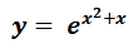
Differentiate the following function using 2 different methods:

Screen Shot 2014-08-23 at 10.49.09 AM

Not a hard question if you have studied A2 Mathematics differentiation. I had to demonstrate my workings on a paper to him. While solving the question, try to explain your workings to the interviewer (hence, interaction!). Not going to type out the workings here, so do it yourself!

8. Chemistry question:

The interviewer showed me the following simple graph:

Screen Shot 2014-08-22 at 10.05.31 PM

And then he asked me a few questions:

  • Why the concentration of reactant becomes constant after reaching a certain point? Give 2 reasons.
  • What will happen to the shape of the graph if the temperature of the reaction  is increased? Will the graph reach plateau at the same concentration? Why? Sketch the new curve on the graph above.
  • What is the effect of increasing the reacting pressure on the rate of reaction if the reactant is liquid? How about if the reactant is gas? Why?

I had to explain the answers to the interviewer verbally (in addition to sketching the curve on paper). So you have to be knowledgeable on the topic and explain all your reasoning to the interviewer. If you happened to say some wrong answers, just apologize: “I’m sorry that I made a mistake just now, and it should be ….” The interviewer might stop you while you’re speaking, to question your answers, but if you’re confident that you’re right, then just be confident! If I was not wrong, this is AS Level Chemistry.

Everyone got different mathematics and science questions during the interview. The above were the questions I got, and luckily they weren’t too hard for me.

9. What do you expect from studying at Imperial?

10. Why choose Chemical Engineering at Imperial?

11. What do you think about the academic modules of Imperial Chemical Engineering course? What is its uniqueness compared to other universities’?

Well, to answer questions 9 – 11, you need to do some reading on the website of Imperial’s Chemical Engineering Department, and also other related Imperial websites such as the “Life at Imperial” (like what I mentioned in the Preparation part above). After answering question 11, here comes the question 12.

12. From where you learnt about those information?

I then answered Imperial’s website.

13. How did you know that what mentioned in Imperial’s website is true? Perhaps we lied about certain things.

Well for this question I just said that I also read some other educational forums such as the Student Room so that I can see the corroboration.

14. How will you fund your studies at Imperial, if you’re selected?

15. What is the probability of you coming to Imperial, if you’re selected?

The interviewer will request you to bring along a copy of your most recent results in the interview invitation email. The perks of this interview experience was: the admission tutor told me he would make me an offer right after the interview!! However, the official offer came 2 weeks later.

So this is my Imperial ChemEng interview experience this year, but I have no guarantees that things and questions will be the same in the following years. Overall, I hope I gave you a picture of how a Imperial ChemEng interview would be like. Nothing too stressful right? Haha 😀

Conclusion

I wish you all the best in applying to Imperial ChemEng! Hope to see you in Imperial next year!

If you are selected for the interview, it means that the admission tutor is satisfied with your actual or forecasted results and personal statement, and likewise, everyone has bombastic results, so the key to success is your interview!

Work hard to get good grades in your actual or forecasted results. You might just need to work way harder if you get the conditional offer – a few of my friends got a bloody condition of A* for all subjects (but this depends on the applicants’ ability every application cycle and might differ from year to year). I obtained my actual A2 results before the offer came in, so my offer didn’t come with any condition for grades.

Links which you may find useful: 

  1. Imperial Chemical Engineering Department- http://www3.imperial.ac.uk/chemicalengineering
  2.  Imperial Chemical Engineering Course Information-http://www3.imperial.ac.uk/ugprospectus/facultiesanddepartments/chemicalengineering/chemengcourse
  3. Imperial Chemical Engineering Entry Requirement- http://www3.imperial.ac.uk/ugprospectus/facultiesanddepartments/chemicalengineering/entryrequirements
  4.  Life in Imperial- http://www3.imperial.ac.uk/campus_life
  5.  Admission – What Imperial is looking for- http://youtu.be/TX5cW-mb8gY
VIEW PART 1 HERE!

Kian Woon copy

Chen Kian Woon is a high achiever who will be pursuing his Chemical Engineering degree at Imperial College London, UK under the Public Service Department (JPA) Scholarship. He loves travelling and now he can’t wait to travel around the beautiful Europe in the next 4 years! One of the most insane things he did in life was not taking the Petronas Scholarship offer to study in Australia, and hence, he is writing this article for you guys today!

Applying to Chemical Engineering at Imperial College London (Part 1)

http://university.which.co.uk/imperial-college-london-i50
The ABB Control Room – the centre of Imperial Chemical Engineering Department’s Carbon Capture Plant

Image Source

About me

Hello people! I’m Kian Woon from Johor Bahru! I’ll be heading to Imperial College London this October to read Chemical Engineering.

I studied at Sekolah Menengah Sains Muar prior to studying Cambridge A-Levels at Taylor’s College Subang Jaya. In 2012, I was offered the PETRONAS Scholarship to read Chemical Engineering in Australia. However, I was determined to study in the UK, so I chose the risky MOE Bursary + JPA Scholarship pathway instead.  Eventually, this choice was worth it afterall as I managed to get into Imperial! (Yay! Hahaha)

I love travelling and now I can’t wait to travel around the beautiful Europe during my next 4 years in the UK!

The application process

Overall, my application process to Imperial ChemEng wasn’t the most troublesome one, but it was quite a ride with lots of waiting, anticipation, nervousness but in the end, happiness.

Why did it involve lots of waiting? Because:

  • Mid-August 2013 – I submitted my UCAS application
  • End-December 2013 – Imperial informed me to wait for an interview invitation
  • Mid-February 2014 – I received an interview invitation
  • Mid-March 2014 – Interview
  • 31st March 2014 – I received my offer (Like finally >.<)

Imperial ChemEng is among the most competitive courses to apply for. Unlike other Engineering courses in Imperial, the admission tutor will short-list applicants for a face-to-face interview upon their submission of the UCAS application – Yes, the admission tutor will fly to Southeast Asia to interview us (I had my interview in KL, Malaysia).

In a nutshell, the application process consists of 2 parts: UCAS Application and the face-to-face interview.

UCAS Application

The UCAS Application is very important, because it determines whether you will be short-listed for the interview, and, of course, it will be evaluated when the admission tutor selects students for admission. There are several things about UCAS (other than personal details and such) that you have to pay attention to:

  • Achieved Grades:
    1. You will need to enter all your subjects and corresponding grades: SPM, AS, IELTS, A2 (if applicable) or other qualifications such as the IB Diploma if you’re not taking A Levels. Be honest.
    2. A Levels subject combination is important: Usually Mathematics, Chemistry, plus any 2 from Physics, Biology, Further Mathematics and Economics are good for ICL ChemEng.
  • Referee Report:
    1. The referee report is a recommendation letter that your mentor in your Pre-U college writes for you, in which they boast about how well you are, based on their understanding about you.
    2. You won’t be the one submitting this letter, as your college will submit it for you after you have submitted your UCAS application.
    3. Good referee report = good impression to the admission tutor.
  • Forecasted Grades:
    1. This will be sent alongside your referee report.
    2. Your subject lecturers will be able to show you your forecasted grades before your UCAS is submitted (If they don’t, you have to ask them!). So, you have to do well in tests and internal exams throughout Pre-U so that they can give you good forecasted grades.
    3. MAKE SURE that your forecasted grades meet the minimum entry requirement set by Imperial ChemEng (or any other universities that you are applying to).
    4. For instance, the minimum requirement set by Imperial ChemEng for A Levels is A*A*A or A*AAA, with A* in Mathematics. If your forecasted grades do not meet that, your application might be disadvantaged.
    5. In case your forecasted grades don’t meet the minimum requirement, try discussing/negotiating with your lecturers to give you better grades.
  • Personal Statement:
    1. Personal statement is where the admission tutors learn more about you beyond the grades and referee report. They want to know why you are interested in the course, your passion, your motivation to study the subject and your activities in high school/college.
    2. Bear in mind that there’s a 4000 characters limit (including spaces), so write your PS wisely and know your priorities.
    3. MAKE SURE to have your personal statement proofread/checked by friends and/or counsellors several times before submitting your UCAS application. This is important to improve your structure and reduce grammatical errors to minimum/zero.

How to Write A Personal Statement

I wrote my personal statement based on the following elements, and I think these are suitable for you even if you are writing a PS for other courses. However, this is not the sole way of writing a PS.

1. What triggered your interest in Chemical Engineering? (1st paragraph):

You may write this based on your daily observations and how those observations made you interested in studying Chemical Engineering – be it food, shampoo, petroleum, medicines, drinks, natural phenomena etc. Here’s an example:

Ever since I started learning Chemistry in secondary school, I have always read labels on products. From food wrappers up to ingredients list in detergents, none of them could escape from me. However, 8 out of 10 chemicals seemed unfamiliar to me. One such chemical is methylisothiazolinone in shampoo. I had this kind of weird habit simply because I am very interested to know how those things work and how those products are made. I even dreamt that one day I could involve myself in the manufacture of those products, especially petrochemical products such as petroleum and polyethylene terephthalate. As I grew up, I realised that I could actually have my dream come true by studying Chemical Engineering.

2. What did you do to further explore your interest and passion in ChemEng? And how did those explorations enhance your interest and passion in ChemEng? (2nd and 3rd paragraphs):

Some examples of things that you might ‘do’– do readings and research on Internet to learn more about ChemEng; read relevant books; attend talks; consult counsellors; enjoy creating experiments; read chemical labels of products; watch related documentaries; like and follow related pages on social media sites such as Facebook and Twitter; and perhaps gain an attachment with a current or ex-chemical engineer…. And the list goes on. Taking “research and reading on internet” as an example, you can then elaborate: my reading and research on the course has boosted my understanding and knowledge about what Chemical Engineering is, and I found that Chemical Engineering is really my “cup of tea”. I love the interesting topics in Chemical Engineering courses such as thermodynamics and separation processes…. …

3. Tell the admission tutors about the academics activities (preferably internationally well-known competitions/activities) that you’ve joined, the awards/recognitions you’ve achieved, and how those activities could contribute to your passion in ChemEng, in order to convince them that you could cope with the highly-demanding course in the future. This is also important for them to see your intellectual ability beyond exams. (4th paragraph):

Some examples of activity and award that can be includedyou obtained a Distinction in the UNSW Mathematics Competition; Distinction in UNSW Science Competition; Distinction in Euclid Mathematics Contest by University of Toronto; High Distinction in Malaysian National Chemistry Quiz; High Distinction in Australian Mathematics Competition; Top Student in the school… and the list goes on. Then, you could elaborate on how taking part in those competitions can help you, e.g. – enhance your knowledge in science and mathematics subjects so that you will be able to cope well in the ChemEng course later on; you found your passion with Sciences, Chemistry, Physics, Mathematics through those competitions and so you are confident that you’ll be in love and do well with Chemical Engineering!

4. Tell the admission tutors about the extra-curricular activities that you’ve joined, and how they contribute to your characteristics, personality and leadership qualities that make you a suitable person to read Chemical Engineering and thus be a successful chemical engineer in the future. (5th paragraph): You can talk about your leadership positions in clubs and societies, further elaborate your experiences and how those experiences prepared you to be a good engineer in the future. An example of text:

In college, it was my pleasure to be the President of the Squash Club and be a part of the Student Council. This enhanced my leadership skills and I learnt to collaborate well with the others to bring success to an event and appreciate the contributions from everyone, no matter how big or small. At the same time, joining the U.S.-Malaysia Young Leaders Summit 2013 boosted my confidence to be a better leader and communicate effectively with people around me. I firmly believe that good communication skills and appreciations of contributions are very important among a team of engineers to make a project successful!

Lastly, your future career aspiration! Tell the admission tutors about what you aspire to do upon getting a degree in Chemical Engineering. (6th paragraph): you can elaborate this in terms of the fields you’re interested in (e.g. Oil & Gas, Pharmaceutical, Manufacturing etc.); any big names that you would like to work with (e.g. Schlumberger, Halliburton, Baker Hughes, Shell, BP, Petronas etc.). Also, it would be great if you could talk about how you wish to contribute to the society/environment as a chemical engineer (e.g. research on producing petroleum with less sulphur content; finding alternative sources of energy; biomass etc.).

VIEW PART TWO HERE!

Kian Woon copy

Chen Kian Woon is a high achiever who will be pursuing his Chemical Engineering degree at Imperial College London, UK under the Public Service Department(JPA) Scholarship. He loves travelling and now he can’t wait to travel around the beautiful Europe in the next 4 years!  One of the most insane things he did in life was not taking the Petronas Scholarship offer to study in Australia, and hence, he is writing this article for you guys today!

What’s Next When Your Offer Turns Unconditional?

http://degreesearch.org/blog/packing-for-college-from-a-to-z/
What’s the A-Z list of what to do after receiving your unconditional offer?

Preparing For Uni?  Stop Stressing Out!

University is a big word. It is a big word because it carries so much determination, expectation and accomplishment with it wherever it goes. If you aim to go to university, then you probably know the feeling it evokes when you even think about it.

There’s stage 1, where all you do is think about it, it’s like a crush that never goes away. With stage 1, you continue to work hard to achieve the grades you need.  After that comes stage 2, which is when you actually get accepted to University.  This is the beginning of what seems like a never-ending preparation for 3 or 4 years of your life. It is, however, not as never-ending as it may seem at first. To put it into perspective, so many before you have done it, so why can’t you? Fret not, I’m here to help.


Step 1: A basic Google search

As the acceptance letter sits beautifully on your now very cluttered desk, you need to start finding out more about where you’re going. Of course, you will have (hopefully) already done this before you applied. However, there’s always something new to discover or learn about a place. I’ve been in Malaysia my whole life but it seems like there’s always a new spot in the city to hang out in. Start with the University itself, followed by an online exploration of the city that you’ll be living in. This includes the weather.

If you feel unsatisfied with a basic Google search, start making friends. Most Universities create Facebook groups and Twitter accounts. There are usually even Facebook groups for your on campus accommodation, if you choose to live on campus. This way, you get to meet or at least talk to some your fellow freshers. I have found that this is the best way to shake off a bit of the pre-University nerves. You get to meet loads of people that are in the same place as you which makes you feel less alone in this uphill battle. You might even get to meet some people that you may already know, or people that are flying off to university from the same country as you.

More often than not, these Facebook groups and Twitter accounts allow you to ask as many questions as you want about the university and the city. You’ll get current students answering your questions personally. So ask away – ask about the city, ask about the campus, ask about the best places to hang out in. As a student, sometimes the best answers comes from other students because they know what a student might be interested in. A travel website can tell you the best places to visit as a tourist, but a fellow student can tell you the best places to visit on a student budget.

Step 2: Getting Your Visa Done

The answer to your question is yes, it is stressful, but only if you don’t know where to start. Take it from me, you should ask the people who have already been through the process. There is a 100% chance that they will tell you that the process isn’t as stressful as it seems on paper. First, find the Visa websites for the country you’re going to and find out which type of Visa you will be needing.

If you’re planning on studying in the UK, you will most likely need a Tier 4 Visa. Here’s a website that will guide you out of the abyss and hopefully get you a successful Visa application – http://www.vfsglobal.co.uk/malaysia/. You can also ring Malaysian British Educational Cooperation Services (MABECS) and their consultants will answer all your queries regarding your UK Visa Applications. The contact details can be found HERE

Upon receiving your Confirmation of Acceptance for Studience (CAS) from your university, you will have to submit an online application. Fill in the online form, get a tuberculosis test done from the assigned centers (there is a specific list approved by the UKBA which can be found HERE), make an appointment with the Visa office and make sure you have all your documents. Last but not least, show up for your appointment on time! All of this is stated on the website given. After all that, you’re all set!

Step 3: Shopping & Packing

There’s a reason ‘check the weather’ is included in step 1. In order to go shopping, you need to know what to buy and what you already have. Otherwise, you will be spending loads of money on things that you probably won’t need. Keep track of weather forecasts so you know if you’ll need a jumper or a hat. Know yourself before you shop or pack. The golden rule of packing is asking yourself the following: “Am I going to shop there?” If you’re anything like me, you probably will. Aim to be financially and spatially savvy, do some research, ask around, compare the prices of clothing items in the country you’re in and in the country you’re going to. Chances are, super thick coats are probably more expensive in tropical Malaysia than freezing-cold England. You can also take it to another level and find out when all the sales are.

When packing, take a minute to explore your room and reevaluate your belongings. What do you really use and need on a daily basis? Is there ever a time that you’re going to need that particular thing? If not, then why bring it along? Remember, you are charged a whole lot of money for excess baggage. To ensure you’ve packed right, ask someone else to go through your luggage i.e your mother. They’ll probably nitpick and ask questions, and if you can’t answer why you need a particular item, then you don’t need it! And never ever choose last minute packing as an option – I did and I have regretted it since.

Lastly, weigh your luggage before you leave for the airport. Missing your flight and/or paying extra money is not a fun start for the long journey you have ahead of you.

Step 4: Flying Off

Before leaving for the airport, do the usual check your parents always do before a trip. Passport, travel documents, boarding pass, medication, cash, a book or two, gadgets. Make sure that you have everything you need before your journey. Make sure that you are at the airport at least 2 hours before your departure time.

Ultimately, begin your journey with a positive attitude and embrace the adventure. Even though for some it may seem purely academic, you’re still embarking on a new adventure every time you do something new.

And remember, university preparation doesn’t have to be stressful. So many others have done it before you and they’ve made it through. So, start Google-ing!


Hasmah
Siti Hasmah Charles Mok is an 18 year old adventure enthusiast. She will be  studying law at  the University of Sussex in Brighton. She’s obsessed with film, books, music and everything fashion. If you ever see her, do say hi!

Biology Personal Statement

This personal statement helped her gain admissions to pursue Natural Sciences in University of Cambridge and Biology in Imperial College London.


Infectious particles in blatant violation of the central dogma, propagating via a putative seeding-nucleation mechanism, in infectivity virus-like, yet in resistivity markedly dissimilar, prion proteins are fibrillary tangles of a confounding nature, arcane and unorthodox. Following a brief introduction to PrP through the “History of BSE in Britain”, my interest began to expand to include amyloid fibrils and its related pathological conditions.

The independent maturation of two different developmental pathways in metamorphosing marine creatures – whereupon pentaradial adults are formed from bipinnaria larvae – is astonishing, especially when both adopt radically different niches, as if they were of different species. I am particularly piqued by the life cycle of Luidia Sarsi, whose larvae lives on, unscathed, for a remarkable time period following the emergence of the juvenile starfish from the larvae.

Regular attendance of Royal Society lectures helped consolidate my interest in Science, “Understanding Epigenetics through Mathematics” by Terry Speed introduced me to the world in which events that occurred early in development may trigger a cascade of events that affects not only an individual, but also its offspring through such mechanisms as genomic imprinting, DNA methylation and histone deacetylation. A visit to Life Technologies, meanwhile, provided an insight to the manufacture of blood products such as the bovine serum and also of the preventive measures taken to avoid contamination. I learnt about the production of drugs, of the painstaking process of running through millions of promising molecules in the hope of producing a viable, effective drug through a visit to Douglas Pharmaceuticals and a talk by Margaret Bramble. At the Liggins Institute, meanwhile, I was given a chance to conduct the polymerase chain reaction.

My interest in Science is evident through the subjects I took for my A levels, notably, Biology, Physics and Mathematics, which are vital for the development of observational, analytical and deductive skills in order to perceive the “obvious things which nobody by any chance ever observes”, as noted by the world famous sleuth. I am currently undertaking A level Chemistry to bridge the gaps in my knowledge. Having been privileged to attend one of the UN Youth NZ events besides being an active member of the West Auckland Youth Council, I was able to experience and be a part of the inspiring achievements of those young in body, but not in soul, of those who believed that change upon the world began with change upon oneself, that passion, determination and failures are key to achieving one’s dreams.

Being the President of the School Band and Vice-president of the Literary, Drama and Debating society, I was endowed with the honour of leading a team of individuals, of the banding of these, different as the instruments of an orchestra, yet each possessing its own vital and irreplaceable roles, coalescing to result in a harmonious symphony. Listening to lectures along with the perusal of books has helped elucidate a number of inexplicable phenomena including that pertaining to apoptosis and the archaeal domain. Volunteering in the zoo allowed direct observation of the behavior and habits of animals as real, living beings, as “endless forms most beautiful” – according to the great Darwin himself – as opposed to being mere theoretical concepts.

Being a part-time tutor of Physics, meanwhile, helped solidify my groundings in Science, for “nothing clears up a case so much as stating it to another person”, – again, by Sherlock Holmes. I’ve also been playing the trumpet for 5 years in several musical groups, which helped hone patience, concentration and dedication which I believe is of crucial importance in conducting scientific research.

A degree in Biology may provide just the “mental exaltation” for which I crave, for “my mind rebels at stagnation”.


DISCLAIMER: The personal statements on this site are strictly meant as a starting point to give an idea of how successful personal statements look like. There is no surefire formula to writing good personal statements. COLLEGELAH IS STRICTLY AGAINST PLAGIARISM OF ANY KIND. UCAS employs a plagiarism check system that checks applicants’ work against other published writing so please DO NOT PLAGIARISE.

Why PPE at Oxford? How do I prepare for it?

Q:

Why did you apply to read PPE? In your opinion, what are the main differences between PPE offered in Oxford and other universities? Will it be a disadvantage for me if i do not have any portfolio, volunteering experiences, as well as knowledge on philosophy and economics?

A:

In my opinion, Philosophy is a big part of life.  It’s basically asking questions about everything, and I enjoy that. Economics is the basis of government – if not for the economic problem we wouldn’t need governments. The philosophies of a government are guides to their policies especially economic policies. For example, UK is considerably liberal but also socialist, so they’re something of a welfare state while maintaining their democracy

Well I think the most valuable part of Oxford’s PPE course is the tutorial system. Beyond lectures, tutorials are conducted weekly with tutors. Since they are very small classes (1 – 3), you HAVE to speak and WILL be forced to learn even if you try to run away from it during lectures. My brother is doing PPE now; he says that they have to write a few 1000-word essays for each tutorial, then read out one of them while his tutor and tutorial-mate rebut , question and pick it apart. Then during the following tutorial, the other person would read hers, and he would have to do the same. Durham also has tutorials, but they are much larger (10-15) so a lot is definitely lost there.

I think it’s not much of a disadvantage, they don’t expect you to know anything more than general knowledge and current affairs anyway. You would need to read up, I think they have suggested reading materials on the page for PPE. Paul Krugman books are quite interesting for economics, and Simon Blackburn writes very good intros to philosophy. Tim harford is also a suggested read for economics.

Answered by: Tay Weiling received a conditional offer to read Politics, Philosophy and Economics (PPE) in Oxford University.  She’s a Bank Negara Malaysia scholar who dabbles in everything from poetry to parkour to particle physics. You won’t find her easily – the wild Weiling is shy of strangers.

Bursary Pelajar Cemerlang SPM

While everyone is dreaming to study abroad, financial issues are one of the biggest problems faced by the majority of us. Look at the enormous amount of tuition fees, price of course books, high living costs and conversion rate; studying abroad does not only cost a bomb, but it is going to cost a nuclear bomb! While it is true enough that plenty of financial aid is available out there, the process of applying for it can still be a daunting one. Going through series of interviews and assessments can be really stressful, and many of us might start wishing for an “interview-less” scholarship. Well, as unbelievable as it seems, there really IS an “interview-less” scholarship!

Starting from 2012 (applicable toall SPM leavers from 2011 onwards), the Malaysian Ministry of Education (Kementerian Pendidikan Malaysia) has introduced a new bursary program for all Malaysian students, known as ‘Program Bursary Pelajar Cemerlang SPM’. Students who scored 9A+ and above in their SPM are automatically granted full bursaries to do their Pre-University programme locally. Various types of Pre-U programmes are available, such as The Malaysian Matriculation Programme, STPM, A Levels, International Baccalaureate etc. (In this case I shall focus on A Levels and IB, which are the more common routes to overseas universities.)

The MOE provides a list of local private colleges for students to choose where they would like to complete their Pre-U studies. The bursaries will cover the cost of the chosen Pre-U program. Monthly allowances, book fees and return flight tickets for those who are coming from East Malaysia are also covered by the MOE.

Students who have completed their Pre-U studies under this program can continue pursuing their undergraduate degrees with scholarships provided by the Public Service Department of Malaysia (commonly known as JPA), which are subjected to conditions. Though these conditions are being updated each year, they are definitely achievable! Here’s a rough idea of the conditions:

  • Achieve a CGPA of 3.75 or above in your Pre-U programme.
  • Secure an unconditional offer from any one of the local public universities, local private tertiary institutions or World’s Prestigious Universities (overseas) for a recognized degree. (A list of universities is also provided by the JPA on their website.)
  •  Attend one (or two) assessment camp(s) organized by JPA and/or the Prime Minister’s Department (Jabatan Perdana Menteri Malaysia).

The whole process does not require any interviews, which is pretty cool! All the students have to do after getting their SPM results, is to register themselves online in the system. Everything will be processed automatically. Once approved, you can start your college with nothing else but a print-out confirmation letter.

So start your preparation early. Your SPM result can be life-changing. Studying abroad is no longer an impossible dream to all Malaysian students!


Links which you may find useful:

  1. KPM website: http://www.moe.gov.my/
  2. JPA: http://esilav2.jpa.gov.my/
  3. List of approved universities: https://docs.google.com/file/d/0B5qVTUF0YlkyWUQ0ZUFYZzdxYkE/preview

GraceGrace Chai Huey Yann is a pure science student who is heading to the University of Warwick to read law under JPA scholarship. She is recently crazy about a micro-blogging mobile apps, Dayre.

Oxford PPE Application Part 2: Interview & Tests

images

Read Part 1 of the story HERE

In the interest of full disclosure, I will say that I am privileged: with a nurturing environment, a family that encourages independence & unpopular opinions, a mother who is an educator, and a father who talks like a politician, mixing sense and nonsense with a poker face. (I kid, I kid! Don’t kill me, pa!) I read a lot as a child – compared to many of my schoolmatesl. My sister is a CMU grad, working as a software engineer, and my brother is studying PPE in The Queen’s College, Oxford. That’s both very encouraging and very pressuring.

Now enough with my yammering and on to the part you’re really interested in.

On the UCAS App

Oxford is not as concerned about your co-curricular activities as they are about how you furthered your interest in your chosen subject. Do relate your activities with your course where possible. I did not do an internship, and if you do it only in interest of increasing your chances to get into Oxbridge, then you probably shouldn’t apply. Make sure you take part in these things because you’re truly interested. Oxbridge has an incredibly heavy workload which you can only appreciate if you like the subject you study. I did do a part-time desk job in college for pocket money and some working experience, which did provide fodder for my PS. I doubt that it was a major factor in consideration of my application, however. My passion and clarity of opinion may have been.

Choosing a college is advisable if there are any particular colleges you don’t want to get. Many people choose colleges for a variety of different reasons – it could be famous for a course, or it may be located nearer to town, or they simply have a good vibe about it. No need to fret too much if you can’t decide: you can make an open application. I did this. It simply means that you will be allocated to a college, which won’t know if you chose it or not (hence, it won’t affect your chances whether your application is open or not).

On the TSA (Thinking Skills Assessment)

People applying for PPE will have to take the TSA – Oxford’s thinking skills assessment. Structurally, it is very similar to the multiple-choice questions (MCQ) exam paper taken by CIE AS level Thinking Skills students, so you can practice those questions on the XtremePapers page to get a feel of it. There are 50 questions, and the only difference is the time given (90 minutes). After the MCQ paper, there will be an essay section: choose one of five essay topics and write about it in 30 minutes. This will not be graded. Interviewers and admissions officers may refer to it, however. Make your essay straight to the point and flesh out your points in a clear manner. Don’t be afraid to say something controversial if you believe in it. Likewise, don’t say something controversial if you don’t believe in it. Sense = necessary. Bombastic = unnecessary. Check the website on the Oxford TSA to find out more. They also have a few sample questions you can glance over.

On The Interview

If you get a good score (for my year, it was 60.05 and above. They grade on a scale. Don’t be alarmed by a 70 – that’s very good! (I got 68.1!) – have a good reference (and grades), and write a good personal statement; you may be shortlisted for interview! Somewhere between half to a third of applicants are interviewed. People who apply for Medicine have to be in Oxford for this – the rest can choose to be interviewed via Skype (find the best connection you can!). There should be no material disadvantage of your chances if you opt for this.

The interviews are held in December over a span of two to six days. The college that you choose, or are allocated to, will interview you at a certain time and date. After that, keep checking the notification board or your email for invitations to other interviews. You may be interviewed by two or more colleges, though your original college has first dibs. I was only interviewed by one college myself.

Prep

The best preparation for interviews is to read your personal statement and any written work you submitted, practice voicing your train of thought and argument in a clear way, and basically read about your subject (as you should have been doing all this while). The interviewers look for teachability, passion, and organised thinking. They are not going to quiz you on facts, though you are expected to have at least some degree of general knowledge where your course is concerned. Some people participate in mock interviews. Do that, if you think it will make you feel better. Don’t, if you think the thought will distract you during your actual interview. You don’t have to. I didn’t. (Note: Admissions tutors advise against coaching.)

The interview is purely academic – they don’t judge you based on your background or clothes or accent (though please speak clearly!). They may ask you about your personal statement, a hypothetical scenario, or current affairs. The questions are not meant to stump you completely, but should be unfamiliar enough to show your critical thinking skills rather than memorising skills. Interviews are often said to be like mini-tutorials – you may find that answers need a moment or two of deep thought, and your interviewer will often guide you through that process. It isn’t about the answer – sometimes the question doesn’t even have a right or wrong answer – it’s about how you reach it. They’re generally friendly and want you to be at your ease so that panic doesn’t affect your performance.

My Interview

My interview was held over Skype. They usually want you to be in your college or school when interviewed, so that college staff can make sure you are uninterrupted – sometimes the interviewers may ask you to show them the room to prove you are alone. I was in Hanoi, on holiday. The line was a bit shaky, so after introducing themselves they switched off their video and just watched mine.

I was interviewed by three people for each component of my course, and each of them had a ten-minute talk with me:

  1. The first, the politics tutor, asked me about an opinion I gave on democracy in Malaysia, making me explain why I felt it was important, as well as consider and give opinions on the efficacy of autocracy in comparison. The conversation was mostly questions from the tutor, followed by my answer, followed by questions about my answer, etc etc.
  2. The following bit with the philosophy tutor was more unnerving – he told me a story and asked me what I could infer from it. This ventured into fields of epistemology – the philosophy of what we know and how we know it. (As in, how do I know I am not just having a very vivid dream about the interview?) I felt almost totally lost, and tried to figure my way through it. The tutor tried to help, but I felt his efforts were in vain.
  3. Finally, the economics tutor led me through a scenario of homogeneous cookie production with a certain number of loyal and fickle customers, asking me how to price my cookies such that I will earn the maximum profit possible. This one in particular made me feel very stupid at the end for giving the wrong answer in the beginning, as well as not knowing what a cartel was. With the tutor’s guidance, I reached the best solution.
  4. After the last part, they asked me if I had any questions. I asked the philosophy tutor how he would have answered his question – he gave the opposite answer from me but didn’t have time to explain why.

I ended the interview feeling appallingly idiotic, on the verge of both laughter and tears. It felt like I had been terrible at answering all of them, especially the philosophy tutor. I thought I’d failed.

I didn’t let that spoil my holiday, though.

Conclusion

The outcome will usually be announced in January. You’ll get an email and a letter, as will your referee. Unlike Cambridge, the pooling happened during the interview stage, so any offer you receive comes from your college or another college that interviewed you. Otherwise, you will get an open offer, which means that they haven’t decided on your college but you are confirmed a place in one of them.

For PPE, the standard offer now is AAA, with an IELTS score of at least 7.0 overall and for each component (they also accept TOEFL and others, check the page out: http://www.ox.ac.uk/admissions/undergraduate/international-students/english-language-requirements). By the way, acceptance rates overall are about 1 successful applicant for every 6.5 applicants, and 1 to 10 in Malaysia.

If you are of comparable intelligence, can reason well, and love learning about PPE (or indeed any other subjects that Oxford offers), go ahead and apply! Worried about funding? Bear in mind that there are many scholarships available. My brother only received his after holding an unconditional offer for months.

As I write this, I am two days away from receiving my A-levels results. Good luck, and bon courage to the both of us!


Links which you may find useful:

  1. Oxford Malaysia club: https://www.facebook.com/notes/outreach-oxford-university-malaysia-club/faqs-on-applying-to-oxford/1382102442020174
  2. Some more detailed advice about Oxford: http://www.thestudentroom.co.uk/showthread.php?t=956112
  3. How fair is Oxford? http://www.stdominics.org.uk/media/uploads/Oxford%20Fairness.pdf
  4. And of course, the most important page for PPE applicants: http://www.ppe.ox.ac.uk/

Wei LingThe University of Oxford claims that BNM scholar Tay Weiling is sure to “achieve the required grades and subsequently enjoy” reading PPE there. Meanwhile she dabbles in everything from poetry to parkour to particle physics. You won’t find her easily – the wild Weiling is shy of strangers.