Wesleyan’s Freeman Asian Scholarship: More Than Just Full Tuition

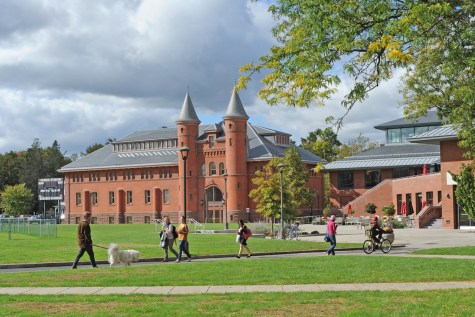
Wesleyan-University-Film-Studies-218.370

One of the most common questions I get in college is, “Why did you choose to come to Wesleyan?”

My short answer, which I say half-jokingly and half-seriously, tends to be: “They gave me a lot of money.”

I’ve been fortunate to have received the Freeman Asian Scholarship, a merit-based award valued at around USD 50,000. The bondless award, such that I don’t have to work for any particular organisation after graduating, covers my full tuition fees for all 4 years at this liberal arts college, not including food, accommodation, health insurance and pocket money.

There are a total of 11 scholarships available, which are awarded to one student from each of these countries: The People’s Republic of China, Hong Kong, Indonesia, Japan, Malaysia, the Philippines, Singapore, South Korea, Taiwan, Thailand and Vietnam. In short, there is only one scholarship up for grab in Malaysia.

Since financial aid was a priority in my college application, it made perfect sense to apply for this scholarship.

The Application

My application comprised of the Common Application, the Freeman Essay and the Financial Aid Application (which, unlike the Freeman Scholarship, is need-based and covers living expenses).

Since I’d already completed the Common Application, I only had to work on the Freeman Essay, whose prompt was: “Please tell us how you would use your Wesleyan education to make a contribution to your home country.” I wrote the first draft in the evening, on my bed (specifically before dinner) several days before the deadline, just to give myself time for editing and proofreading, which didn’t take up much time.

It was one of the easier essays to write because I’d already had a good idea about the academic opportunities in Wesleyan which piqued my interests, and how I could use what I learnt beyond the classroom. These were thoughts I’d flirted with during the frenzy that was the college application process, so it wasn’t too difficult to translate them onto paper.

Writing the essay came very naturally also because I wrote about debating, something I felt very strongly about. Having spent weeks thinking of potential ideas for strong college essays—for context, I applied to 6 other US colleges—I’d observed that superficial subjects with which I had no profound connection were harder to write about.

The Interview

There were two parts to the interview day, the individual interview and the information session.

Three alumni interviewed me. It was highly conversational, which is the case with many US college interviews. The alumni were interested in putting a personality to my application so they could make appropriate recommendations to the admissions office.

We spoke very casually about the opportunities at Wesleyan which attracted me, my academic interests and extracurricular involvements. My favourite part of the interview was talking about what I was reading at the time, The Emperor by Ryszard Kapuściński, short stories by Borges and The Land at the End of the World by António Lobo Antunes.

I’d been through interviews before (both for college and non-college purposes) so I had a sense of how things would play out. I was very calm before the interview. Ironically, since I was early, I checked out the exhibition of Australian universities which was held downstairs. I politely told the representatives I was not interested.

My parents accompanied me to the information session, which took place several hours after the individual interviews. Since it was rather informal, it was a great opportunity to chat with Wesleyan alumni and the seven other candidates who were shortlisted. During this time, we watched videos of Wesleyan alumni and faculty members talking about their Wesleyan experience. Little did I know that I’d eventually take an Economics class with one of the professors!

After the Q&A session with the alumni, I had a much rounder idea of Wesleyan and the Freeman community.

Receiving the Scholarship

It was 4.45 PM, I’d fallen asleep in the library and missed my bus home from school.

I called my mother to tell the bad news, and in turn, she told me the good news.

The Wesleyan community was very welcoming. Not long after accepting the award, I received emails and Facebook friend requests from upperclassmen and graduating students. Prior to attending college, I met with Wesleyan students and alumni, Freemans and non-Freemans. As I learnt more about Wesleyan, I was satisfied with the choice I’d made.

What’s nice about the Scholarship is the community you’ll be part of. The Freeman scholars are pretty tight—we plan and attend events together—but not limited to each other. The Freeman alumni come back every once in a while to meet up with current scholars. All in all, being on this Scholarship has made for a very rich college experience.


Amanda Yeoh is currently studying at Wesleyan University under the Freeman Asian Scholarship. If you intend to contact the author, feel free to contact the CollegeLAH Team at contact@collegelah.com.

IMU-Otago Credit Transfer: Dentistry

nz_otago_university_campus_from_above_lo

The Partner Dental School Course is implemented jointly by the IMU, Malaysia, in collaboration with partner universities, with the students spending the first phase (5 semesters, 2.5 years) in Malaysia and the later years in the partner universities. The students will receive the degree from the respective Partner University after graduation.  University of Otago is one of the Partner Universities for Dentistry. You can find more info in http://www.imu.edu.my/imu/programmes/undergraduate/dentistry/

I recommend those who are interested in the PDS programme to apply fairly early, as there are very limited spaces each year. I applied online in March/April the year before intake starts. An interview will be carried out around November.  The interview was pretty informal. The interviewer will provide a situation and you need to solve it. The question I got was if someone was having a heart attack on the plane, which place will you fly to (A,B or C)? My answer was I couldn’t choose as I have no idea which place is the plane closest to. The questions they asked are usually easy, as long as the answers are not too far off logically and are ethical you will be fine.

There are many things to adapt to in the first year. Lectures are like learning a whole new language as there are many new terminologies, especially anatomy. Some lecturers may have a strong accent. Dental students will be having the same lectures as medical students in 1st and 2nd years, in addition to dentistry lectures. Clinical and simulation sessions are extremely important as it builds a strong foundation in the future. It may seem overwhelming at first but just remember your classmates are in the same boat as you.

In the 5th semester (3rd year) those who are in the PDS track are required to list PDS in order of preference. You will be required to write about yourself and why you chose the specific partner school (something like personal statement). A computerized system will then assign each student to the PDS. Partner schools have the right to decline acceptance if you do not reach the minimum IELTS requirement so do not take it lightly. If you (touch wood) failed to secure a place you may opt for the local BDS track (5 years in IMU).

As University of Otago intake starts middle of the year, I only had limited time to apply for student visa. I applied through visa agency (Selset) but that is optional. You need to have chest Xray, medical report, translated ICs and photocopies of important documents stamped by public notary. Some of these processes take time so visa application process need to start as soon as PDS result is out. There will be a refreshers course for dental students in Otago to familiarize you to the clinic and the Otago way of doing things. There is considerably more clinical exposure in Otago compared to Malaysia as you are exposed to more patients in the clinical years. Patients in Otago are also more medically and dentally complicated than Malaysia.

Otago lecturers and staff are very friendly and encouraging. Don’t be afraid, they are not there to reprimand you, they are there to guide you through. There is a very strong student support group there. There is an Otago Malaysian Student Association (OMSA) ready to give support for all new students coming to Otago. I felt like home whenever I join OMSA activities. Plus great discounts everywhere as an OMSA member. More info about OMSA can be found here: www.omsa.org.nz There is a lot of Asian restaurants in Dunedin so don’t be worried about not finding Asian food. Dunedin is a small student city that is generally cold, so I would recommend people to invest in a good warm jacket.

All in all, just enjoy your student life as much as possible and as long as you study regularly and attend all the classes, you should be fine. All the best!


Ong Jinn is currently a Dentistry student at the University of Otago.

Life@BAC – Law

usw

While locals all over the world put their local universities as one of their choices, it is sad and disheartening to see that not many Malaysians practice this option.

While most have dreams and ambitions of what they want to be, I on the other hand was still deliberating all the choices. In such a circumstance, I figured that taking the A Levels would be the best option for me after talking to several counselors as it keeps my career path as wide as possible.

Though I completed my A Levels in the Subang campus of Taylor’s College, I did not further my tertiary studies in Law in Taylor’s University as it was just introduced and I would be the first batch for it making me very hesitant. Hence after much surveys and scouting around the Law schools, I decided to be a part of the famous Brickfields Asia College (BAC), “The Fastest & Smartest way to over 50 UK Law & Business Degrees”.

Well, my university sure provides the fastest way to most of its courses. In the United Kingdom, the A Levels course would take a whole 2 years to complete. In most typical Malaysian college, that course would take a duration of 1.5 years to complete. But BAC knows how much Malaysians like to have everything from speed to results so they came up with a shorter duration of time allowing students to complete it in just 1 year!! The awesomeness did not end there you know how we all like to request freebies whenever we purchase an item, BAC gives out freebies without even a request!! When I enrolled for my UK Transfer Law Programme, I was given a free course for a programme called Achiever’s Programme and also a set of free books to start my year with. On top of those academic programmes, we also get a free membership for the gym, Monster Fit.

To enrol into BAC, one can pay a visit to the Petaling Jaya Campus which is in VSQ Square just beside the Luther Centre and register yourself for the next intake. BAC offers three intakes: the normal September intake; the express January intake who will graduate the same time as the September intake; and the April intake. There is two types of programme that you can choose to undergo, the University of London Programme which would not require you to twin to other UK universities or the UK Transfer Programme where you can choose to the 2+1 which means that you twin for one year or the 1+2 where you twin for two years with any of our partner universities.

As I underwent the 2+1 UK Transfer Law Programme, I took the 4 compulsory subjects of common law, public law, criminal law and contract law. However, in Year 2 we were given a slight freedom in choosing one of our electives which are the company law or family law with 3 compulsory subjects along with it: tort law, land law and evidence law. In Year 3, those in 2+1 programme would have to prepare themselves to bid their friends goodbye as most would go to different universities of their preferences. Though we are allowed to choose 4 electives of our own choices, twinning students would have to take a compulsory subject of EU Law with 3 other electives of their own choices for those who are firm in doing the Certificate in Legal Practice Malaysia examination (CLP). As for those who are considering to do the Bar examination in UK, it is advisable to take up both EU Law and Jurisprudence as some Bar schools requires both though there are some who would accept students without knowledge of the Jurisprudence. Two of our partner universities: Cardiff University and University of Northumbria, offer the Bar examination. As for those considering the CLP examination, BAC do provide it too with additional privileges for their own students.

Besides studying, BAC provides many opportunities for students to explore their talents. There are classes such as Zumba, Martial Arts, Free Trial music classes and many more. A recent talent exploration I had a privilege in participating was to be part of the press team for BACMUN (Brickfields Asia College Model United Nations) whereby I could explore various writing expressions under guidance from those with experience.

Though Law course is one which is demanding in terms of understanding and memory, it is important to enjoy your university life before stepping out of our comfort zones and start working. Aside from that, one should give importance to self developments to further appeal your future employers and equip oneself with self-esteem, confidence and interesting personality.


Jasmine Tan is currently reading law at Brickfields Asia College (BAC) under the 2+1 UK Transfer Law Program.

Economics at the London School of Economics and Political Science (LSE)

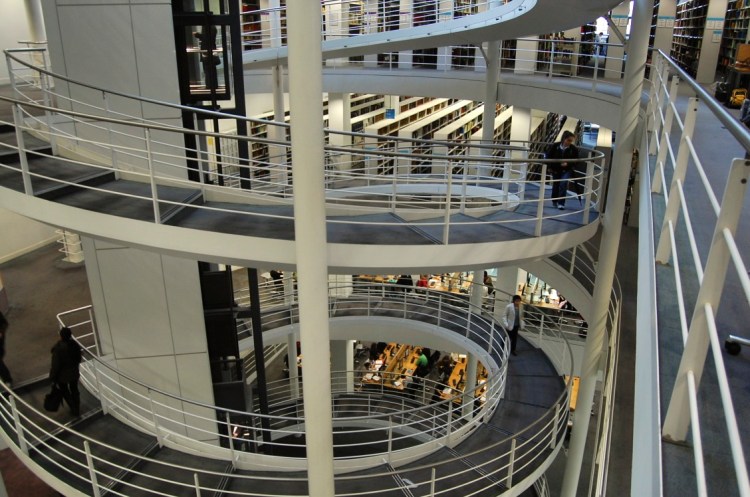
Lselibrary_1Image Source

This write-up will explain largely the key questions surrounding applications to read Economics at LSE – Composition and direction of the Personal Statement and subject choices. I am currently studying BSc in Economics (L101) at LSE, having studied A level (History, Economics, Maths and Further Maths) at Kolej Tuanku Ja’afar previously.

PERSONAL STATEMENT

The Personal Statement is undisputedly the most important component of your application. Tons of other applicants will possess stellar grades, which is where your statement will differentiate you from the others and land yourself an offer. If your grades aren’t stellar, likewise, this is the hinging factor that might place you over the others. Evidently rejections from LSE often fall back to faults in Personal Statements being not up to the standard LSE wants or that they do not reflect what LSE looks for in an applicant.

Let’s establish three simple principles to follow in writing your personal statement, which will apply to arguably all other university applications through UCAS. Firstly, your personal statement must reflect that your academic potential or interest. Secondly, your personal statement should be about academics. Thirdly, your personal statement should reflect you. Being able to follow these three divine commandments will, hopefully, bring out the essence of your application to British universities, with LSE included. Keep in mind that Economics at LSE is extremely competitive, you have no reason to slack off on your personal statement.

How shall I display my academic potential or interest?

The most intuitive way to do this is to display curiosity, sophistication and clear understanding of economic issues that deeply interest you. Given that, it might be helpful to start planning and think about burning questions or issues that you love way beforehand rather than to glide through economic books or textbooks to find the “most interesting topic”.  You will be able to talk about topics that interest you deeply more intelligently, passionately and interestingly.

In my case, my initial draft largely consisted of brief mentions and analysis of books of different topics, ranging from financial crises, development, income disparity to policies. A clear problem was that it lacked depth and sophistication. Surely it displayed evidence of reading but certainly not competency. Realising that, my further drafts focused on largely a central topic – development. In doing so, the number of books mentioned was reduced significantly. Each book mentioned revealed a different aspect of developmental economics, while complementing and extending one another. At this point, it is easy to slip into a trap of summarising books you read. Avoid this and relate the content to what you have understood, or how it revealed a new aspect that sparks curiosity. A good way to do this is to either express an opinion in extension to your analysis of the book or an intelligent question.

A crucial aspect that might easily be overlooked is mathematics. Maths is the Holy Grail for LSE, especially for economics, which is maths-intensive. This means that you should display mathematical competency in your Personal Statement, not forgetting to relate maths with economics. Developing this portion in depth, supported by your understanding and perhaps, achievements in maths would be great. Remember however that listing your achievements in maths competitions is good but isn’t impressive in comparison to a candidate who shows awareness of relation between maths and economics in context.

How should I make my Personal Statement academic?

An appropriate answer to that would be to strike out/cut down on ECAs and personal interests that have no direct relation with Economics. However, that does not mean that your personal statement should be strictly without ECAs etc. Having internships and ECAs that directly relate to Economics would be very helpful if you are able to show that they facilitate your understanding of the subject. Intuitive examples could be debates and internships at the government/think tanks/financial institutes/research institutes. To be clear, it is imperative to discuss them in an academic context and not the typical “leadership/teamwork skills”. Surely the latter is interesting but less importance than the academic portions.

If you do feel the burning need to include unrelated ECAs or personal interests, to the point that you will not gain sufficient closure, do it by all means. However, do minimise it to perhaps, a short paragraph at most. It will contribute at most marginally, if not nothing at all, to the strength of your application, which also applies to generally highly selective universities. It is your personal statement regardless, do whatever that makes you most comfortable.

How do I reflect myself in my Personal Statement?

Given that UCAS Personal Statements are academic in content, having an essence of individuality would, supposedly, make your application more differentiable and perhaps, impressive. Notice how US college essays explicitly, and sometimes strictly, emphasise on revealing yourself as an individual. Your goal is to achieve that effect within the academic construct of a UCAS Personal Statement.

Understandably, it is relatively easy to achieve this effect in the introductory paragraph of your Personal Statement. A situation, observation or experience that relates to an Economic problem would be appropriate. Of course, do expound on it and if it relates to you to the point that it deserves to be in the first paragraph of your statement, you should be able to raise intelligent, sophisticated and nuanced questions/understanding.

Extending that, an issue that closely relates to you would also be an appropriate theme of your personal statement. This general theme allows you to explore a topic in depth easier and in context, particularly when you know first-hand about the economic problem/topic in discussion. Take the freedom in exploring in breadth but writing along a familiar theme comes with good depth, understanding and relative ease. Moreover, your Personal Statement avoids the pitfall of being a barrage of loosely linked academic topics, with a touch of dryness.

SUBJECT CHOICES

What subjects should I take?

LSE is part of the Russell Group universities, which are all selective research-intensive universities. A common thing that all of them share explicitly is their preference for traditional subjects over vocational/soft subjects. LSE, in particular, discourages explicitly its applicants from taking soft subjects such as Accounting (yes, even if you’re applying for Accounting and Finance), Law (even for Law applicants), media studies etc. Economics applicants should, therefore, take the precaution of taking traditional subjects given that your offer will exclude Further Maths from being part of the A*AA offer. Your grades for Further Maths, however well you do, will only count towards the “Pass in A2 Further Mathematics” segment. According to LSE’s international officer James Brown (2015), taking a soft subject will put your application at a disadvantageous position, which could, however, be amended by getting impressive grades (metric is uncertain but the mid-high 90s UMS range would make sense).

There is also an ever-going discussion over the necessity of Further Maths as a fourth subject. There are practical benefits of taking Further Maths if you are applying for Economics at LSE as well as at other universities. University Economics generally requires good mastery of mathematics. More than half of your first year modules in LSE will be about maths, which means that taking Further Maths will help you in going about university easier than those without.

There is a saying that goes “taking Further Maths will not give you any advantage but not taking it will disadvantage your application.” Although there are people who have obtained offers without taking Further Maths, there is no reason to deliberately put one aspect of your application in a weaker position.

Given that, an optimal subject combination should comprise of Maths, Further Maths and 2 hard subjects. Hard subjects include but are probably not limited to the following: History, Economics, Physics, Chemistry, Biology, English Literature, Geography, Classical Studies and Languages. A list of “non-preferred” subjects is available on the LSE website itself under the page titled “LSE’s entry requirements”.

On a less related note, given that people applying for similar subjects might be viewing this, specifically Econometrics and Mathematical Economics that normally doesn’t accept first year entries, it is stated on the subject page on the LSE website that taking at least one physical science would be attractive, from which you will also find out that they don’t normally accept direct entries into first year.

What if my AS exams were to go wrong?

I suppose this segment is only relevant to those who would take their AS exams in summer (May/June) before UCAS application opens. A quick answer would be that you’re probably doomed. Fear not, however, as mentioned previously, your spectacular, groundbreaking, marvelous, impressive, stellar Personal Statement might be able to save you. Nonetheless, if your AS grades are only a grade away from the grade requirements and that your predictions meet them, you’re probably still in for the game. I cannot stress how important it is to perform well in your AS exams. Re-sits are possible but you might have to compensate on your A2. Worst of all is that the not-so-good AS grades will have to be declared on UCAS.

In instances where extenuating circumstances such as medical conditions, staffing issues etc. have affected your grades, declare them. In my case, I had a history teacher crisis in which there was a lack of a teacher for disturbingly long period of time. Unsurprisingly, I managed to obtain only a ‘b (76)’ for my AS History.. The point is that if your extenuating circumstances have affected your grades such that they do not reflect your academic performance, declare them with the utmost and shameless honesty. It is still possible that you stand as strong as or stronger than others with better grades.


imageedit_4_4122498761

Suah Jing Lian is currently a Bank Negara Malaysia Kijang Scholar who is pursuing Economics in the London School of Economics and Political Science (LSE). He has a penchant for Baroque music, particularly Bach’s partitas, and debating, which he claims provides sparks to his life. People claim that he looks and speaks in an intimidating way but not really, he’s one of the most eccentric people you will ever meet.

Economics Personal Statement

This Personal Statement was part of Sukhdev’s successful application to the LSE, UCL, the University of Warwick and the University of Manchester to read Economics.


Growing up in the capital of a developing nation, I have observed rapid change around me. Despite significant government funding, there has been an alarming increase in the nation’s relative poverty rates, according to the United Nations Development Programme. Excess welfare handouts are generally criticised for being politically motivated as Household Debt to GDP ratio increased worryingly from 60% to 88% in the past 7 years. An also consistent rise in National Debt to GDP ratio exhibit similar trends to Greece prior to their debt crisis, but to a lesser extent. As I seek answers to policy problems in my nation, I am convinced that economics will provide some.

The use of handouts by the Malaysian government convinced me that Malaysian policies were largely Keynesian as I learnt that they affect Consumer Expenditure and Aggregate Demand. Paul Krugman also emphasised on such policies in his book “End This Depression Now!” but what I found to be highly interesting was his reference to Fisher’s Debt Deflation Theory where the more people repay debts in their economy, the more their debt grows due to a deflationary effect as a result from reduced expenditure. Not only did Malaysian household debt grow as a result, exacerbated by a property market bubble, but GDP growth also slowed down with the recent Goods & Services Tax. Krugman used this theory to explain the slow recovery to America’s 2008 economic depression when austerity was thought to be the solution.

Nevertheless, as household debt continues to approach unsustainable levels despite handouts, I inferred that there was a larger structural problem at hand. This led me to Thomas Piketty’s “Capital in the 21st Century”. His theory on how income inequality is fuelled by the use of capital is supported by his “r greater than g” theory. This resonates with the long-time Malaysian dilemma of the Chinese consistently dominating the housing markets and businesses despite affirmative action and special socioeconomic privileges given to the Malays. Stark differences in racially polarised ownership of capital such as land estates and means of production since the colonial era generated grave wealth inequality. Piketty’s solution to enforce taxes on capital rather than income may actually eradicate inequality in Malaysia given that there is a tangible difference between income and returns from capital.

Piketty’s constant use of calculus made me realise that Economics is very mathematical. While the formulation of the Gini Coefficient in statistically proving income inequality is impressive, I am sceptical of the overreliance on it as the predictions are conditional on numerous assumptions. Miscalculations on returns for secondary derivatives which became one of the factors to the Minsky moment in the 2008 financial crisis is a testament to my worries.

Last summer, I interned with the Business Development Team of Maybank, the largest banking conglomerate in Malaysia. One significant thing I learnt here is that financial services are targeted differently at specific income groups. I hypothesised that this is because there is severe inequality which might stem from a faulty economic structure, or perhaps some services are simply better suited for different income groups. If it is the former, I perceive that banks play a vital role in mitigating this effect. As a Maybank Scholar, I believe that I can make an impact on these issues.

While studying, I also took up British Parliamentary Debating, consistently debating at national-level and varsity tournaments where I learnt to critically analyse economic issues. Debates ranging from the use of Quantitative Easing during a recession, to the relevance of an extractive economy in developed nations have taught me more about Economics in ways which books cannot.

I look forward to the challenges that University has to offer and I hope that a UK degree in Economics will aid me in my future endeavours to contribute back to the global community.


DISCLAIMER: The personal statements on this site are strictly meant as a starting point to give an idea of how successful personal statements look like. There is no surefire formula to writing good personal statements. COLLEGELAH IS STRICTLY AGAINST PLAGIARISM OF ANY KIND. UCAS employs a plagiarism check system that checks applicants’ work against other published writing so please DO NOT PLAGIARISE.

UK Architecture Application

Hi there! I am Louisa from Kuching, Sarawak. I did my A-levels at Kolej Tuanku Ja’afar (KTJ) and am currently pursuing the Foundation Course in the Architectural Association School of Architecture (AA School). This will lead to my First Year in Architecture.

When you hear the word ‘architecture’, you will probably think of buildings, sketches or the people responsible for creating space, function and form while the engineers grumble over that these architects draw dreams that they have to create. Architecture is, however, a long journey of 5 academic years for the master’s degree and another two years of working to earn your RIBA part 3, which ultimately proves that you are a fully-fledged architect and are able to sign off your drawings. It is encouraged to take a break to work for a year after the third year of your degree. So this journey would be about 8 years long – “as bad as medicine”, people would say.

You have to be certain of your choice and you must have a passion for this course. Otherwise, it will be absolute torture for you. The hashtag ‘#architorture’ is a thing on Instagram, go check it out. This is not the course for you if your plan is to get rich quick. The famous architects you hear about don’t represent more than a bare minority and they had to work long and hard to reach where they are now. Hard work, perseverance and passion are necessary to survive this craziness.

Portfolio

The big major question everyone has in their mind. The major headache of every art student. Honestly, presentation is what is important for the portfolio the most. You need to give good quality images of your work and then be able to explain it well. Have a side note to each image and tell them what inspired you to do this – the thought process. To each student their own because the portfolio is almost like an extension of your character. Especially now with my course mates, when I see their portfolios, I see their characters in the images and the way they present their images.

There is no right or wrong with portfolios. It may vary according to the school you apply for, they may be looking for students with certain qualities or styles. That is why it is important to research on the schools you are applying for, to understand their approach to teaching the architectural course.

When I applied to the AA School, my portfolio was very much comprised of fine art with a bit of graphic design thrown in. My friends have portfolios showing just sketches or just photographs or every style of art under the sun; showing their experiments and approaches. The AA School likes students from all styles as long as you can communicate and explain your work. They are more interested in the way you think, the way you approach things, rather than actually seeing what you can do, though that is necessary too.

Personal Statement

Another headache. At this time, the UCAS students are shaking their heads and panicking because the deadlines are here or for the Oxbridge candidates, pass and the agony of waiting is upon them. The important thing about personal statements is to speak about your passion in architecture and what influenced you to choose architecture. Let them understand without question or doubt as to why they should choose you for a place in their university for architecture. Explain how your skills and ECA activities tie into architecture or how they are useful.

Spend a small amount of time, small being the crucial word here, to explain why you choose the university. Of course for UCAS applicants, you have to be very general about it but explain why the university would be necessary for your future and how you are important to the school too, how you could contribute to them. Talk about how your experience and leadership skills acquired in high school can be used in the clubs and societies offered in the university.

For applicants applying to private universities or applying to a university individually, this is the time to really research on the university’s teaching style. Is it technical or more creative? Explain why you want to pursue those aspects that the university can offer. These are mere examples. Remember, do not oversell yourself or ‘butter up’ the school too much. You will come off as desperate or a sycophant, both of which will decrease your favourability to the universities and you do not want that to happen. Unless you state it, the universities will have no idea which other universities to applied to, this is especially so for UCAS candidates, until you have chosen your firm and insurance choice.

In my personal experience, I would say, be prepared to work hard but remember to work smart. Every day, do something and little by little, it will build up into something amazing. Do not get discouraged if your first topic was bad. Keep working on it, Rome was not built in a day after all. You can only get better with practice. Do proper research, read a lot and observe. Take photographs, sketches, make annotations of buildings and anything at all that captured your attention. You never know when these things might actually help spark that creative streak in you down the road when you are stuck in the studio in the middle of the night trying to come up with an idea. You start to notice what works and what does not in architecture, architecture will take over your life.

Important point is, that even with an architectural degree, you do not necessarily have to practice architecture. There are people with architectural degrees doing product design, interior design or even event planning. The sky is the limit, it does not stop with architecture. In fact, it gives you a better understanding of things. In architecture, you learn model-making, observational study, photography, and an excellent understanding of the Adobe Creative Suite which includes Photoshop to name a few.

I personally enjoy my course even though it can get extremely tedious. Honestly, there are moments when I love it and moments when I question my life choices. But if you are certain about this, and you have a passion for it, I say ignore whatever other people say and go for it. This is your future, you should do something you enjoy and if need be, go against the current. I am all for being unique. After all, that is how amazing things happen – with confidence, tenacity and hard work.


Louisa Wong is currently reading Architecture in the Architectural Association School of Architecture (AA School) in the United Kingdom.

Life@John Hopkins: Meta-study abroad

homewood_campus

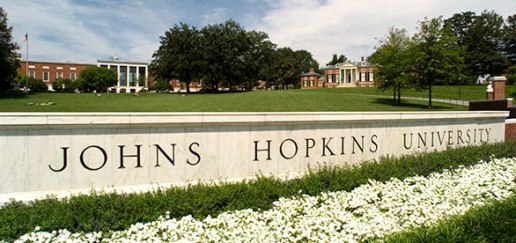
A long-haul transatlantic flight brought me to this country in the far west, which many people are seemingly familiar with, due to the enormous cultural influence it has cast upon the world. The same insecurity and excitement surged within me once again, even though I was much more capable of containing these emotions now that I have spent two years reading biological sciences at UCL. I have since settled down in a flat that is just 5-minute walking distance from the gorgeous Homewood Campus at Johns Hopkins University. I am really grateful for having this opportunity to go to the US while studying abroad in the UK (hence, the title) and would like to share my experiences and also my perspectives on the differences between these two most sought-after study abroad destinations.

Academics. It is undeniable that a UK degree is more specialized than its American counterpart. In the UK, you have very limited flexibility when it comes to course choices. For instance, in my second year, out of 4 credits I have to accomplish, at least 3 have to be biology-related and it is rather rare for you take elective modules offered in another school/department, due to various reasons (mainly administrative and pre-requisite requirements), unless it is a language module. On the other hand, in the US, many students are allowed to juggle Virginia Woolf, the nodes of Ranvier and epidemiology in the same semester. Even though you still have certain requirements that you need to meet for your major, you have much more freedom compared to UK students. In this semester, I am taking neuroscience courses, which are completely foreign to me, as my specialization back home is molecular and cell biology. I am planning to do a course on natural catastrophes next term, since I finally got the chance to quench my thirst for studying geology. I simply cannot end this paragraph without comparing the grading systems. In the UK, grades are categorized into classes: first class, upper second class (2:1), lower second class (2:2) and third class. The grades are absolute. If you get higher than 70 (which is hard, trust me), you are considered first class, regardless of how your peers perform. In the US, you are assigned a letter grade for each course you take, and that letter grade corresponds to a GPA score. At the end of the term, you will get a weighted average of your GPA score (depending on the credit weight of the courses). How is the letter grade assigned? It depends on the course, many courses use normalized curve, which means that if you obtain a mark that is around 90% of the highest score below the 4th percentile, you will be assigned an A grade (and of course those top 4% will get an A+). Some courses may apply different strategies, for example, you probably need to get a score that is one standard deviation above the average grade to be in the A range or just to be top 10% of the class to achieve it. This is very dissimilar to the UK system, as you will face situations when you do not ‘reap what you sow’ and experience tension and competitions amongst your peers at all times. The advantages are that you are going to be more diligent and fastidious, as you will be very concerned about the scores of each report and midterms (I don’t even know what it was before coming here), and know how to manage your time so that you can learn happily and get a good grade. The UK education requires a huge amount of self-discipline and rigorous independent study, as in many cases; only one final exam (for each module) that counts heavily towards the final mark is given in the end of each academic year. This does not mean that it is easier. The exams in the US comprise mostly short-answered, analytical, problem-solving questions – you are normally given a set of data which you have to interpret and analyse logically and apply it – while in the UK exams are essay-based, in which you have to write pages and pages explaining how we can target EGF receptor signaling to stop tumour growth (as an example). The former demands clear thinking and complete understanding of learning material while the latter requires the ability to present your understanding and critical thinking about a topic in the most succinct and lucid form and also loads of memorization. So, which is more suitable for you? If you are determined on what you want to do in the future, the UK system may suit you best, as the specialized education equips you with the specific skills and advanced knowledge that are indispensable for your chosen path. Students who have not yet decided on their future career path should take advantage of the holistic, well-rounded undergraduate education of US universities, as you can always change your concentration in first or second year and balance your personal interests with academic preferences.

Social life. Owing to my ALDH2 (the enzyme that should digest the by-product of alcohol degradation) mutation, I am not allowed and not in the position to comment on the clubbing (seriously not my style) or drinking social life in both countries. However, I do participate in societies and hang out with friends who share common interests. Homesickness is an illness that every international student is highly susceptible to. To me, meeting fellow Malaysians and eating Malaysian food are the most effective remedies for this malady. As US is further away from Malaysia than the UK and is blessed with more decent universities (therefore, sparser distribution), you will most likely find fewer than 10 Malaysians in one university (we have 6 at JHU, including me!). On the other hand, Malaysians constitute a huge part of the international student communities in many UK universities. The opportunity to organize glamorous events that can unite all Malaysians across the country is surely deprived in US universities, as most do not even have an association for Malaysians, let alone organizing events. On the flip side, you are relieved of the burden of being obliged to cling to people from your home country (that is if you do not like it) and get to interact more with local students. A major part of my social life in the UK is eating out with my Malaysian friends or holding potluck sessions at someone’s apartment. In the US, I mostly hang out with some other exchange students and also people from the society I joined. So far, I felt that US universities are not as diverse in terms of student body in comparison to UK universities (mostly due to the lack of Europeans). Most of my course-mates are Americans (of different ethnicities, though). This may be slightly biased as I am studying biology, a subject that attracts fewer international students.

Travelling. I have to write a separate paragraph regarding this important activity. I reckon everyone is aware that UK is located slightly above Continental Europe, the dreamland of all travellers. The flights to all European countries are affordable and the travelling time is bearable to almost everybody. I am blessed to have so far been to many gorgeous towns and cities in the continent and am still looking forward to visiting many of them next year. In the US, this is not the case. Flight tickets are relatively expensive and it takes hours to travel one from location to another. Planning requires much more time and research that I expected, as many cities do not have convenient public transport service which you can seriously take advantage of when you are travelling in European cities. Again, this does not mean that the cities are not as worthwhile to visit. I have been to Boston and Washington D.C. (which are near to where I am studying at) and they are jaw-droppingly beautiful. Having said that, I have planned several trips to New York, Orlando and Miami in the coming holidays. Another point worth to mention is that, in fact, US universities have less vacation compared to UK universities. This has been troubling me as I have been in torpor for a long time after all the torment of late night revisions and weekly exams.

These are the points that I would like to cover this time and I hope you guys enjoyed reading it. I focused extensively on the academic part, as that was the main reason why I chose to come to the US, which is to experience the reputable education system in this country. If you are still struggling to choose between these two, do consider the universities that offer a study abroad option in addition to the course that you are fond of. Moreover, I would recommend you all plan earlier for the application, which normally falls in late first term of the second year This means that you will have to use your first year results to apply. Therefore, doing fairly well academically in the first year is crucial to secure a place in the programme, as it can be quite competitive (especially for US universities). The application process can be frustrating sometimes, as you will need to write a motivation letter and also to find a referee who can tell good things about you, but I promise the experience is going to be awesome.


Untitled

Victor Pong is a third year MSci Biological Sciences student at University College London (UCL) under the MyBrainSc Scholarship. He fancies playing Pokemon games, dining in posh restaurants and taking strolls in the tranquil city parks. If you intend to contact the author, feel free to contact the CollegeLAH Team at contact@collegelah.com.

A-level Life in the UK

900717_May0019206_Town_v_Gown_-_Wycombe_Abbey_for_DT_WeekendMay0019206_Daily_Telegraph_Town_v_Gown_--large_trans++ZgEkZX3M936N5BQK4Va8RWtT0gK_6EfZT336f62EI5U

A-level lasted two years, and I finished mine at a private girls school, full boarding, in the UK. I must admit, a year before that I had never even considered going abroad for studies, as no one else in my family had done so before. But when many of my other friends were applying it led me to start researching a little about boarding schools in the UK just to see what the big deal was about.  It was then I realized that going abroad is a wonderful experience that could potentially bring in new opportunities and also means a fresh start. After 4 years at the same high school, I was then quite eager to meet new people and try new things. In that sense, I was never ‘afraid’ of the prospect of leaving home, in fact it made me the more excited to be able to demonstrate my independence overseas.  I was never ‘forced’ to go abroad for studies, it was all completely my choice and I really appreciated my parents for that freedom.

I only applied to only 2 colleges in the UK. It was common for students to apply to at least 4-5 schools in order to increase chances of acceptance, but unlike some of my peers, I didn’t share that whole ‘must-go-abroad-no-matter-what’ mentality. I did really want to go, mind you. But to me, I decided to apply to try my chances, and if I wasn’t successful, then so be it. Hey, at least I tried right? Application wasn’t that difficult. All you need to do (with your parents help, of course) is to fill in application forms, pay the application fees and sit the entrance examinations. Anyone can apply, as long as you have the appropriate prior qualifications. For many schools, all they require is IGCSEs, O-levels, or something equivalent like SPM. The application fees are roughly around £200 but they differ between schools. The tricky part of application is the entrance examinations. Boarding schools are competitive; you are trying for limited amount of places with students from all over the world. I only discovered upon starting that they only accepted 12 new girls in my year. You must know which A-level subjects you are applying for, and those will be the subjects you will be tested in. I found my exams to be quite tricky, and much of it was testing me A-level knowledge that at the time I was completely new to. I did try my best and I’ve been told that the teachers just want to see the way you think and work out solutions rather than achieving the right answers. In addition to my entrance examinations I had a short interview with one of the teachers. The interview was relatively creative and they asked wacky Google-like questions like “Who would you choose to meet if you were to travel back in time?” to which I made a confused face and blurted out “Hitler” (but for the right reasons, trust me). I wouldn’t necessarily advise anyone to bring up Hitler in any interview, but I guess what I’m saying is to keep an open mind and just deal with any curveball they throw at you. Like I said, I suppose they just want to see what type of person you are! (Just as I’m writing this it hits me that I must have come off as some eccentric psychopath who constantly thinks about Hitler, great).

Oh and for scholarship applicants, the entrance procedure is similar, only that I’ve heard they undergo a more vigorous interview process. Some of the new girls in my year were academic scholars, as well as musical and sport scholars. Don’t be afraid to try out for a scholarship. They’re tough, but they won’t diminish your chances (unless you screw up super badly). Worse case scenario is you don’t get a spot, but it is also very possible that they offer you a place without the scholarship.

In my two years at boarding school, I’ve got to say that the experience was worth it, as a whole. If you have the opportunity, don’t be afraid to take it even though it must seem scary to leave home and study overseas all by yourself, away from friends and family. That is indeed tough, a few other overseas new students and myself included were often counting down the days until the next holiday in the first term, not because we were super homesick but because boarding school life is just so different and hectic. Your day is literally filled with activities and classes and you don’t get back to your room until the day is dark and you’re tired. It was such a contrast to when I was in high school and back home by 4pm. Then there’s also the part about your social life. Girls at my school were nice, they were friendly and approachable. But what you’re probably forgetting is the difference between friendly people and friends. When you’re so far from family you need good, trustworthy friends who make you feel at home. It was difficult to make those types of friends when you’re new. The existing girls in my school had already formed their social circles having boarded since they were 12 previously. As an outsider and newcomer, it was hard trying to find your place in such an established social situation. I guess this was only the case of my school, as there were so few new girls, let alone Asians or Malaysians. I was lucky in the sense that the other new girl in my house and I became really good friends throughout my college years, and we were able to go through everything together. From getting lost and finding our way around the school, to helping each other out with our work and attending events together. It’s always easier when you bond with someone in your position. So yeah, find a newbie and stick to them. But here’s the positive part – having spoken to the new girls when we graduated, we all agreed that there were definitely ups and downs throughout our 2 years there. There were times when you’re dead tired and missing Malaysian food and just want to go home, but there are also times when you’ve bonded with the house watching Downtown Abbey, or cooking with your friends while jamming out to MTV. Although I’ve made only a few close friends, I do appreciate that I’ve at least had the opportunity to know the other girls in my year as they are all very cool and interesting. My school was a very traditional, British school, and naturally about 92% of the student body was girls from privileged, London families and they would all bond together. It’s tough when you’re not from similar backgrounds, and don’t have mutual friends, but I got on with them fine and had lots of fun. I do however, know of people who struggle with the social aspects of going to boarding school, so do consider this aspect when deciding to apply.

Academic-wise, it was fine for me, but I guess that’s because I was previously attending a British curriculum back in KL in an international school. The pace in my college was much quicker though, and the jump between IGCSEs and AS level very high, but I managed to cope eventually. Teachers were very helpful and always willing to provide extra help if you need it. There’s a lot of self-studying involved, which I’ve always enjoyed anyway. If you have previously been heavily reliant on tuition in high school, make sure you know you can cope in boarding school if you are to apply, as I do know several people in this position. The Westerners are often heavily opinionated and loud-spoken, stimulating debates in classes as opposed to the Asian way of ‘listening to the teacher and making notes’. The British way of teaching is definitely something different, but I really liked it and I grew to be more confident throughout as I learn from others to develop thoughtful opinions and be more assertive. Extra-curricular is good too (well, they should be, for the price you pay) and there are a lot of opportunities offered outside of academics in boarding schools. I got involved with new sports, new musical skills, as well as Young Enterprise, drama production and various other school officer positions. Schools like this encourage you to be an all-rounder and you really get the feel of belonging to a community. My college also provided very good university entrance support, with university preparations in the 1st year to very hands-on help with personal statements, university entrance examination help, and interview practice. This is because majority of students from my school often apply to Oxbridge, and this is the typical entrance procedure. It’s good if you’re aiming for Oxbridge as it is schools like this that have inside knowledge about the tips and tricks that might otherwise not be available to local Malaysian teachers. Pastoral support is great too, the teachers are kind and helpful, in non-academic matters as well and they really do have your best interests at heart for all things concerned.

My time at boarding school was great. Looking back, I do not one bit regret ever going over. That said, I do admit that it wasn’t smooth sailing the entire time, but I’m just the sort of person to take risks and welcome new things that are outside my comfort zone. I also fully appreciate being able to experience it, as I understand that not everybody has the same opportunities. But if you do, I would definitely recommend trying out for boarding school, but do so with an open mind and don’t be afraid to try new things!


Due to personal reasons, the author of this article has requested for his/her institution to remain anonymous. If you wish to find out more, feel free to contact the CollegeLAH Team and we will direct you to the author, subject to his/her consent.

Actuarial Science/ Maths & Stats/ MORSE Personal Statement

Lim Yeak Seng is currently reading Actuarial Science at the London School of Economics and Politics (LSE). This personal statement is part of his successful application to LSE, City University London, Heriot-Watt University and University of Warwick for MORSE.


I am intrigued by how stochastic processes are applied in probability theory, in order to capture uncertainty in real world dynamic phenomena. The book ‘Time Series Modelling of Water Resources and Environmental Systems’ by K.W. Hipel impresses me with its employment of statistical methodologies for scientific data analysis of environmental time series. The research undertaken by Silva et al in optimising the generation of power from hydroelectric plants, by utilising linear multivariate time series models to model flows into the reservoirs, has saved Brazil about $87 million in five years. From my research, I believe the time series model can provide a rigorous mathematical formulation of underlying structures and their relation to observable random variables, via its latent variables. I realise the importance of holistic and pragmatic time series models in simulating real world situations and for predicting possible future outcomes.

I was introduced to cladistics by the entomologist, W. Hennig in ‘Phylogenetic Systematics’. The cladograms are assembled by computer analysis of similarities and differences between species, such as characters and DNA sequences. Linnaeus’s classification scheme and Haeckel’s Tree Of Life provide a solid foundation for mathematicians to catalogue nature’s diversity and to reveal the secret of evolution.  In 2010, D. Theobald effectively applied cladistics methods to test this hypothesis, known as ‘universal common ancestry’; the results came down firmly in favour of a common ancestry for all present-day life. I am impressed by how the construction of cladograms can make the classification of organisms more systematic, avoiding the subjective decisions of traditional taxonomy. In the future, I aspire to contribute to society by utilising my numerical ability to analyse statistical data in order to construct models with greater predictive power.

As an intern at Yong Sing Insurance, I was introduced to a variety of policies. I am fascinated by how an actuary formulates a policy, taking different variables into consideration with the aim of maximising profits. My second internship at Hong Leong Bank exposed me to the resilience of Malaysia’s existing financial systems. An integrated regional crisis management framework, alongside surveillance mechanisms, puts policymakers in a constant state of preparedness for any eventuality. I am intrigued by how better risk assessments by an actuary allow the best decisions to be made by policymakers for implementing pre-emptive measures. The causes and impacts of the current world financial crisis fascinate me. My reading suggests that the limitations and defects of D. X. Li’s Gaussian Copula model caused the U.S. Subprime Mortgage crisis to aggravate. The unstable correlation between financial quantities and the unpredictability of the parameters of the economic models have made it difficult to assess hugely complex risks accurately. In my view, sufficient historical data about actual defaults needs to be assembled and the indication of rising default risk, such as the soaring price of credit default swap, should be considered when constructing statistical models.

I enjoy solving complicated maths questions and I am currently enrolled in a Data Analysis and Statistical Inference module on Coursera. I am very curious about how statistical theories work; currently, I am studying frequentist and Bayesian inference.  Both are useful in parameter estimation, depending on the data size and the availability of the prior distribution.

I have developed my leadership skills and discipline as a Scout Leader. Working as the Treasurer of the Maths Club has given me invaluable experience in managing funds. I enjoy sports and athletics; I represented my District in the International Ekiden Run.

I am a motivated, passionate and determined student who is looking forward to acquiring the skills I need by studying as an undergraduate at a prestigious UK university.


DISCLAIMER: The personal statements on this site are strictly meant as a starting point to give an idea of how successful personal statements look like. There is no surefire formula to writing good personal statements. COLLEGELAH IS STRICTLY AGAINST PLAGIARISM OF ANY KIND. UCAS employs a plagiarism check system that checks applicants’ work against other published writing so please DO NOT PLAGIARISE.

Physics Personal Statement

Jiaxen Lau is currently reading Physics in University of Oxford. This personal statement was part of his successful application to University of Oxford, Royal Holloway, University of London; University of Warwick, University of St Andrew and Durham University.


For me, the most exciting thing about physics is the thought of what it can help us achieve in our future. The fundamental nature of subatomic particles could develop new forms of qubit-based computers; superconductors could alleviate inefficiencies in public transport and electronic circuits; the nature of space-time could even allow a fast spaceship to noticeably slow its own passing of time. As I explore books and other media, I find that our world’s intricate clockwork is beautiful, intellectually stimulating and full of discoveries to be made. By uncovering and understanding these phenomena, we allow ourselves to make great leaps in our own technological capabilities. I aspire to explore the physical world with like-minded peers and professors, as well as do research to contribute to this extraordinary field.

I keep up to date with current developments in Physics through online science news and communities including the Institute of Physics. To add to my knowledge of physics, above popular physics books, I am currently also reading Feynman’s transcribed lectures and undertaking Leonard Susskind’s Theoretical Minimum course online. I find them challenging yet rewarding, as they use more complex diagrams and intriguingly more sophisticated manipulations of mathematics than my A-levels. I especially admire their intricate use of mathematical principles I know to spawn ideas in physics, such as the use of geometric lengths of a light ray’s path from different reference frames to arrive at the theory of special relativity, or the solving of differential equations to determine concepts in classical mechanics.

Physics expresses itself through mathematics, and apart from representing my school in various maths and science competitions, I had the opportunity to practise using mathematics during an internship with Accenture, where I helped to develop software to predict a company’s categorical expenditures. The project involved using Excel and Visual Basic programming to manipulate large amounts of data. I enjoyed applying my mathematical knowledge, in particular the process of generating and understanding various graphs from the complex sets of data I sorted, and then modelling and making predictions from trends. I also enjoyed writing technical procedures and explanations for the software’s user manual.

Becoming my school’s Film Club President taught me a lot about communication. Making films made me think of creative ways to deliver information; I also enjoyed teaching junior members in the club filmography-techniques and how to use editing software. Over time, I learned to articulate ideas more efficiently and to think from others’ perspectives to make my explanations captivating. I further practise this skill in my school’s maths club, where I regularly prepare and give mathematical demonstrations and lessons. I love to talk about useful applications of mathematics in the sciences; one of my favourite topics to present was an introduction to Fermi Problems, an estimation technique used by scientists to induce approximate values from limited data. Sharing ideas and teaching others allows me to solidify information in my own mind, which I find helpful when studying. I look forward to challenging myself to use these skills at university to convey increasingly complex and technical ideas in physics to others.

As my school’s Head Boy, I lead a team of prefects in a multitude of activities aimed at maintaining a positive learning environment, while also playing a part in coordinating social events such as fundraisers, concerts and the Sixth Form induction. I find that the organisational, time management and teamwork skills I gain through these experiences help me to plan my studies well and work comfortably in groups.


DISCLAIMER: The personal statements on this site are strictly meant as a starting point to give an idea of how successful personal statements look like. There is no surefire formula to writing good personal statements. COLLEGELAH IS STRICTLY AGAINST PLAGIARISM OF ANY KIND. UCAS employs a plagiarism check system that checks applicants’ work against other published writing so please DO NOT PLAGIARISE.