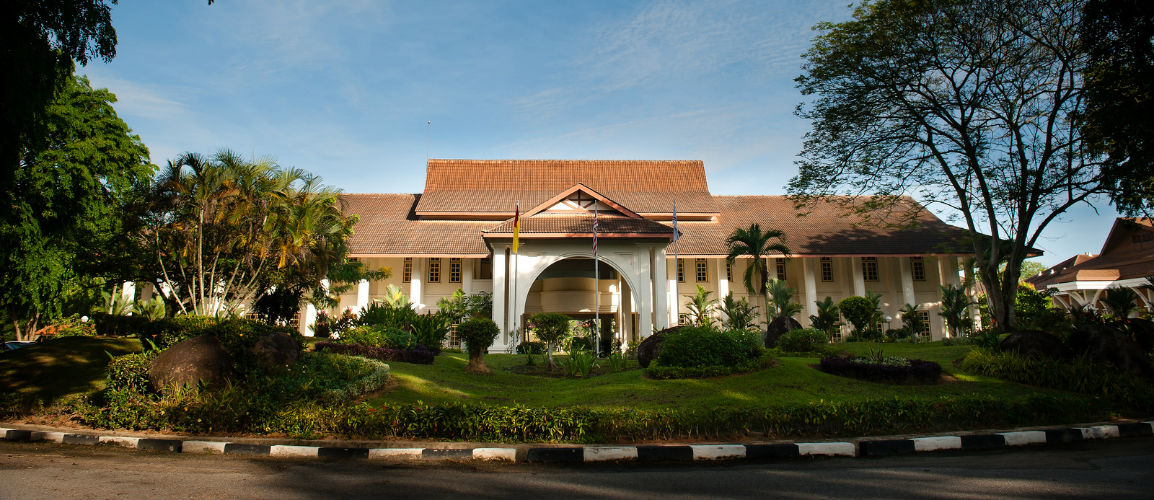
Life@Kolej Yayasan Saad International School (KYSIS) – A-level

kysis-home-0002

I was first enrolled in AUSMAT in Sunway College for about a month when my SPM results came out and that was when I decided to do my A-Levels at Kolej Yayasan Saad International School, Melaka (KYSIS). Frankly, I was quite apprehensive since this was the first time that KYSIS teaches A-Level. There was no selection process to enter the school but to have a better idea about the school’s environment and academic policies, it’s best to visit the school personally and have a chat with the principal. I chose to do my A-levels in KYSIS mainly because of its proximity to home and it was listed under the JPA scholarship list of A-levels schools.

My batch was small so it was a stark contrast from the large classes and the multitude of friends I had in Sunway College. We had an experienced cohort of academic staff who were predominantly from the U.K. The student-teacher ratio was very low and that allowed us to cultivate a close rapport with the teachers and have a more personal teaching experience. We were allowed to sit in classes of different subjects to make up our minds of which subjects we wanted to take for the exams and I ended up taking five subjects for AS (physics, biology chemistry, maths and economics) and then subsequently dropped economics at A2. Critical thinking classes were made compulsory for the first few months to allow us to develop our analytical skills. The teachers made sure the classes were very interactive and we explored themes beyond the syllabus as well. The facilities were very new and the labs were fully equipped. Some of my favourite memories in school were when we had to do lab experiments for the sciences as we always manage to learn a new method at getting better results.

Since we were the first batch, the administration were not very well-versed with the different requirements for each UCAS application. However, our dedicated tutor organised for us to go for education fairs and various university talks so we had a good grasp of what was needed before applying. We also took the initiative to look for more information on the internet and websites such as The Student Room and CollegeLAH of course came in handy as well. We reviewed some of the university choices together and each personal statement is vetted by a tutor. Some of us who were applying for courses that required interviews such as medicine were given several mock interviews and lots of support to help us with the stress of entrance examinations. The teachers ensured we were adequately prepared for each obstacle we faced during our application including support when we did not receive the offer we wanted.

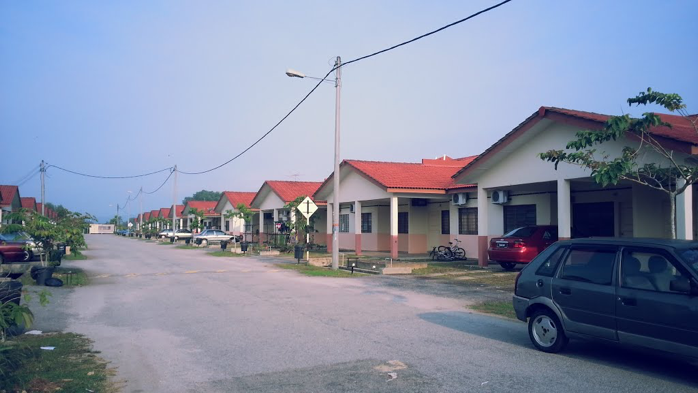
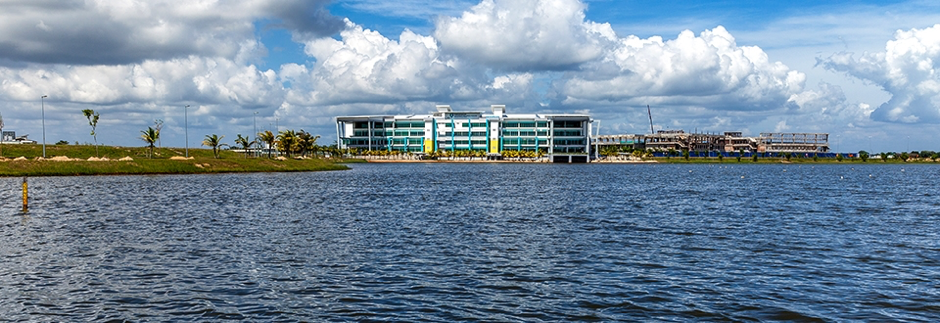
KYSIS is surrounded by a beautiful green forest and yes, there are plenty of monkeys. I remember the quiet evenings which were very conducive for study as well as walks around the school compound. There are many sporting facilities available such as an Olympic-sized swimming pool, squash courts, track and field. We had to make sure we were involved in at least one extracurricular activity which allowed us to unwind after a hectic day of studies. We were also given opportunities to take part in events such as a school talent event organised by ourselves, Model United Nation conferences, and the Duke of Edinburgh Award programme. Students were encouraged to organise events themselves and I think that really helped us develop our leadership skills. KYSIS started out as a full-time boarding school but after a few months, those who lived in Melaka were allowed to become day students. Being in a small group, tensions were high at times but all of us became quite close-knit and helped each other out whenever possible.

Lastly, I think KYSIS is a very conducive place to pursue A-level as it’s quiet and peaceful. The teachers are very experienced and I really enjoyed my college life despite some of the challenges I faced. However, KYSIS has had a revamp after my batch so some of the teachers who have taught me have left and the administration have undergone some changes. It’s best if those who are interested in pursuing A-Levels in this institution to visit the school and get a feel of it.


Sanjana Ilangovan

Sanjana Ilangovan is currently pursuing her medical degree in University College London under the JPA scholarship. You will always find her playing with her pug or whining about how much she misses her pug.

NTU ASEAN Undergraduate Scholarship

NTU

What’s NTU ASEAN Undergraduate Scholarship?

It is a scholarship for NTU students that covers the tuition fees and allowance per academic year while your results will be assessed every semester to make sure scholars get at least 3.50 out of 5.00 of CAP (Cumulative Average Point). The scholarship works in this way: half of the tuition fees is subsidized through Tuition Grant and the scholarship will cover the rest. There is no bond to the scholarship whereas the tuition grant provided by Singapore government has 3 years bond with any Singapore registered companies. Do note that this scholarship does not cover your hostel fees, so you have to use the living allowance to pay for that.

Cool! How do I apply?

To apply for this scholarship, you would need to fill in a scholarship application form after submitting your application form to NTU. The form is used for application for other scholarships as well, such as CN Yang Scholarship, College Scholarship, Nanyang Scholarship and NTU Science and Engineering Undergraduate Scholarship during my academic year, so it’s convenient for students to apply for multiple scholarships with just one application form. It requires students to fill in their past results, academic awards, extra-curricular activities and then write an essay not more than 300 words based on one topic chosen from 3 options.

So, what did you write about?

I chose the topic about the values and beliefs I hold strongly to. In my opinion, every essay that you need to write and submit before the interview is extremely crucial. This is the chance for you to express yourself truthfully while convincing the interviewers that you deserve to be awarded the scholarship. For my case, I wrote about the turning points in life that led me to my new beliefs. Students should look for something unique in themselves and write about it, instead of those same old stories about how determined or hardworking he or she is. Therefore, I would recommend people to try out new things and explore more, not only for the sake of applying scholarships but also for your personal development!

Ok! What’s after that?

If you are shortlisted for scholarship interview, NTU will notify you via email so keep an eye on that! NTU Scholarship Section of Financial Aid Office will come to Kuala Lumpur to interview all the applicants from Malaysia. If I am not mistaken, there is only one venue for the interview. My tips for the interview:

  1. Be prepared! Do your homework on the scholarships, the university, especially the courses you applied, and also some common interview questions. (Google! Google! Google!)
  2. Relax yourself by believing in yourself. Try not to compare with others, you must know that somebody will be better than you. That’s why you should focus on your unique personality.
  3. Be confident but not too arrogant. Avoid telling the interviewers that they will be living in remorse for the rest of their lives if they don’t offer you the scholarship.
  4. Be polite to the interviewers. Never forget to smile and thank them for their time in the end! First impression is extremely important.

During my interview, I talked about myself and shared my experience of backpacking in Bangkok. I related it to myself as that is my interest. After that, since I applied for Civil Engineering, they asked me a basic physics question of calculating force acting on a block on a slope. I saw a simple chemical equation on the back of the paper though. My friend who applied for Chemical Engineering was asked to differentiate methane and methene, and guess what – methene does not even exist! Then, they asked me about my favourite building in Singapore and what’s so special about it. Of course, you don’t have to answer the question like a professional; they are just testing your critical thinking skill.

Any last advice for future applicants?

Have faith in yourself and don’t stop believing!


The author, who wishes to be anonymised, is currently an undergraduate ASEAN scholarship holder at the Nanyang Technological University, Singapore.

Applying to the National University of Singapore with AUSMAT

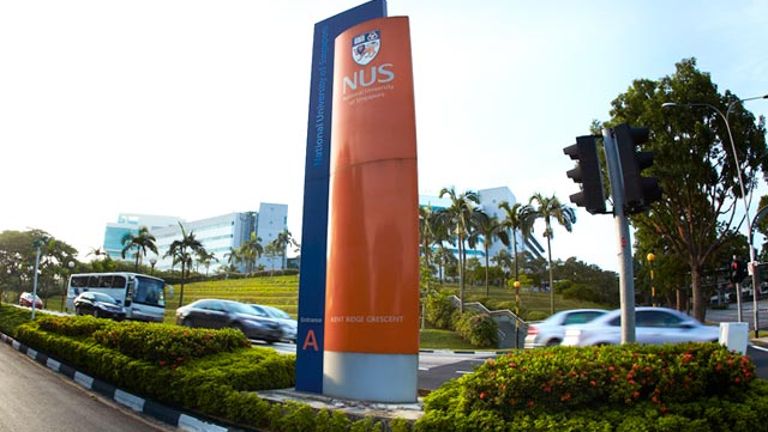
NUS Signage

Image Source

Hello there! I am Chin Jie Yin, currently a year 1 Psychology student in the National University of Singapore.

I completed my Australian Matriculation (AUSMAT) in Sunway College JB in 2014, and received the Western Australian Certificate of Education (WACE). For those who don’t know, AUSMAT is the Australian equivalent of Cambridge A-levels. I took 5 subjects: English, Mathematics, Physics, Biology and Chemistry, and got an ATAR of 96.45, which qualified me to make an application to NUS. Their minimum requirement is an ATAR 90, with at least 94 preferred to make a competitive application, according to the website.

When I applied, I had to include my results from secondary school up till pre-u, along with various co-curricular activities and achievements along the way.  These included competitions on various levels, positions held, or any noteworthy events. I included details of my time in the drama club in secondary school, the competitions we participated in and the prizes we won. Additionally, I was supposed to submit proof of competency in English, which I did by submitting my IELTS results.

Besides these, I recall having to answer a short essay question that concerns an event that has a large impact on me. I don’t remember the exact details, but I remember writing about my time in secondary 2 and met with some obstacles that I eventually had to overcome on my own. I suppose this section was to assess language competency and how reflective one is. Well played, NUS, well played.

Aside from the application, there was no entrance test to take, unlike NTU. So all I had to do after I submitted my application was to wait for the letter of acceptance/rejection. The only test I took I was IELTS since many universities require it in the application. It was rather easy, and I just bought the reference book to look through and try the questions. I took the test after a preparation of a month and got an overall score of 8.0. The tip is to be familiar with the style and format of testing, and prepare with that in mind. The difficulty is not a problem if you have sufficient basic background to know good grammar.

As I only put these 2 choices in my application: Arts & Social Sciences and Science, I did not need to attend any interviews for admission into the courses, which were only required for Architecture, Dentistry, Industrial Design, Law, Medicine and Nursing. However, since I applied to Ridge View Residential College (RVRC), a residential college program for freshmen, I had to go through a Skype interview. The atmosphere was rather friendly, though I still felt nervous as it was my first ever interview of such nature. I was asked about my interests and why I wanted to join the program. It wasn’t very tense, as the questions were to know more about my personal opinions, so there was no pressure in giving the right answer, as long as they were answered truthfully from your own point of view.

Eventually, I think what helped me in my application are my co-curricular records and academic achievements within the school (eg. Getting best in subject or top 5 in level) Besides just CCA records, I also included the personal achievements such as being selected to do a short video for a Chinese teaching material that MOE was going to use, representing my school in the Australian Mathematics Competition and so on. In addition to these were my O level and AUSMAT results. I probably would not have made it into NUS if I only had one without the other.

That was how I applied to NUS. I will suggest future applicants to make the effort to include every single achievement or participation in events or competitions in the application, whether they are only on a school level or a larger scale, or whether you think it’s relevant to the course you’re applying for, while not forgetting to include good academic records. For the mini essay part, I would suggest applicants to write with purpose, and to write eloquently with sincerity. You only have one shot at this so make it count, so you will have no regrets. In fact, you may thank yourself later for being so serious about this when you are enjoying life in NUS.

With that, I would like to wish all prospective NUS students all the best in your application and university life!


Jie Yin

Jie Yin is a daydreamer pursuing her Psychology degree in the National University of Singapore. Sometimes when she smiles her dimples will show, but most of the time they remain hidden like elusive creatures.


MyBrainSc Scholarship

MyBrainSc16Banner

Editor’s Note: Please be advised the the renditions of the MyBrainSc Scholarship from 2016 and the foreseeable future no longer sponsor students to overseas institution. However, the basic principles behind the application process for the scholarship highlighted in this article still apply. 

Are you still scratching your head to look out more scholarships desperately on the Internet? Please take a serious glimpse of this article if you wish to know more regarding the details of this scholarship. MyBrainSc scholarship is offered by the Ministry of Education (MoE), and open to all Malaysians. This scholarship sponsors successful candidates financially to pursue both undergraduate and postgraduate studies (Bachelor Degree/Master/PhD level) in local and overseas universities. For your information, only four pure-science disciplines are sponsored by this scholarship- Physics, Chemistry, Biology and Mathematics. If you wish to practise Chemical Engineering, Statistics, Forensic Science, Biomedical Science or Biotechnology, then you are barking up the wrong tree. Thus, I am writing this to share my experience and equip you with ample information so that you are not far from materialising your big dreams.

Stage One – Online Application

The online application is open from December to March. Make sure you always check out the website of Portal Kementerian Pelajaran Malaysia (KPM) during the period. You must meet the minimum requirements before applying for the scholarship. The documents required in the online application are softcopies of your original ICs, passport-sized photos, SPM transcripts, Matrikulasi/STPM/Asasi/IB/A-level/Diploma/SAT transcripts and university offer letters (if available).

Stage Two – Psychometric Test

In the mid of April, you will start receiving an e-mail which demands you to sit for a psychometric test. This test is implemented to evaluate your main interests in particular fields, ambitions, mentality, emotionality, hobbies, potential abilities and other psychological abilities. It is almost like the test we usually did in our secondary school to determine which field or job you were excellently cut out for. Compared to the previous years, the psychometric test has taken the place of an IQ test without doubt.

The test embodies two sections- Section A and B. Each candidate will be allocated roughly 120-180 minutes which are quite adequate for him or her to complete both sections separately. The questions are in Bahasa Melayu. Examples of the test are: “Adakah anda suka membaiki mesin dan motor?”, “Adakah anda suka mencatat, mengira, menulis dan membaca?” & “Anda dapat menerima nasihat orang lain dalam satu organisasi.” It consists of 300 questions and repetition of multiple questions occurs in the two sections. The answers are only “Yes” or “No”. The questions are not esoteric and you will be having plenty of time to complete them. I am sure you can answer the questions well as long as you possess a moderate command of Bahasa Melayu. Even so, please do not make light of this test because many candidates are eliminated from this stage either.

Stage Three – Interview

Eligible candidates will be notified of the interview through e-mails in due course. Interviewees need to attend the interviews in different states as to your respective residences. The wisest thing to do at this stage is searching for plenteous interview tips on the Internet, for example, blog spots of the scholars and interviewees, CollegeLah, ScholarStories, Lowyatnet and etc. The tips obtained are requisite in giving you an idea on how the interview is conducted and what kinds of questions will be asked during the interview.

Two candidates will be paired randomly in a group after the registration together with a panel of two interviewers. The interviewers are normally the professors or experts in the pure-science related fields. In my case, I was paired up with another guy who was doing his first-year Physics degree locally. Our interview took about 45 minutes and was fully conducted in English. We took turns at answering the same set of questions. You can round your points out to enable your ideas to be graspable even further. Moreover, keep up with current issues nationwide. I would suggest chatting with other candidates first before the interview helps to relieve your pent-up pressure and disquiet.

Speak confidently to voice your own opinions even though you are stammering sometimes throughout the interview. It is a no-brainer everyone is not like-minded in essence, thus, you must be level-headed by the time you encounter rebuttals from the interviewers. Take it as a piece of advice from them as it is just an exchange of opinions between both parties. Just be frank if you are ignorant of ideal answers to a question, it will not impinge on your overall performance. Also, try to engage them in a conversation with you as it can make you be yourself more and mitigate your apprehension.

I am listing out the following questions asked during my interview session:

  • Introduce yourself briefly.
  • What would you like to be besides becoming a lecturer?
  • Which department would like to join after your graduation? (Private, government or university)
  • Besides being a lecturer in university, what else do you think the lecturer should teach his students other than emphasising on the academics?
  • To study in England, what do you think you can do so that the foreigners will appreciate Malaysian students?   
  • If you get an awesome offer from the overseas company, would you like to work there or come back to Malaysia?
  • From all the activities you joined, what is the most valuable experience you have gained so far?
  • How would you promote patriotism?
  • What is your biggest strength and weakness?
  • How do you overcome the weakness?
  • Do you think you deserve this scholarship?
  • Current issues asked in my interview- GST&1MDB

Scholar’s Advice

I would like to highlight that the MoE is not going to help you in the university application. All procedures are kindly handled on your own. If you wish to study in the UK, all you need to do is apply for the universities through UCAS. Getting the admission of universities done before securing the scholarship is sparing with time and efforts. MyBrainSc Scholarship does sponsor students, too, to study in the US, Australia and Canada aside from the UK. The lists of universities recognized by MyBrainSc are available on Portal KPM.

Plus, you will need to come back and serve Malaysia for 5 years upon completion of your studies. The job prospects offered are becoming lecturers or researchers who will be affiliated with educational institutions and research centres in Malaysia. You should leap at this golden opportunity without scruples provided that you have an eye to Pure Sciences. The interview results shall be set forth approximately around the UPU results week.

Truth to tell, I have been harbouring a hope to study in England come what may. Finally, I have come across this scholarship which can bring my dream to pass and let me head for my dreamland, England. Perseverance is the key to achieving success and goals. To err is human. I do sail through trials and tribulations which have dampened my spirits. However, it takes courage and faith to begin the first step of everything you embark on. After going through a bad patch, you will see light at the end of the tunnel. Be a go-getter, and keep in mind that success does not come easy for any warrior. I truly hope that the information shared here will come in handy for you all in time to come.


Ka Chong

Ngui Ka Chong is a scholarship holder who will be pursuing his Biology degree in The University of Manchester under MyBrainSc Scholarship 2015. He loves making new friends everywhere, listening to music, reading novels and being a zealous writer. The motto of his life is “go confidently in the direction of dreams, live the life you have imagined.”

Yayasan Khazanah Global Scholarship Programme

First stage

It was like any other scholarship application process. You are required to fill in personal details and also write an essay about how will you contribute back to Malaysia in the future.

Second Stage

You will be informed to log on into a system and answer the questions given within the limited time frame as stated. It is very likely that you will not have enough time to recheck your answers as the time given to answer them is very short. In my opinion, these questions are similar to the questions of reading comprehension where you need to have critical thinking in analyzing the data provided in these questions.

Third Stage

I received an email from Khazanah at approximately 11.40pm (yes, Khazanah workers do work late) In the email, I was informed to attend the third stage interview at Corus hotel, Jalan Ampang. The traffic at Kuala Lumpur is very unpredictable at times so I decided to travel early! I like the view of the skyscrapers in Kuala Lumpur as we do not really have such tall buildings with many storeys back in Seremban. I was a bit shocked because there were only 5 people including me when I reached Corus Hotel. After enquiring from the interviewers, they explained to us that they had separated many sessions for those that were selected where each session only consist a maximum of 6 people.

The interview consists of 3 parts, and it started with group discussion. Everyone was given 2 resumes and were required to discuss which person would be more suitable take up the position considering that the company has who to put in what position with company’s limited budget. It was less stressful as there were guidance such as data and instructions. The group discussion went on for 30 minutes with the Khazanah interviewers observing the progress of the discussion.

The next part was the case study personal presentation. We were given a case and were required to present individual presentation about launching a new phone. We need to analyse and decide the venue, time, types of advertisement and many more.  At this stage of the interview, everyone was guided as data and instructions were provided. After 30 minutes of preparation, we begun our 15 minutes presentation and ended with a question and answer session.

The last part was regarding a personal interview which I would personally advise those who will be interviewed to stay calm and be yourself. You need to be honest with everything you say or provide as it will not be surprised that these experienced interviewers will know whether or not you were lying. I would also advise to do simple preparation before coming for the interview. I prepared files containing my resume and certificates although it may not be used during the interview.

Fourth stage

I received another email a few days later, informing me to attend stage 4 interview at KLCC level 33. The relaxing room for the Khazanah workers was really very nice with yellowish lighting. Stage 4 was a personal interview with Yayasan Khazanah director Mr Kamarul Bahrein which lasted for 30 minutes. He asked me to introduce myself and some questions regarding my personal background, personal interest and also my curricular activities.

Fifth stage

After two weeks of waiting, I finally received an email from Khazanah. There are 14 of us that were fortunately selected into the final stage. I had fun chatting and getting to know them. The interview session was with the director of Khazanah and it only lasted for 5 to 10 minutes. It was considered a short and brief session.

This is the picture of me with YK director and managers during my pre-departure briefing 🙂
Khazanah

**All above are just my personal experience and it may be different for other candidates**


Belinda Lee

Belinda Lee Theng Lui had completed her matriculation at Kolej Matrikulasi Pulau Pinang(KMPP) last April. She is currently doing her bachelor of commerce at Australian National University under the Yayasan Khazanah Global Scholarship Programme. She loves travelling whenever she can and enjoys cooking in the kitchen. ‘Do not confuse your path with your destination, just because it’s stormy now doesn’t mean you aren’t headed to sunshine’ is a quote she believes for a lifetime.

Life@International School of Kuala Lumpur (ISKL) – International Baccalaureate Diploma Programme (IBDP)

ISKL Ampang

I first entered the International School of Kuala Lumpur as a student in 6th grade (form 2 equivalent). Previously coming from a British School background, the transition was admittedly difficult. At first I had to come to terms with quintessential American terms like “tardy” (which means late, not a contraction of retarded…), “cafeteria” (instead of canteen), and parenthesis (meaning brackets). Little differences in mannerisms let me know that ISKL’s American culture is quite strong, almost think of Mean Girls. The benefits of attending such an institution is the simple fact of internationalism. I marvelled at how a South African girl in my class was not black (excuse my initial lack of awareness and political correctness) and that it seemed like all of the koreans were from South Korea (where were the North Koreans?). ISKL helped me, for the first time, consider these questions. Not only is the school an active supporter of intercultural mingling, but also that mixed groups of friends just naturally form. Growing up, I had friends spanning from Cameroonian, French, Indian, (South) Korean, and Taiwanese, and each of these people helped me understand their own cultural backgrounds. The feeling garnered from ISKL’s middle school program (grades 6-8) is one of friendliness. I got a genuine feeling of happiness and appreciation from each of my teachers—they actually care about you!. While they perhaps weren’t the most harsh in terms of academics (the push for competitive academics to achieve high grades needs to come from within the student or their family), they certainly provided me the opportunity to succeed. In middle school I scored straight A’s while participating in basketball, volleyball, softball, and badminton. Global Issues classes and Model United Nations (MUN) are also offered to Middle Schoolers. Those three years are noted with much happiness.

After completing 8th grade, the introduction to high school was quite hand held. ISKL formulates an encouraging environment where bullying is virtually nonexistent and students thrive within their own interests (be it sports, academics, or intellectual clubs like debate and MUN). Grades 9 and 10 offer some rigorous courses like Advanced Placement United States History (APUSH is one of ISKL’s most challenging classes), AP Calculus BC, AP Computer Science, and AP Statistics. Other classes of potential interest include an accolade of music classes (jazz band, 3 different choirs, piano and guitar), fine arts (technical drawing, ceramics, and visual arts) and drama. A prominent highlight of grade 9, 10, and 11 is the annual Global Action Program (GAP) where students simultaneously travel to corners of Asia from Tibet and Bhutan to Minado and Bali. On these trips, GAP focuses on community service and in 11th grade students complete their Group 4 project (a mandatory requirement for the IBDP).

Currently on my penultimate semester of the IB, I am enjoying the challenges that comes with it. Since starting ISKL, enrolling in the IB was always an assumption. However, it should be noted that only about 60% of upperclassman (grades 11 and 12) are full IBDP candidates. The nature of the IB makes it such that I don’t have enough free time to be bored. For those that enjoy dabbling in a spectrum of courses (where math, english, science, language, social science, the extended essay and of course theory of knowledge are all mandatory classes) it is the right curriculum. As a jack-of-all-trades and the sort of student that finds all subjects interesting, I’m pleased that I can study physics in tandem with literature. The combinations of Higher Level (HL) and Standard Level (SL) courses keeps doors for university open in allowing me to apply to the US and the UK. However, students of ISKL don’t generally apply to any one country a, s my friends have applied to places like Denmark, Holland, India and the usual suspects like Australia, the UK and US. During my application process my counsellor is extremely helpful in regularly notifying me and other students of upcoming deadlines and providing her expertise in crafting the application. However, if for whatever reason, there are ‘creative differences’ between a counselor and the student, there are other faculty who are just as accessible and available to help. If you’re not sure as to where you want to apply, I feel like the counselors are especially good at establishing the right ‘fit’ for you. As for myself, I am more reserved and am very creative. Yet I take my academics very seriously and wish to pursue Political Science. Because of this, my counselor pointed me in the direction of some of the US’s top liberal arts schools like Amherst, UChicago, and NYU. ISKL’s academics are what you make of it, really. The resources and faculty expertise are enough to see through students to Harvard, Oxford, Columbia and UPenn (as we do have recent alumni currently studying there). You just have to seek the challenge and be organized. If anything, the school has exposed me to a nurturing environment where I have to pursue the tough rigour myself. But once there, the knowledge is rewarding. If you’re interested in ISKL but the sticker price is a shocker, ISKL offers 2 full scholarships every year to enrol in the IBDP after sitting SPM.


Sonja Fei English

Sonja Fei English is a rising senior who is enrolled in the IBDP at the International School of Kuala Lumpur . She hopes to study Law in the UK or Political Science in the USA. She is a self-proclaimed Spotify addict and foodie—you will likely find her at a mamak stall over the weekends.

Life@Kolej Tuanku Ja’afar – A-level

KTJ Front

 Naturally boarding school may sound like an unnerving idea to many. Vague notions of having to live away from home for the very first time and to become independent in such a short span of time certainly sound daunting. The reality of things at Kolej Tuanku Ja’afar (KTJ) is far different.

Let’s look at some of the general aspects of KTJ as a school before focusing in on the aspects that would interest you as an A-Level Student. This article won’t focus much on the facilities and specifications of the school as you can glean all this information from the school’s website. What I will attempt to do is to provide you an insight from my point of view as a student in KTJ’s Sixth Form.

Students are assigned a boarding house, which is where they will stay for the entire duration of their course. There are 4 boys boarding houses and 3 girls boarding houses, along with one junior (Form 1-3) boarding house. Students in the Lower Sixth will often share a room with another person while most Upper Sixth students will get a single room. Most students love their boarding house and build strong bonds with others within the houses. It will also represent the sports house that you compete in throughout your time at KTJ.

Classes at KTJ start between 0800-0830 depending on the day and consist of eight 40 minute lessons. Students in the Sixth Form will have a number of periods depending on their subject choices as well as the intake that they join. Students in the January intake generally will have less free periods as the teaching has to be more compact due to the shorter duration of the course.

Meals are served in the dining hall daily. There is breakfast, lunch, tea and dinner. Both Asian and Western cuisines are served during the 3 main meals and a vegetarian option is always available. There is a daily panini station with alternating fillings such as chicken and lamb. On most days there will be a noodle station serving local favourites as well as a grill on alternate days. Sunday is an exception where brunch and dinner are served. A typical brunch will comprise of things like pasta, roti canai, salmon steak, lamb, croissants and many other options. If you still find yourself hungry, there is a ‘Tuck Shop’ open at night during social hour (2045-2115) where you will be able to purchase additional food. All the boarding houses also have a limited pantry where you will be able to make simple things like instant noodles and soups.

The following paragraphs will mainly be relevant towards students who will be in the Lower Sixth and Upper Sixth forms while they are undertaking their A-Level course.

  1. The Academic Life

A focus on academics forms an integral part of the KTJ Sixth Form Experience. A combination of CIE A-Levels and EDEXCEL A-Levels are available at KTJ. Students will typically take between 3-4 AS Levels with some choosing to continue on with only 3 subjects for the A2 Level Examinations and others sitting for all 4. A broad combination of subjects is available for example; Mathematics, Further Mathematics, History, English Literature, Economics, Chemistry, Physics, Art, Music, Biology and Geography. The subjects are generally organised into ‘blocks’ giving students the ability to have numerous diverse combinations. If you’d like to know more about the combinations I’d recommend you visit the following link: http://www.ktj.edu.my/userfiles/ktj/Sixth%20Form%20Subject%20Choices.pdf The teachers are extremely dedicated at KTJ and go the extra mile in ensuring that students are able to excel in their chosen subject combinations. There is a dedicated Sixth Form computer room with printing facilities that oftentimes comes in handy when one is revising. The CIE Examinations are offered in both the Summer and Winter sessions whereas the EDEXCEL ones are only offered in Summer. During the weekdays and on Sundays there are two ‘prep’ sessions which you are supposed to use to study productively. These are extremely beneficial as they get you into the habit of not leaving everything to the last minute and ensuring that you do something productive daily. I have found that they greatly relieve the stress that is felt as the examinations approach as you have done most of the necessary revision weeks in advance. Science practicals are usually held weekly in preparations for the practical component of the Science A-Level examinations. There are dedicated laboratories for each subject that are fully equipped.

  1. The Social Life

The social life at KTJ is an interesting one mainly due to it being a boarding school. You are able to get to know your friends much better here since you spend the whole day with them hence forming the very tight-knit community. The vast number of clubs, sports and societies allow you to meet many people with similar interests and build lasting friendships. Sixth Form Students are allowed day outings over the weekend and will have to return to school before a stipulated time. It’s undoubtedly different from other schools as you won’t have the freedom to leave school whenever you wish but this has never been an issue for me. You will always find something to do as a result of all the activities that are planned, something that I will elaborate further in the next few posts. It really helps you in preparing for your future at a university as you learn to interact with people of all ages in the boarding houses and throughout the day. An induction program is also organised for all students entering the sixth form to introduce them to the school and introduce them to their course-mates.

  1. Extra-Curricular Activities

The opportunities to involve yourself in ECAs is immense at KTJ. From wall-climbing to public speaking and debating to golf, KTJ has it all! There are numerous clubs and sports that meet up daily during the fixed ECA slots from 3.50-4.50pm and 5.00pm – 6.00pm. It’s a great opportunity to pick up new skills or even take your skills to the next level. There are numerous fields that facilitate hockey, football, rugby and basketball. There are even opportunities for students to start their own clubs should if an activity they are passionate about is unavailable at KTJ, recent examples being volleyball and an Anime club. It’s definitely indispensable in achieving a holistic education. There are frequent inter-house competitions not only in the usual sporting events but the Arts as well. ‘House Singing’ and ‘House Drama’ are events that many students look forward to. If you’d like to know more, just visit KTJ’s YouTube page! Some of the main sporting events include the Cross-Country Run, Swimming Gala, Athletics events, Interhouse Rugby, Football and Hockey. There’s a never ending list of available opportunities to pursue at KTJ and if you do indeed come here, make sure you take full advantage of all the opportunities at KTJ. There are also excellent leadership opportunities in KTJ, be it the Sixth Form Committee, Prefects’ Board, Student Council, or the BOD of the societies and clubs. All of these roles will be very beneficial to you as an individual in honing the skills that you are required to equip yourself with in life. My personal favourite societies are the KTJ Debate Union (also the current CollegeLAH Director’s favourite) and Forensics Society!

  1. University Application Support

I can’t comment on the application support that students experience while applying to the US, Canada and Australia as I haven’t undergone the process myself. Focusing on the UK applications, KTJ has a dedicated Sixth Form Team that will assist and advise you throughout your time in the Sixth Form. Representatives from universities such as the London School of Economics and Political Science (LSE) and University College London (UCL) have visited KTJ over the last year to provide information to prospective students. It’s a unique opportunity for you to be able to communicate with the universities that you are looking forward to applying to as it gives you the option to resolve all the doubts and questions that you have. There is a great level of support in helping you get to university not only from your teachers but your seniors as well. They have undergone the applications process and are in a great position to be able to advise you not only on university choices, but also with wider reading for your subject choice. There is often practice for university admissions tests such as the UKCAT and LNAT Examinations. Guidance is also provided to individuals who are required to submit additional forms as part of their university application. Besides that, mock interviews are organised for students who have been invited to an interview, usually for Oxbridge. Starting this year, the Extended Project Qualification (EPQ) is being offered for those taking their A-Levels.

KTJ is not like a school to me, it’s way more than that. It’s like a home away from home. The best way for you to gauge a school would be to come for a tour and see it first hand! I do hope that you consider applying to KTJ for your A-Levels and that you will enjoy it like I do. There will be an Open Day coming up on the 27th of February 2016 for those of you who’d like to see more of the school. Check out the KTJ Facebook Page for more details; https://www.facebook.com/kolejtuankujaafar/


Imran Debating

Imran Mateo joined the Sixth Form in KTJ in 2014. He hopes to pursue a degree in Law in the United Kingdom. You are most likely to find him at a Debate Competition.

Life@Trinity College Dublin

Trinity College Dublin

I’m currently in my third year studying medicine at Trinity College Dublin, Ireland. The application process is quite straightforward compared to UCAS. There is an application form where you have to rank the universities. Your application will be send to your first choice and if you’re rejected, you’ll then move on to your second choice and so on. You will have to send in a simple CV as well. If you’re successful, you’ll be invited for an interview around April. The interview was fairly laid back and you’ll get the usual questions with faculty member from the Irish universities. Following the outcome of your interview, you’ll either get an offer letter or be placed on the waiting list.

After accepting an unconditional offer from TCD, the next issue was accommodation. TCD has an off-campus student hall, known as Trinity hall. On-campus accommodations are generally for students with disabilities and scholars (I’ll briefly touch on the subject of scholarship later). Trinity hall basically has 2 types of accommodation, Cunningham house and the modern apartments. Cunningham house is shared while you’ll get en suite rooms in the modern rooms. There are also some twin rooms in the modern apartments.

In terms of academics, TCD is similar to the system we’re used to. There will be lots of memorising and exams. But then which medical curriculum does not? To help relieving the stress from studying, TCD has many clubs and societies, ranging from sports and arts to food and drinks. There is also an on-campus gym.

Socially, the Irish are the best people I’ve ever meet. Most of them are so friendly, they go out of their way to help you. But they do love their alcohol such that TCD has its own on-campus bar, called The Pav. The city of Dublin is compact and there are many affordable restaurants as well as Michelin-starred ones. The shopping scene is little less developed compared to other major European cities, like London or Paris. But it is sufficient enough to get everything you need and for the occasional splurge. Dublin also has many gardens within the city limits. There is a certain tranquility mixed in the bustling city and also a bit of ancientness mixed into the contemporary.

Dublin celebrates much of the same holidays as other western countries. But one particular holiday that stands out is St. Patrick’s Day, which happens on the 17th of March every year. It is a national holiday for the Irish. On that day, the main streets in the city close and parade marches throughout the city. It is a tradition for people to wear green and paint their face in the Irish colours on that day. After the parade, the crowd disperse and gather in the many pubs of the city.

In terms of weather, the stereotypical expectation is actually true for once. There isn’t much sun, especially during winter. It also rains a lot here but it isn’t like the kind of downpour that we get in Malaysia but more of an annoying, depressing kind of drizzle that comes and goes every 5 minutes. Most of the time, the rain will be accompanied by strong wind especially around November-December and I’ve never seen any umbrellas that can withstand that kind of force. Therefore, I would recommend wearing a waterproof or at least, a showerproof coat.

I wish everyone all the best in their application. Hope to see you in Dublin soon!


Wennweoi

Wennweoi is an aspiring surgeon who is in her third medical year at Trinity College Dublin. She enjoys studying about anything medical but detests the exams. Also, pastries make her very happy.

Life as a STPM (Physics-Chemistry) Student

STPM

‘Hello there!’
‘Good morning Mdm. Nancy.’
‘Good day to you sir.’

That was basically the routine for me, every single morning of my life whenever I bumped into a teacher or the principal. Pretty straightforward and ‘old-school’ I would say, however for me, it is a courtesy and doing so is my pleasure. Born and raised in Kuala Lumpur, life could be very boring for the past 5 years. Since the UPSR (Ujian Penilaian Sekolah Rendah), I was admitted into Victoria Institution. For 5 years, I went through the highs and lows of my high school life and now I am in Form 6, taking the STPM (Sijil Tinggi Pelajaran Malaysia) examination in the same school, Victoria Institution. It never hit me to take STPM until my grandfather shed some light on me about the STPM examination. After receiving my SPM (Sijil Pelajaran Malaysia) results, I had three choices to further myself into tertiary education due to my shallow results, the UPU system, STPM examination, or private colleges. I took all three choices seriously. The UPU system is roughly a system whereby it gives SPM graduates choices to study locally either in Diploma or Asasi. The choices given by this system seems somewhat random because you will end up with courses that are not really related to your interest. I did not consider depending on the UPU system at this point. Leaving that behind, I found myself in a crossroad. It was either private colleges or STPM. It took me a month to decide which one was the suitable choice. Coincidentally, the STPM was having a change in format and syllabus. The change in format and syllabus made the older one obsolete. The older format was called the ‘Terminal System’, which was very similar to SPM format. The students were required to study for a year and a half, and by the end of the duration, STPM examination would take place. However in the new and revised format, in a year and a half, the students will undergo three short semesters, where the syllabus for every subject in STPM are separated into three parts. By the end of each semester, a major exam takes place. The average marks for three semester is calculated and that would be your CGPA. At first, this big change in format was a handful to take. But, after letting it to sink in, it made sense. The new format is very similar to the Foundation courses in the private colleges. It took me a while to think about it. I compared the financial cost for STPM and private colleges. I had a hard time comparing those two, checking Mr. Google for experiences in both fields. There was really a major difference in lifestyle, but the outcome was somewhat similar. The only thing is, STPM prepares you generally for almost any degree course. In contrast to that, private colleges offers a wide range of programs that prepares you specifically for the chosen course, resulting a narrow range of degree courses. At this point, I was not really sure of what sort of career that I will be taking, and my mind was kind of fuzzy at that moment. Confused and lost, it took mae one week to decide what kind of career that I am going to pursue. In the end, I choose to take up STPM.

I ended up choosing STPM, and decided to follow the Science stream. There is a lot of combination of subjects in this particular stream, the common one being the “Physics-Chem” and the “Bio-Chem”. The former one requires you to take Physics, Chemistry and Mathematics while the latter requires you to take Biology instead of Physics, plus the other two subjects mentioned after that. Upon making the decision, something hit me in the head. I was not good at Biology at all! So I took the “Physic-Chem” combo. A friend of mine, Lim Yu Wei, took an unorthodox combination which some might consider crazy. He took up Biology, Physics, Chemistry and Mathematics. It is possible to take that kind of combination, however not recommended to the student since there are more than a handful of subjects to juggle. Our school allowed this combination, but it is rarely taken up by the students due its difficulty. Other schools which offers STPM mostly have these three combinations in the Science stream. That basically sums up the Science stream in STPM. When I think about it, the subjects that are offered in the Science stream are quite general, but the depth is quite deep. There is a lot more to be learn in STPM in comparison with ‘Asasi’ or Foundation. I was not quite sure about the reason behind this, however I guess it’s the standard that has to be maintained, even when there is a change in the format. The fact that STPM has a reputation of being tough, rumours arise like bubbles in hot springs and the biggest one is “STPM is going to make you suffer because it is hard.” This is not so true however. STPM is hard but it is totally up to the students to conform and suffer or to rise above that. It is a matter of technique that lets you through this ‘suffering’ examination. Other rumours pretty much revolves around the previous one, saying it is hard and unmanageable for a student at the age of 18 and 19. Personally, I think it would be better off that way because it will give a valuable lesson to those who take up STPM. In other words, you got to prepare yourself for whatever that comes your way. Despite of all the load that takes toll on STPM students, I can proudly say that we are a bunch of happy students. In contrary to common believe, we are happy students at heart simply because it is like high school all over again. Back in our uniform that we are not so fond of, reminds us again that we are still young. Life in the Form 6 is not as mundane as you think it is, very exciting, somewhat weird and sometimes dangerous. Very adventurous I would say, however because of this, the importance of our studies were temporarily stripped away from our brains, until the mock exams come.

Putting aside our happy yet silly lives, lets focus on what STPM is comprised of, the subjects. As a Science student, I took the ‘Physics-Chem’ subject combo and therefore I had to study Physics, Mathematics, Chemistry and the General Paper. STPM is well known for its dense syllabus for each subject and with the new modular format, students were required to learn at a very fast rate. In the new format, the old syllabus is split into three parts to accommodate for each semester. This applies to every subject in both Science and Arts stream. Hence, we will not be referring to the materials that had been learnt in the previous semester. More like a take-and-throw routine, things that has been learnt in first semester would not be brought up in the second semester. Even if there is a relationship between the topics, it would be negligible. As I took up Elementary Physics, it is split up into three parts, Motion & Thermodynamics, Electromagnetism & Optics, and Nuclear Physics & Quantum Mechanics. So I would have done those three separately and I can tell you that each one is very dense and requires you to swallow it up within six months. A daunting task lies ahead of me and I was unsure if I can pull it off by the time the final examination claims me. Pretty much the same for Maths, Chemistry and General Paper. Talking about the final examination, the format for the final examination is very new to me as each subject has only one paper. Unlike SPM, each subject may contain several papers to sit, and each subject differs in the number of papers to take. The Science subjects in STPM, Physics, Biology and Chemistry has a common format. The paper is divided into three section, Multiple Choice Question Section, Subjective Questions Section and Essay Question Section. All three must be done within an hour and a half. This seemed very crazy, but if you focus and persevere, it is possible. By the end of the exams, our hands would be worn out since we are writing fast to save time. Because of this, I have to change the way I’m studying. Instead of focussing on the vast content of each subject, I focused more on the important formulas and the frequently asked questions. STPM may overwhelm you with the vast content, but don’t be disheartened. My advice is do 50 questions from each subject daily and time yourself. Consistency is the key. Be consistent and you’ll find yourself some space to breathe in the end. Sometimes, we are taken aback by the difficulty that we are facing and try to run away from it. Instead, face the truth, be determined and have the will to go on. Taking tuitions outside is advisable, but do not depend too much on it. Study often and you’ll get through. Sounds like it is going to be mundane, but the fact it is not. Don’t bend yourself to the books solely and lock yourself from the world for good. Be resourceful and smart, find questions from different platforms like A-levels, Foundation programs and Matriculations. From there, you will get a wide array of questions and answers. Use the internet and find papers from different states. That is how you could study in STPM, for the Science stream as well as the Arts stream. Honestly, the teachers are not going to feed you with the knowledge needed so you need to find your own way out of the mess. Do not neglect them however, because sometimes you need their help. I used to ask teachers for papers from other schools because it is in their field of knowledge. Utilise things around you to aid you in quest for success.

Up until now, I still feel that the Form 6 in schools in Malaysia is detached from the school organisation. Back in the 1950’s to the 1980’s, the Form Six were considered the eldest among the high schoolers. However now, it just seems like a far cry as the Form 5 is considered the eldest and the Form 6 is a separate institution. In Victoria Institution, the efforts of putting the Form 6 back into the school organisation is fruitful, events that were organised by the Form 6 were openly accepted and celebrated. During sports day, the Form 6 and the Form 5 are placed in a single category. The Form 6 integrated well with the school in Victoria Institution. Apparently, the Form 5 do not have a proper student council or a student body. Only the Form 6 does. From time to time, representatives from the Form 6 student council discuss about yearly events with the Form 5. However, due to the density of STPM, the Form 6 students rarely participate in Form 5’s huge event. The Form 6 students are often reminded to study rather than getting involved with the school activities. We are not forced to become bookworms, but to prepare ourselves for whatever is coming. This preparation and constant reminder kept us alive and will forever teach us a valuable lesson, which is to be matured. STPM graduates would normally end up doing a degree course in a private university instead of a public university simply because the chances to get into public university is very low. Appealing to them would be futile. Even if we got the offer to attend public university, the courses offered are always not related to us or our interests. Private colleges became our option in the end. Whether it be the private colleges or the public university that I end up in, the support from several dedicated teachers that I received is what I really like. Even though you are supposed to be on your own, some teachers would really help and push you till the very end. These teachers are selfless and would do anything in their power to help us students achieve a high CGPA in STPM. I would like to thank them and I am very grateful to have them as my teachers. Then again, even having such people to help us, the STPM exam papers needs to be revised. With the current format, the questions asked are very objective and requires you to read a lot. None of them piqued my interest in Physics, Chemistry or even Math. Everything asked was based on facts and nothing were subjective or opinion based. The “Subjective Questions” section in our papers does not prove its purpose and instead asked more factual question. With a little bit of opinion based questions in STPM, it would give us a little room for us to breathe and would probably spark our interest in our respective subjects learnt. I would be happy if they would do that.

Here I am, typing this essay on a laptop, expressing how I feel. To be honest, I feel grateful and happy to have done STPM. A lot of memories were made along the way and not to mention, the amount of silly things we did back then. It was a journey for me to reassure myself about what I was going to do next. STPM made me think maturely and it certainly did taught me one important lesson, to persevere and have determination towards your goal. Here is a thing to those who have made it to the last passage of my essay, do not underestimate luck and when you have it, use it to your fullest because that may be the last bit of luck you can ever get. I am not asking you to rely on it, rather make use of it when it comes. Always put effort into anything you do and seize the chance if you see it and don’t let it go! Think of this essay as guide to peer into and hopefully, it had helped to clear out a bit of things. I wish you all good lives and have fun along the way.


Abdul Aziz

Abdul Aziz bin Azman is currently a foundation student en route for a Oil & Gas Process Degree at UniKL. Hailing from the famed SKBD and Victoria Institution, Aziz claims that he might just be one of those “DotArds”, spending much of his holidays on DotA 2 and Warcraft 3 of top of the chess and reading that he does in between. Sparked by reading Stephen Hawking in fifth form, Aziz’s love for physics has now become unquenchable.

Life@UMP – Software Engineering

Picture1

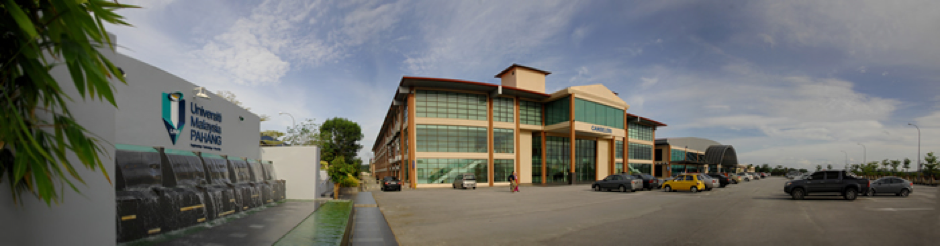
“What university is that?” “Where is it located?” “Never heard of it lahh.” These are just some examples of statements/enquiries I, a future Software Engineer, received when proudly proclaiming I’m from Universiti Malaysia Pahang (UMP). Yes, you now might have a mysterious voice in your head saying the exact same thing. Well mates, the non-glamorous UMP is situated on the side of Tun Razak Highway, Gambang, Pahang in Malaysia. Basically, it’s in a random Malaysian rainforest. Animal sightings are a norm, usually just wild boars and dogs, and occasionally more exotic ones such as snakes, lizards, monkeys and once a Kongkang  (Slow loris).

Like all public universities, application is done through the UPU system. Here is a simple guideline for those that chose the A-level-ish path:

  •   Input personal details
  •   Input pre-u details and results
  •   Input course/university choices
  •   Hope and pray

Like many other poor souls out there, my prayers weren’t answered. The dreams of threading into the hallowed grounds of Universiti Malaya etc now in shambles. Nevertheless, dreams can be rebuilt, restructured, reconstructed and reprogramed. Fantasies aside, I come from the widely praised Malaysian Matriculation Program, at least that is what they claimed. For me, that one year at another random Malaysian jungle was absolute torture, classes non-stop from 8am to 5pm, lab reports every day (Science stream), quizzes every hour, study every minute. Well it does give the advantage of 1 year compared to Form Six.

A year and a half (3 semesters) has passed since I opened the door to my hostel room. Compared to my tenure at Matriculation, life at UMP was easy, I only have 16 credit hours average per semester in my 3.5 year bachelor’s degree course. I do not face the daunting stress of medicine courses, nor do the memory crunching Law degrees, and neither do my fellow university mates. Yes, my university is filled with future engineers ready to innovate the future or a varsity filled with lazy people looking for ways to get things done easy, depends on which way you see it. Judgements aside, we all live mostly in harmony no matter our ethnicity or background brought together by our mutual hatred of our Student Council members and Students Welfare Department.

Picture2

Moving on, as students, we normally would be busy rushing deadlines and completing assignments. Typical, but then again as a Malaysian, we like to compare things. Don’t tell me you never compared our durians against foreign species of durians. Yes, but here is a norm to compare our busy schedule. Who is free? Who is busy? What course is that fella from? Ubiquitous questions thrown around to investigate each other’s cramp schedule, with many agreeing that Engineering Management students could practically sleep through the weekend without worrying about Monday, a luxury to the others.

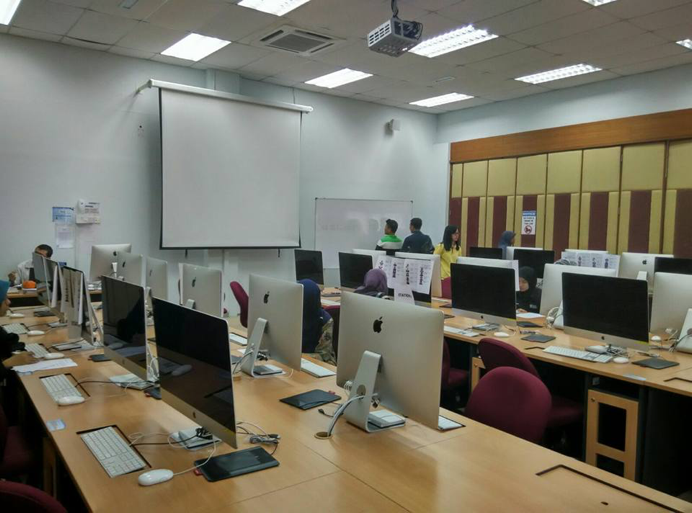
Talking about schedules, what would fill up a Software Engineer’s schedule? Most people would probably guessed we are a group of geeks with thick lenses staring at a desktop typing the enigma code out. Nope, half of my syllabus is actually project planning and management. I was surprised to find out that I’ll be learning ways to plan a software project and requirement elicitation in my first semester. Of course we still learn those weird codes and computer languages. But as I learn, I realize Software projects are not like typical engineering projects, and require different set of procedures to run due to the more unpredictable and competitive world of cyber business. So don’t go around imagining us as some fat, ill managed slob slurping down Pepsi while burping out lines of incomprehensible codes. We are more capable than you are, jokingly of course mate.


Picture3

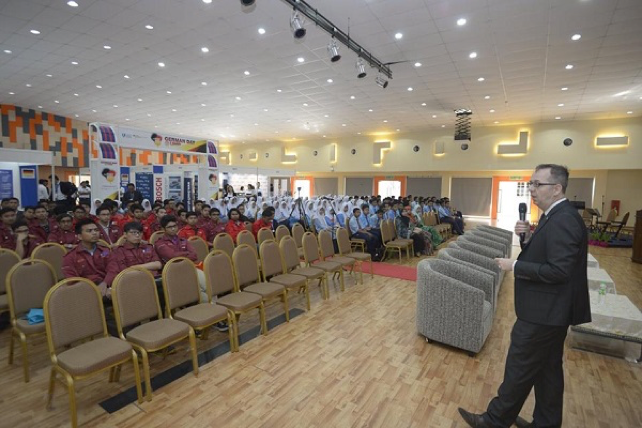
Unfortunately for us, even with our busy schedule, we’re expected to make time for co-curricular activities. Sounds normal? Here’s the catch, points will be gathered based on our involvement in the activities. Points gathered will be used during application for next year’s hostel arrangements, and there is a minimum threshold you need to pass o be eligible. My first year’s point threshold was a record high, 3900 points, as compared to the previous year, 2100 points. To make this look daunting, an international level involvement only yields 200 points. Oh and Malaysians’ love for comparing does not spare this either, competing to see who has the most points.

Picture4

Well, this is what I got myself into – an average kid suddenly thrown into a whirlpool of expectations and social competition. Then again, it was no less what I expected, these norms were already taking root during Matriculation. Competitiveness between students are high within public institutions knowing only the best are acknowledged here. I myself expected a tough journey ahead before putting on the tie for the orientation. You might say, “mate, your university’s rank is over 2000!?” I tell you, education anywhere is equal, it’s the experience and things you learn that are not from your lecturer’s that’s worth it all. I came here with expectations for myself that I wish to be met, UMP is just a training arena.

Picture5

So far, life has been kind enough, bumps along the way but nothing too rough yet. Socially I’m doing well, my trilingual (as a Malay) ability distinguished me well among the students here. Education wise, I’m just average, nothing too fancy. I’m here to mature and experience, a Degree certification is just a paper if you can’t even talk to the stall cashier, let alone some company’s CEO. My advice to future university students, look to improve more as a person, it’s more important than getting that Upper case printed “A”. Also, try not to forget to have some fun, this might be your last time where you can do so at full capacity. Those who are prospecting their future with UMP, well don’t put your hopes too high, it might disappoint you a little, it’s a public university after all. Then again UMP might be better off than a few other public universities since it’s fairly new, hence better facilities. Its close proximity with Kuantan (30 minutes’ drive) does not really isolate it from civilization too.

For enquiries you can contact me through my Facebook (Mhd Qym) or through Twitter (@MuhdQaiyyim). Just drop me a message or anything, I’ll try to reply as soon as time allows me too. So I’ll sign off by saying, good luck and may the force be with you.


Qaiyyim

Muhammad Qaiyyim is currently striving for his Bachelor (Hons) in Computer Science Majoring in Software Engineering at Universiti Malaysia Pahang. A true geek powerful with force. Frequently spotted at the basketball court or anywhere that resembles a dojo, with a laptop closeby.