Medicine in Cardiff University

Cardiff-C15---Environment-2

Image Source

1. Tell us a little bit about yourself.

My name is Rucira. I’m in Cardiff University. I did Cambridge A Levels in Taylor’s College Subang Jaya and my Malaysian exams in Convent Green Lane, Penang.

2. What was included in the application process to your university?

Firstly, you need to know what kind of universities you are targeting: overseas or local (public or private) universities in Malaysia.  For me, since I did the A levels, there was no way of applying to local public universities as they charge you international student fees.

Secondly, make sure you have fulfilled all necessary entry requirements prior to your application. For example, the UKCAT, BMAT, ISAT, SATs, IELTS. Also, you need to write a sensible personal statement and know your forecasted grades on the upcoming A2 examinations. For me, I did fairly well on my UKCAT with a 720 average and a scoring 900 under Abstract Reasoning. My forecast was 3As and 1A*.

Thirdly, I went to useful and trustworthy websites like thestudentroom.co.uk to read up and do a little research on the universities that I will be able to maximize my chances of getting a place. You need to know your limits and capabilities! I did not apply to universities that concentrate a lot on academics as my forecast grades were not very high. I also avoided universities that pay a lot of attention on the UKCAT. In my place, I applied to the universities that pay more attention on gaining an all-rounded student as I was active in the clubs and societies in my college as well as in cultivating self-development skills.

Next, once you have submitted your application, wait for them to call you for an interview. That’s the exciting part. Most of us students already have a ‘bible’ to literally memorize answers that will most likely be asked by the interviewer. But don’t only rely on that as interviewers themselves own that book as well. I recommend that you read up on the very small and down-to-detail stuff about the university that you are attending the interview for. Read about their medical system, the NHS and also the latest BBC news.

After that, it’s all praying time.

3. What did you include in your personal statement/essay(s)?

Well, my personal statement portrayed more of what I did during my hospital attachment and how I felt about the whole experience.

4. Did you perform any attachment?

I did my attachment in Island Hospital. It’s the largest and fastest-growing private hospital in Penang.

5. What are some of the activities you participated in that you think helped your application?

I joined a handful of clubs in college and held positions in two of them. I was the President of an art club (Free Arts Movement) and an Activity Coordinator for a charity club (Welfare And Charity Keen Youth).  Besides that, I also freely participated in any volunteer-based activity that was held by my college. For example, teaching at the Myanmar Education Center, visiting orphanages, helping out at an autism home. I also had the opportunity to participate in CAMPS International where we travelled all the way to Beng Mealea, Cambodia to help build classrooms for their local school, teach the school children English and also help out in their agricultural needs.

6. Did you have to take any tests?

I took the UKCAT. I only had 4 days to prepare for this. I bought the 600 UKCAT book, did the whole book, all the questions, and also practices online. The more questions you do, the better you get the hang of it. Most of the time, the questions are not hard, but they are time-consuming, and to answer a certain Reasoning, there’s a fixed amount of time. What I did was, I tried to answer as many questions as I can right in the beginning, and then when I have roughly 1 minute left, I just randomly choose the best-fit answer.

7. How was the interview session?

I was called for 6 different universities’ interviews. They were all different. Unfortunately, I can’t share the questions with you as I have signed a confidential release. But you should be prepared for anything they ask you.

If I were you, the smartest way is to go on to student blogs and read up on past student experiences. Some universities will tell you beforehand what to expect, so don’t worry. Nothing could be harder than preparing for SPM.

8. What do you think contributed to the success of your application?

I included most of my ECA, as the universities that I applied to concentrate a lot on gaining a student who is both academically good and active in extra-curriculars. I also included my self-development skills: for example, I’m a KUMON completer, and I took ABRSM piano up to Grade 8 for both theory and practical. I also took part in a lot of NGO competitions that are internationally-recognised, such as the Commonwealth competitions, the AMCHAM award, FedEx International Trade Challenge/Junior Achievement competition.

9. What advice would you give to future applicants?  What are some of the useful resources you used?

I would say, know your limits and capabilities. Play to your strengths! I did a lot of reading on thestudentroom.co.uk, the NHS, BBC news and also the respective universities’ websites. And if you ever fail, I hope you have the courage to try again.


imageedit_2_8264332927Rucira Xiu Xian Ooi is an all-rounder who will be pursuing her medical degree in Cardiff University under private funding. There’s never a dull moment when you’re with her and she is also a very good listener.


Medicine in Monash Malaysia

a53749f57df20f401babc429f03e613fead283

Image Source

1. What was included in the application process to read Medicine in Monash Malaysia?

I applied online through http://www.monash.edu.my/study/apply/application-form/online-application. My advice is to apply as soon as your forecast/ actual results are available.  A band score of 7.0 is required in IELTS. The ISAT (International Student Admissions Test) is required too!

2. What are some of the activities you participated in that you think helped your application?

Being a member of the St John Ambulance Malaysia, I learned a lot about first aid and how to handle emergency cases. It mainly helped me in my interview, more specifically how to think critically and how to answer questions asked by the interviewer. I also believe that the school is looking for people who can work well in a team.

3. How was the interview session?

The interview session was fun because it was like a mini game going on. Multiple Mini Interview (MMI) could be tough for some people that couldn’t read carefully, think critically and answer questions quickly.

There were 4 interviewers with different questions. Candidates were given 2 minutes to read through the passage and 8 minutes to answer 5 to 6 questions.

The passages I got were on:

  • Doctors being tired due to long shifts;
  • Helping aboriginal children in funding on breakfast scheme;
  • Parents not agreeing on children studying agriculture; and
  • Team members neglecting their projects. Give advice.

Some of the interviewers are quite strict; you’ll be pestered and pushed to answer the questions. Most are very friendly and they’ll allow you to ask questions like how the syllabus is and anything you’re curious about. The “seniors” are quite helpful too! Don’t be shy to ask them for tips.

PS: Running is required, so ladies, ditch your high heels.

4. What do you think contributed to the success of your application?

I think the interview covers a whole lot in the application process. So as I mentioned earlier, ECAs and teamwork will help your answering technique. Do practice questions on ISAT and score well in your Pre-U course.

5. What advice would you give to future applicants?

Good luck in your future career as a doctor! Don’t be too stressed up on studies and do well!

*Note: Monash University Malaysia uses the same syllabus as Monash University Australia and is recognized by both the Malaysian Medical Council and Australian Medical Council. You may apply for housemanship in Australia.*


imageedit_14_6684298470Melanie Hew is a joyful girl who enjoys bringing happiness to people. She will be pursuing Bachelor of Biomedicine in the University of Melbourne. She hopes to be a paediatric cardiologist in the future.

Is it possible to apply for US colleges without Pre-U?

Q:

Is it possible to apply for colleges in US without taking A-Levels,form6 or any other Pre-U(Grade 12)? Can I be admitted into colleges in US by just using SAT scores,TOEFL/IELTS & SPM grades?

A:

In short: it is possible to get into US colleges without completing Grade 12; I personally know people that have gotten into college after Form 5.

However, bear in mind that you will be in the same pool with applicants that have gone through Grade 12 (hence more material and rigor in their education). So in order to not let your lack of Grade 12 education be a disadvantage to your admission chances, you have to put together a strong overall application taking into account your extra-curriculars, essays, outside study, personality, etc. (read “holistic admissions”). In other words, you have to be a really strong applicant, “better” than the people that have done Grade 12.

How much it affects your admission chances also depends on the kind of schools you are looking at. Community colleges are a good option. If you don’t already know, community colleges are 2-year institutions, meaning after spending their 1st and 2nd years there, students transfer to a normal 4-year college to do their 3rd and 4th years. The reasons why they are a good option are (1) they are less selective than normal 4-year colleges so more likely to take students graduating with Grade 11, (2) they save time (after SPM: 2 years @ community college + 2 years @ 4-year college). On the other hand, if you’re looking at prestigious, highly-selective Ivy Leagues (for instance), it might not be such a good idea to apply with just Grade 11.

Answered by: Yeong Wern Yeen, a JPA scholar who is studying in the University of California, Los Angeles (UCLA). 

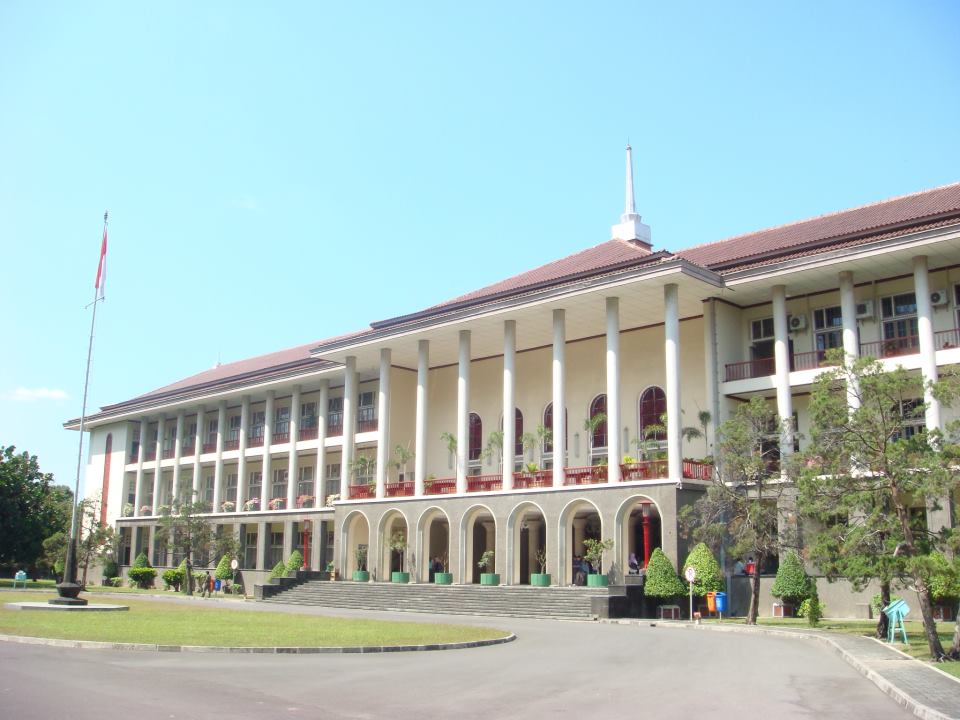
Medicine in University of Gadjah Mada Indonesia

UGM

Image Source

Hello there! If you are looking at this wall of text, I presume you are interested in at least one of these following courses: Medicine, Dentistry, Pharmacy, and Veterinarian Science. If you’re not then you might be looking at the wrong post.

Let me just be honest. I chose University of Gadjah Mada (UGM), Yogyakarta, Indonesia to study medicine due to economical considerations as I come from a middle-income family. The whole course costs around RM 200k. The fees increase from year to year, so check it out yourself.

First, let me do a brief introduction of Yogyakarta (but I believe Mr Google can do a lot better than me). Yogyakarta is a city located in central Java, famous for its special status as the only city in Indonesia with a Sultan, and also well-known for the number of universities crammed into this little city. Here, you can see university students literally everywhere, and the city’s economy revolves around the needs of students: from 24-hour photocopy shops to convenience stores and cafés – even Dunkin Donuts is open 24/7! You don’t even have to worry about your laundry, as for less than RM 1 per kilo, people will be begging you to let them do your laundry, iron it and give it back to you all neatly folded.


Tell us a little bit about yourself. 
I took the SPM, then came here to study in University of Gadjah Mada after doing a short foundation in science course (7 months). For more info on this, please contact the sole agents managing the students entering this university (Medic ProLink and Nugrahan)

Link to FB:  https://www.facebook.com/medicprolinkMalaysia?fref=ts

What was included in the application process to your university?
It involved taking an entrance exam, called the Gadjah Mada Scholastic Test. I was tested on the 3 sciences, Mathematics, English, and Bahasa Indonesia. The tests that were difficult were the Mathematics and Physics tests. The test consisted of hundreds of objective questions, and the marking scheme was: 4 points awarded for each correct answer and -1 point for every wrong answer. But it appears that in 2014, the test has been altered and it is no longer that difficult. There is a psychological test and IQ test too. All the tests will be done on the same day, and you will be interviewed on the spot by doctors for aptitude (just to make sure you have interest in the course you are pursuing, nothing much). The interview is normally one-sided, where you answer questions the doctor asks. Make sure you keep up on the latest medical news as there will be a question or two on recent medical issues. The results will be announced a month or two later. The tests normally commence in June or July, so be sure to contact the agents before this period. My recommendation: study as hard as you can before the exam because whether you enter or not all depends on the test results.

What did you include in your personal statement?
For the personal statement, well I just wrote an honest summary about myself, my strengths, and my weaknesses. They just expect something simple, just so that they can see if you are suited for the course you want to pursue at their university.

Did you perform any attachment?  
I did a medical attachment before I entered university, but in my opinion it was solely to convince myself that I am interested in medicine and to experience the life of a doctor. You will get more than enough hands-on experience in the clinical years if you have the right attitude and sufficient knowledge, so do not worry.

What advice would you give to future applicants?  
Think carefully before you choose medicine, dentistry, pharmacy or veterinarian science. Once you take the first step, there is no turning back. Any regrets will probably accompany you for your entire life, and turning back will result in a big waste of your parents’ money. Consider the number of people you need to compete with after returning to Malaysia, the amount of hours you will spend dating books and journals, and just simply being in the medical world where no one but people in the same field will understand stuff you say. Be prepared, for the medicine course is a very gruesome, multilevel mental challenge. It will change your life completely, in ways you will never have imagined, be it for good or for bad.


Now for you city folks, I’m going to address your main concerns.

Q: What is the average internet speed there? Will it be fast enough for me to video call home or have an online conference video call with my friends?
A: I’d say 2 Mbps tops for 3G network (normally only enough for social messaging and light browsing) and if you have the cash, 5 Mbps if you get a telephone line connected to your rented house. 5 Mbps costs around RM700 per month? Personally I use a 1 Mbps line which costs around RM70 and share it with 2 housemates.  Just nice for all of us, as long as we don’t stream movies at the same time.

Q: What is the usual means of transport?
A: Not many people here can afford cars so we get around by motorbikes. But there are some who prefer to get a car, which costs around RM50k?

Q: What are the living conditions there?
A: Well, money talks here so, the more money you are willing to spend, the better the conditions. A typical room with air conditioning and an attached bathroom for a girl easily goes up to RM 500, with water heater even more. Because all my expenses here are on my parents, I prefer to go on saving mode. My rent costs around RM 2k per year, so that can give you a general idea of how prices can vary. It is totally dependent on what you want. Climate here is similar to Malaysia, but the dry spells and rainy seasons are much more prominent than in Malaysia. Most nights are chilly enough, so sometimes you don’t even need to turn the fan on when you go to bed. Generally, Yogyakarta’s condition is similar to Ipoh, just not as developed as Kuala Lumpur. Expect to take a free “time-travel” back to our parent’s era where Coke is still sold in glass bottles, roadside stalls sell fuel for motorcyclists, small roadside stalls everywhere etc. Ask your parents how their era was like, and it won’t differ too much in terms of infrastructure, except for the fact that you have better technology like computers and 3G networks. In my opinion, it’s not too bad, but initially I really had a culture shock. Just saying.


The student is a low-profile medical student, currently studying in University of Gadjah Mada. He believes that everything in life has an answer or solution in the end.

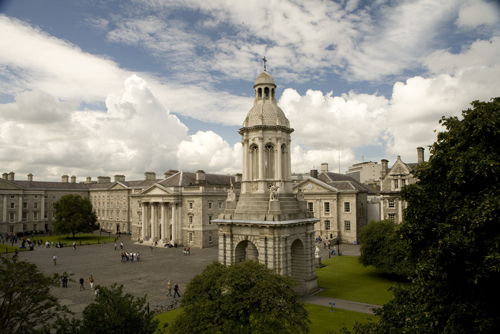
Applying to Medicine in Trinity College Dublin

FrontSquareCamp

Image Source

Tell us a little bit about yourself.
I am Emily Tan from Penang. I am currently studying medicine in Trinity College Dublin, Ireland. I am now in my second year. I previously did my A-levels in Taylor’s College Subang Jaya.

What was included in the application process to your university?
The application process is relatively easy compared to UCAS. Basically, there is a specific application form when applying to Ireland universities. I had to rank the universities of my choice, namely Trinity College Dublin, University College Dublin, University College Cork and National University of Galway. I also had to send in a resume regarding my scholastic achievements and extra-curricular activities.

Did you perform any attachment?
I shadowed an orthopaedic surgeon in Penang General Hospital for a week. That experience was truly the defining moment for me to pursue medicine as my lifelong ambition. I have gained insights on the working life of a doctor and how important the doctor-patient relationship is, besides having knowledge on your respective field of work.

What are the ECAs that you think helped your application?
Music has played a huge role in my life as I have been playing the piano and violin since young. I channelled my passion into actively participating in the music scene in high school and also in college. Besides it being my passion, it is also another way for me to unwind and de-stress after a long day.

How was the interview session?
Successful applicants are shortlisted for an interview depending on which university you get into. I was interviewed by two Trinity representatives. It was more of a conversation/discussion rather than a formal interview. It was basically an interview to get to know you better. The questions posed were rather conventional, such as “Why did you choose medicine?” and they were more focused on my resume, so re-read your resume and thoroughly know what you wrote. Most of the time, the interviewers questioned more deeply into my response, so really know what you are going to say, but most importantly, just be yourself.

What advice would you give to future applicants?
Choose a field which you are most certainly passionate about. If you are uncertain about it, do attachments or talk to seniors to gain insights on what that particular “life” is all about. Do not be afraid to approach people who have already gone through this process. Good luck!

Here’s my email, etan@tcd.ie if there are any queries on anything.


Emily TanEmily Tan Chiao Wei is currently chasing her dreams of being a medical practitioner in Trinity College Dublin. She has amazing patience and this meticulous character that compliments her friendliness so well. That aside, she also loves music and dogs as much as medicine, if not more.

Medicine Interview in Cambridge

IMG_0219

King’s College Cambridge

I first laid eyes on Cambridge when I went there for my interview in December 2013 and I must say, it is indeed every bit as beautiful as it appears in photos and postcards. Upon arriving at Cambridge, I immediately realised that I had forgotten to bring formal shoes to match my suit. It caused me great distress as I looked to my worn-out sneakers, which even had holes (on the left near my little toe) in them and I was so sure that I was going to give a horrible first impression. Shopping for new ones were out of the question as I didn’t have much cash on me at the time and I was already due to fly back to Malaysia the day after my interview. In the end, I decided that I’d just hope that nobody would notice that my shoes were completely out of place.

My misadventure then started when I was dropped off by the taxi at the Gonville & Caius main Porter’s Lodge (or as they call it, the ‘plodge’), when in fact I was supposed to check into my room at Harvey Court plodge. Luckily, a kind senior who happened to be there offered to show me the way, and led me to Harvey Court by passing through King’s College. I should take this time to mention that King’s College is what most people think the whole of Cambridge looks like, as it’s always shown in postcards and pictures of Cambridge. I collected my room key from the porter’s lodge and proceeded to lug my suitcase up two flights of stairs to a room in the K-block near Harvey Court. I remember spending the night worrying over my interview, and desperately trying to memorise the process of aerobic respiration.

The next day, I spent most of my time in the JCR at Old Courts, waiting for my interviews and generally having panic attacks while listening to other people talk about their interviews. My first interviewer started the interview by asking me a few questions about my work experience to help me settle down and make me less nervous about the interview, and followed this up with questions relating to my work experience. Since I talked about how I had learnt to take blood pressure while volunteering at a nursing home and mentioned that I shadowed a urologist, I received questions pertaining to these experiences. I was also asked about the latest issue of biological sciences review and what the main story was, but I could not give an answer as amidst all my other interview preparations, I did not manage to find the time to keep up with it. That made me feel pretty bad, and was definitely not the best morale booster.

My second interviewer also tried to make me less nervous by talking about his experiences in Malaysia when I told him I was Malaysian, but soon after, he cut the chit-chat and moved on to the serious stuff. This interview was mostly a discussion about the various organelles inside a cell, specifically focusing on mitochondria and their respective functions.

The third interview was the one I felt I screwed up the most, but I suppose it was my fault for not studying my AS syllabus in enough detail. We discussed about the organelles of the cell again (mostly about the mitochondria) and then moved on to discuss the sex chromosomes, followed by a series of questions about kidneys and oxygen dissociation curves.

I made sure to thank each of my interviewers after the interview for their time and also for teaching me something new, because I truly did learn something new in each interview. I should also note that each interview is conducted sort of like a typical supervision, so as to give a taste of what Cambridge life would be like.

If you have any questions or would like more details, I can be contacted via:
Facebook: Victor Teh
Twitter: @Zenxenitious
Ask.fm: ask.fm/Zenxenitious


Victor TehVictor Teh is a first year medic in the University of Cambridge. His phone is permanently on flight mode but you can always catch him online (details found above :P)

Biochemistry Personal Statement

This Personal Statement was part of this student’s successful application to study  Natural Sciences at University of Cambridge and Biochemistry at Imperial College London, University College London, University of Manchester and University of Edinburgh


When I was nine, I saw my grandmother pass away in bed. I never really grasped the implications of the situation then. But as I grew older, I found out she had died of colon cancer. I realised that her life could have been prolonged if only we had known how to deal with this terrible disease. I thought that there must be some way to fight off this threat. And after learning more about science, I realised that there was more than one way. Scientists and researchers spend nearly their whole life in diverse fields for a solution to this problem. For me, I see Biochemistry as a highly reliable route for preventing cancer, as cells and molecules can now be manipulated effectively.

At school and college, I have been constantly fascinated by the way molecular structures and bonding affect the properties and functions of cells because these are the areas I believe can be used to treat cancer and other diseases. Furthermore, organic chemistry amazes me as its wide scope opens up many possibilities for the hybridization of drugs to produce more effective medicine.  Mathematics too is a very enjoyable subject for me. I have been quite capable of understanding the methods required in solving maths problems relatively quickly and remembering the formulae necessary to solve them

Reading is an important part of my life. Literature in any form, has taught me to have an open mind. To appreciate many different perspectives. To view things accepted as ‘truths’ in a new light. My interest has never been limited to a single genre as reading materials about science, history and culture are among those I peruse. ‘The Origin of Humankind’ by Richard Leakey, has successfully instilled a culture of enquiry in me with its wide discussion covering various points of views. In this way, my passion for reading has improved my understanding of the world and how science has come to affect civilization. It has also given me the ability to be critical and analytical when dealing with a variety of situations.

Representing my secondary school in a national science competition known as the Mighty Minds National Challenge has led me further into the realm of science. This competition taught me that the route to science does not consist of just information, but creativity, innovation, and consistent questioning of the processes that are used to solve a problem as well. Furthermore, my participation in the Yokohama Science Frontier Forum for International Research, Science and Technology (FIRST) has provided me with a first-hand experience of different cultures and international perspectives with respect to scientific progress and research from a country respected for its ground-breaking technological advancements. In preparation for that forum, I spent two weeks with a local scientist in her laboratory where I learnt how to use equipment such as a drying chamber which was used for supercritical drying of the aerogel I made for the forum.

After five years in a boarding school, I feel I am very capable of adapting to living abroad independently. Also as a prefect, I have learnt to be responsible for my actions, communicate effectively and work under pressure. Apart from that, my involvement in rugby has instilled a strong sense of teamwork and dedication into me. Additionally, being in the school orchestra has given me a high level of discipline, commitment and attention to detail, preparing me for the rigours associated with completing a degree.

In due time, I believe that a qualification in Biochemistry in your university will help better prepare me to solve the challenges that our world will face in this era of mass production, environmental hazards, scientific progress and shared responsibility for our Earth. I look forward to contributing as much as possible and working together with the members of your esteemed university to improve humanity’s quality of life in a sustainable and efficient manner.


DISCLAIMER: The personal statements on this site are strictly meant as a starting point to give an idea of how successful personal statements look like. There is no surefire formula to writing good personal statements. COLLEGELAH IS STRICTLY AGAINST PLAGIARISM OF ANY KIND. UCAS employs a plagiarism check system that checks applicants’ work against other published writing so please DO NOT PLAGIARISE.

Jeffrey Cheah Foundation-Sunway Group Scholarship

Sunway Scholarship

In 2013, Jeffrey Cheah Foundation and Sunway Group Joint Scholarship consisted of 4 stages in total. Upon submission of your application form, you will need to go through the following stages:

  1. Phone interview
  2. Individual interview and aptitude assessment
  3. Group assessment
  4. Final interview

As this scholarship was offered for the first time in 2013, there are various opportunities for amendments in scholarship assessment method in the years to come. Hence, this can only be served as a reference.

Application form:

In 2013, the form could be accessed in the official website of the Jeffrey Cheah Foundation. It was an extensive 4-page-long (longer) form as compared to most other scholarship applications. I was required to attach my curriculum vitae (CV) as well. The deadline for submission was in late May in 2013.

Phone interview:

I didn’t even know that this was an interview until the person-in-charge told me so after I was awarded the scholarship! The questions asked were mostly your personal information, such as family, education background, co-curriculum activities and choice of university and courses, and was conducted by a Human Resource Assistant Manager. No specific preparation is needed as the questions are only at the personal level. Be honest, articulate, and elaborative in your answer.

Individual interview:

I was invited to Sunway headquarters for my first face-to-face interview, conducted by 2 interviewers: the same person who did the phone interview, and a representative from Jeffrey Cheah Foundation. Common interview questions were asked: Tell me about yourself, your strengths and weaknesses (an interview trick: I didn’t just stop after explaining my weakness, but to continue to explain how I tried my best to overcome it), leadership experience etc. Nothing too daunting as the interviewers were very friendly! (Even if they are not, don’t be discouraged! It is part of the assessment!)

Aptitude test:

Right after the individual interview, I was brought to a room for a computerized aptitude test. The aptitude test I took contained 3 multiple-choice sections: information abstraction (abstract information from graphs, tables or paragraphs), critical reading (very similar to SAT critical reading section) and geometric deduction (3 to 4 consecutive shapes/geometrical alignments are given and I was asked to deduce the next possible one). I personally found the test harder than the Khazanah Stage 1 test due to the extremely short time allocated for the harder test questions. Don’t worry if you find the test hard as well: I almost failed my test, but still was able to proceed to the next stage.

Group assessment:

I was given a stack of information and a proposal: I was then required to decide whether the proposal was a good one based on the information provided. In a team, we had to draft a complete report on this. (Not all information given was necessary: some was redundant.)

After that, I was brought to a room for an individual interview. Two interviewers questioned our proposal.

Finally, we were required to further modify the proposal based on another set of information given. A group presentation was given to convince the interviewers that this new proposal was good.

Tips: It is essential to evaluate both sides of the argument before a decision is made. The interviewers were seeking for candidates who could draw comparisons between pros and cons. Also, when tons of information are given to you, keep calm and be ready to filter the unnecessary information.

Final interview:

My final interview was an interesting one: the panel of interviewers consisted of 3 Sunway CEOs (all Tan Sris) and the Head of the Group Human Resource. Common interview questions were asked as well as some personal-specific questions: ‘Tell me about yourself’, ‘How did you prepare yourself for exam and activities’, ‘What is your biggest challenge/hardship’, ‘How did you prepare yourself for the transition from a Chinese school to English-speaking college’, etc. Surprisingly, the interview was casual enough that I could speak comfortably and frankly, which was probably the reason I got the scholarship. I strongly encourage interviewees to be honest with your answers as it is plain hard to ‘make stories’ or ‘cheat’ or ‘exaggerate’ due to the interviewers’ experience.

What do I think helped my application the most. Of course, consistent excellence in academic (school and competition) results helped me in convincing the panel of interviewers that I had the sufficient aptitude to tackle problems in work. Therefore, even if I almost failed my aptitude test, I was still able to secure the scholarship.

However, the panel (particularly the final stage interviewers) was actually looking for people who were honest, critical and humble. Therefore, it was vital for the candidates to have a positive attitude during all stages.

Some ECA activities, particularly leadership activities, also helped in the interviews.

*****

I did not prepare for it as it was the first time they had this scholarship, and so I did not know what to prepare for. However, I would encourage students to prepare for the aptitude test; there are online sample questions on several websites. Also, it is advisable to ask yourself some ordinary interview questions before the actual interviews such as, “Tell me about yourself”. This allows you to understand yourself better so that you are better prepared for the actual one. However, there is a fine line between being well-prepared and over-rehearsed. Be careful so that you won’t sound too artificial.


Zi Qing

Liew Ziqing is always the lucky one in terms of his education journey. Formally a Chong Hwa Independent High School and Sunway College A levels student, he is now an engineering student in University of Cambridge. He is the first student to be joint sponsored by Sunway Group and Jeffrey Cheah Foundation to study in Cambridge. He likes karaoke, but doesn’t want to be a singer.

AMCHAM-MACEE Scholarship

BIASISWA AMCHAM-MACEE

Hi there! My name is Roumen Guha, and I am an 18-year-old Malaysian studying at the University of Wisconsin-Madison. My intended major is electrical engineering, but mechanical and biomedical engineering are both fields that I am interested in as well. My graduating class will be the class of 2018, although I am trying to finish my course in 3 years instead of 4.

I was jointly awarded the 2014 AMCHAM-MACEE Scholarship by the American-Malaysian Chamber of Commerce and the Malaysian American Commission on Educational Exchange. It is a partial scholarship worth $5000 annually, lasting for 4 years of study. To maintain the scholarship, I am expected to maintain at least a 3.25 Grade Point Average, and required to send MACEE a copy of my transcripts every semester. I intend to intern with engineering companies during my summers here, while also taking summer courses. I also plan on pursuing undergraduate research opportunities as they come up.

The first stage of the scholarship application, in my mind, was finding out about it. I only became aware of its existence through a friend of mine who was also applying. I also only found it about 2 weeks before the deadline for the application form. THERE WASN’T ENOUGH TIME.

And so it started, the race against my own laziness. It didn’t help that the scholarship form was a Word document. I resorted to converting the entire document after it was filled out to PDF and then writing the 2 essays in separate Word files. The application also required two letters of recommendation; one from a teacher that had previously taught me and another from a mentor in a community organization that I was a member of. These letters of reference had to be both emailed and posted to MACEE, and because I was already so close to the application deadline of May 30th, I had to request that the letters be completed as quickly as possible. Be aware, they also ask for the income tax and annual salary statements for working parents in the application.

Another challenge I faced was submitting the application, which had to be done via email and via post. However, because I had been working on finalizing my essays till the early morning hours of the 30th of May, I had to submit my application in person. And I didn’t have a working printer at home either. I had to submit it before the MACEE office closed at 16:30. My parents were supposed to have come home from work with the documents printed, but they got stuck in a traffic jam and so couldn’t make it in time. I quickly rushed to a taxi stand and asked the driver to take me to Menara Yayasan Tun Razak, where the MACEE office was. I called MACEE ahead of reaching there to ask if they had a printer I could use in their offices, and I was in luck!

About 3 days after submission I got an email and then a call informing me that I was a finalist, and I was asked to schedule a date and time for the interview, 15:30 on Friday the 13th of June. Talk about bad omens. The week of the interview, I was busy with trying to learn the basics about cars with a mechanic, and so didn’t have time to prepare till the day before. So on Thursday afternoon, I arranged my documents, such as certificates and accomplishments and other things of the sort inside a folder to take with me. The next morning, I researched the commonly asked questions by scholarship interviewers and went through about 30 questions, trying to answer them to the best of my knowledge.

At the interview, it looked like I was overdressed, with a tie.

It was a one-on-four interview, with me being the one. It was intimidating; they all had their eyes on me. I was uncomfortable in a tie. I was overthinking. I got terrible stage fright. I could hear the tremor in my voice as I spoke. They could definitely hear it too. I even apologized for this. But the interviewers were nice, compassionate people. They had a tough job ahead of them too. They could only pick one person for the scholarship. They could only say one person was deserving enough for it, which isn’t true! But it was their job to pick.

They asked why I chose electrical engineering. I told them it seemed challenging and that it was so diverse that I couldn’t imagine there wasn’t more to be done in it. I also told them that I wasn’t sure, and that I might change to another form of engineering after I had started classes. Also, engineers serve. I want to be helpful. They asked why the University of Wisconsin-Madison, and I told them that it was the only one of two universities which accepted me, it was the university my dad went to, and that it was a university ranked for many, many subjects compared to the other university, which had a stronger electrical engineering program. I told them this was because I wanted to learn a lot. I love music, and I intend to take music classes. I want to try dance classes as well. Debate classes. I want to try everything this university has to offer, and it has A LOT to offer. They asked why the US, and I told them it was because only the US system gives students the ability to sit in on classes and not technically be a part of them, so it wouldn’t count in their exams, giving me the opportunity to learn instead of cram.

They asked about any leadership qualities I have; I told them about my experience as a Leo of the Leo Club of Metro Methodist College Kuala Lumpur, about being a leader and about being of service to people. (Service is also one of the main themes of the University of Wisconsin – Madison.)

They asked where I saw myself 10 years from now. I answered that I’d like to be working with UNOPS, which is the United Nations Office for Project Services. It is a peace-keeping organization that is renowned for being politically neutral and only helping people, and that it was also allowed into countries to help even when the UN itself was not. I also told them that I think prosthetics is a great, curious field to get into, and since I fully intend on continuing into graduate studies, I might choose to go into biomechanical engineering. I told them of the recent articles I’d read from Duke University and Rice University about wires made of nerves so that the body would build them up and heal them itself, instead of needing to be replaced. I feel like there is a lot more to be found there.

The most challenging one was one was asked last. It asked why I, specifically me, would be more deserving of the scholarship. I had no answer, and I told the interviewers this. I told them that I’d struggled with this question too. There are 7 billion people on Earth, and I could not be the most deserving one. I told them that I’d try to change the fact that their job is so difficult. I want to make education easier to attain, and I told them this too.

They also gave me the opportunity to ask them questions, and I took it to ask how many finalists there were. 5 finalists.

I don’t think that this scholarship changed my views, but I think it made them clearer. It gave me something to shoot for, and the understanding that there were others relying on me to succeed. I am deeply grateful for simply being considered.

During the interview, I added simple jokes. Like the fact that my dad went to the same university seemed like a disadvantage for the university than an advantage. I was honest. I think that that’s the best advice you can get. To be honest, and prepare for everything. They want to know that you can succeed, so don’t give them a reason to think otherwise.

Good luck!


Roumen

Roumen Guha is currently studying at the University of Wisconsin-Madison to graduate as an Electrical Engineer. He likes music and stories, and is like a moth to a flame with drumsets

The Astro Scholarship

Logo-Astro

Hello readers. This short piece is to give some insight into the whole selection process for the Astro scholarship. Just to start off, I would like to say that having been in your shoes I can understand any nervousness, anxiety, worry, butterflies in your stomach, etc. As a Christian, my first advice would be to take a deep breath and say a prayer. Remember that if you do your best and leave the rest to God, you have already done the best that you can do. So it becomes pointless to stress over things beyond our control.

How many stages were there in your scholarship assessment?

There are about 4 stages after the submission process.

1st stage – The online assessment

Say you have submitted your resume and are now asked to take the online assessment. This part is done online at your own convenient time. However, you are required to submit your answers before a certain date.

The online assessment is divided into two parts.

  • The first part is an English/Maths questionnaire where you will be tested on mostly your logic and IQ. It resembles the A-levels Thinking Skills questions (if you are familiar with them). Most people find this part fairly easy so don’t stress too hard over this.
  • The second part of the online assessment includes writing an essay. You are given two questions and are required to choose one to write an essay on. My question was something along the lines of “Astro is primarily a media broadcasting company. Propose a few ideas to expand the company.” Hopefully you can tell that I am paraphrasing the question.

2nd stage – The Interview

So 1st stage is done and dusted, thank God. Now comes the second stage where you will be invited to an interview at the Astro centre. Here you will be given a time slot to come and attend the interview. Come early as it gives you time to prepare mentally and just to calm down a little. The environment was really pleasant and exciting.

The interviewer was the Vice-President of Human Resources. She was very friendly and hopefully this will put you at ease. The questions were fairly standard like “Tell me about yourself?” “What would you say are some of your weaknesses?” “Tell me about something you did that shows your creativity?” and “How can you contribute to Astro if we select you for our scholarship programme?”

Try to put a little more thought in your answers. Remember, the interviewer will be having interviews that can stretch across a few days. Having the same responses to the questions as most other people will not be very favourable. Also, remember to be honest and polite. Give a proper greeting when you enter the room. Try to remember the interviewer’s name to address him/her properly. Be pleasant. Also, show serious interest in working for the company if you plan to be their scholar.

3rd stage – Group Assessment

Phew. Congratulations if you have made it this far. *Wipe imaginary sweat*

For this stage, Astro will use outside examiners to assess the candidates with a few of their own personnel overseeing the activities. During my time, the people from Leaderonomics were invited to assess the candidates. It was really exciting and the facilitators from Leaderonomics were very outgoing and vibrant people.

You will initially begin with a few ice-breaking activities to ease the tension and loosen up our tongues. Then, the facilitators will start dividing the batch into a few groups. There were about 4 groups, if I am not mistaken, with each group having around 7-8 people. A leader was chosen from each group randomly. My advice would be not to sweat over this. You will not be in anyway handicapped if you do not happen to be a leader of a group. Instead, try showing that you can also be an efficient follower.

After being split into groups, we were given a few tasks to do as a group. Almost all the activities given were fun and resembled high school camping activities.

For example, we were given a bunch of materials and told to create the most innovative Astro centre we could come up with. Also, we were given chocolate bars and mineral water to sell to raise funds for our “Astro centre.” The funds allowed us to buy more material for our project. Selling the chocolate bars and mineral water wasn’t easy though as we had to sell them at a fixed price to either the facilitators from Leaderonomics or Astro. Also, you were competing with other teams to sell the exact same item. I managed to sell the bottle of water by including my own home-packed bottle of water for a buy-1, free-1 deal. Let’s just say some sweet talking was also required.

After a certain amount of time, we were required to give a presentation of our Astro centre and this was when all sorts of ideas were presented. There was even one where the team built missiles as a defence for the centre. Again, this is about creativity and the ability to present rather than what is plausible. Ability in public speaking came in handy here. Other teams were allowed to question your design to test your ability to defend your ideas. Remember that your attitude is being watched throughout the process. Many people here tried asking questions just for the sake of it, which did not impress the judges. Ask only genuine and intelligent questions. Try answering a few as well as the facilitators notice this.

There were many other modules that tested our ability to think on our feet, things that you normally find in a leadership camp activity.

My time spent in Red Crescent camps really paid off here, thank God. My advice would be to get involved in all of the team’s decision making. Voice out your ideas and concerns. Once your voice is heard early (especially if it is beneficial), it makes it easier to state your points throughout the day. Also, remember to take an interest in your teammates’ ideas as most of the people there are intelligent and capable individuals. Be a team player, take up the challenge to lead if appropriate, and try thinking of ideas that are out of the box. Use the opportunity to make some friends as well. Most of the friends that I made ended up getting the scholarship as well.

This stage was the most fun I had in all the scholarship stages I had been in.

4th stage – The Final Interview

Finally, this is the stage before the scholars are selected. You are given a slot to come in for the interview. The interviewer panel on my day consisted of 3 senior Astro employees. There was Mr Alex, the Chief Operating Officer, Mr. Andrew, the head of human capital and a lady interviewer (whose name I can’t quite recall), who was the Chief Information Officer. The questions in the interview ranged from “What are some of your interests?” to “Why is the piano an interest of yours?” even up to “What are your favourite periods in music and why?” I guess my point here is they get really thorough in their examination and see how we react to unconventional questions under scrutiny.

It’s not all about music though as they also asked me to defend my choice to study in London as opposed to studying somewhere in the States. Their argument was that the United Kingdom was seeing a decline in terms of competitiveness compared to areas such as China and the United States. Chinese universities are on the rise and the U.S. had traditionally “stronger” universities and was the number one destination worldwide in terms of higher education. Also, universities thrive on government grants which depended on the GDP. With the economic power shifting toward China and the U.S being the powerhouse it has been, British universities are expected to slowly decline.

My advice in this stage would be to pray beforehand, and remain firm with your choice with proper reasons to back your decision. Do not be rude or ignorant however as they are not the same as being firm. Remember that a scholarship is a blessing and the company does not owe you anything.

There are no set number of scholars chosen each year at this stage. 15 were selected for the final interview with 7 finally chosen as Astro scholars. The number was 5 the previous year. It comes down to how many applicants are deemed suitable for the scholarship by the interviewers.

Old man’s ramblings

I sincerely hope this article was some sort of help to you guys. Most of this happened nearly 18 months ago, so most of the details are rather unclear. The Astro scholarship is slightly different from say Khazanah or Shell scholarship. Each scholarship has certain expectations from its candidates and so different people fare differently in each scholarship. Since most of the people that are shortlisted after the first 2 rounds are generally bright, Astro chooses to focus more on individuals who are great at fitting into a business team environment. Sort of like a prefects selection process in some ways.

Also, don’t be afraid to apply if you are studying something that does not seem like a direct fit for the company. I chose to study Geophysics and still managed by God’s grace to get the scholarship. I knew of another applicant who studied gaming design who got shortlisted to the 3rd stage (although he eventually did not manage to get the scholarship).

Finally, it’s not the end of the world if you are not chosen for the Astro scholarship. There are plenty of other scholarship providers. Also, getting a scholarship is not the end all and be all of your life. If you do not manage to get any scholarships, fret not. Life goes on so long as you do the best that you can do. It’s not necessarily the place you study or the scholarship you win. Life should not be a rat race.

There, I got it off my chest. So I wish the very best to all would-be applicants and remember…

THE TIPS AND RECRUITERS’ P.O.V. ARE MY PERSONAL OPINION AND DO NOT REPRESENT THE COMPANY’S STAND.


New Jo-Shua is a devoted Christian who reads Geophysics in Imperial College London under an Astro Scholarship.