My journey applying for Economics & Management at Oxford

maxresdefaultImage Source

I applied to read pure economics at Warwick, LSE, Bristol and UCL. However, as Oxford did not offer a pure economics course, I chose E&M instead. (UCAS only allows you to apply to a maximum of 5 universities). Moreover, E&M appealed to me as it combines my interest in the management of business with my passion for economics, and is also less mathematical than a pure economics course in say, LSE or Cambridge.

Personal statement (PS)

Next, the dreaded PS which you would spend centuries redrafting. A personal statement is your opportunity to write about your achievements, passion in the subject and differentiate your application from the others.

I only had 3 weeks to draft and submit my personal statement so, I would really recommend you to start your PS as early as possible to allow yourself ample time to redraft and perfect it.

As you are limited to 4,000 characters (about 1 A4 page), it is vital that you focus your PS on your achievements and experiences that reflect your passion and interest in the course you are applying for.  Below is how I structured my personal statement:

  • Introduction. Why economics? What sparked the interest? Instead of merely mentioning my involvement in community service and mission trips, I’ve linked this to how it initiated my desire to study economics – i.e. “to explore economic policies which would reduce chronic destitution and poverty”
  • Books I read which supplemented my interest and articles which I found thought provoking. i.e. The Bottom Billion by Paul Collier, Paul Krugman’s End this Depression Now!
  • My achievements which linked to economics (i.e. UKMT math challenge competition), and the transferrable skills I gained from the subjects I took in A levels (Further Maths and History) and how they further propelled my desire to study economics.
  • Interest in management. i.e. Link to the practicality of economics/ any experience you have in business management (Enterprise CCA)

UCAS only allows you to submit 1 personal statement so if you’re applying for E&M to all 5 universities, then you may want to give equal weighting to both subjects. However, since I applied for  slightly different courses (E&M and pure economics), I only had a small section on management to acknowledge and show interest in it, as I did not want it to affect my pure-economics application to the other 4 universities.

  •    Conclude

TSA Test

The Thinking Skills Assessment is a pre-interview test held in early-November, with the intention to test applicants on their critical thinking and problem solving skills. This is only applicable to certain courses and universities, so do check if you need to take it!

The admission test consists of 2 sections.

  1. Section 1: 50 MCQ in 90 minutes
  2. Section 2: Answer 1 essay from a choice of 4 in 30 minutes which would be reviewed by the admissions tutor of your chosen Oxford college

It’s useful to gain an insight to the structure and time constraints of the paper by looking at specimen/ past papers.

Interview

If you’re shortlisted for the interview, you can decide to fly to the UK or hold a Skype interview.

You are expected to be reasonably well-prepared for your interview.

  • practise answering typical questions like “Why Economics and Management
  • ensure that you are able to discuss anything you mentioned in your personal statement
  • read about your subject, like current affairs/ latest happenings
  • have mock interviews with your teachers/ subject specialists (if you think it will help you, I found this useful!) My economics teacher held a mock interview with me which I recorded to see which areas I could improve on.

For my interview, I decided to fly to UK so that I would be able to visit the campus and my college. I applied to Trinity College and had 1 interview there with 3 interviewees and a 2nd interview at Keble college. Both interviews were starkly different, with my 2nd interview being much more math-based.

Example of parts of my E&M interview:

  • Simple math equation which I had to sketch and questions relating to it. I was not really expecting math questions (I don’t know what I was thinking :/)
  • Interviewer asked me about the Keynesian stance which I mentioned in my personal statement
  • ‘What would I say about a government that keeps using fiscal stimulus however, there is no improvement?’
  • Summarise some articles (mine was on employment) which they allowed me to read before the interview

I was nervous for both interviews and felt like I performed terribly especially for the math questions. However, the interviewers were very friendly and would guide me along the math problems whenever I was stuck.

What are the tutors looking for?

  • Confidence and clarity in expressing and discussing ideas
  • Interest and passion in subject
  • Flexibility and ability to construct and assess arguments
  • Teachability

I almost considered not applying to Oxford due to the limited time I had to prepare my personal statement, and the “certainty” that I would be rejected. What stirred me on was the belief that ‘I know I’ve tried’, so regardless of the outcome, apply to your dream course and university. #noregrets

All the best for your application!


The author, who chooses to remain anonymous, is delighted to be reading Economics and Management in the University of Oxford.

Application to Australian Universities

930812-10-greenest-universities

Image Source

I am an Australian Permanent Resident and I took A Levels instead of Australian Year 12. I’m going to pursue Bachelor of Biomedicine in University of Melbourne, Australia.

It wasn’t until April this year that I found out that my university application was a completely different procedure compared to other students and the placement center in my college couldn’t assist me in my application. My reaction was like “Oh My Gosh, how I wish someone told me earlier so I wouldn’t have to go through this hassle!”

And yes, I shall tell you how to overcome this and not create a (sort of) mess like I did.

Step 1: check if your parents/you are Permanent Residents of Australia.

If you are an Australian PR, congratulations! (Please proceed to Step 3)

If you are not an Australian PR, congratulations! (Please proceed to Step 2)

Step 2: International students

International students with overseas qualifications (A Levels, CIMP, CPU, STPM, Malaysian Matriculation)

International students can apply directly to universities or through education centers like IDP or AUG. You may get your application fee waived.

  1.       Prepare your certificates and forecast results. Do bear in mind that you’ll have to certify your photocopied certificates.
  2.       Go onto university websites/education centers to get the application form.
  3.       Fill up the application form CORRECTLY.
  4.       Most of the universities will give you three choices, just fill in accordingly.
  5.       Hand in your application form!

International students with Australian qualifications (SAM, AUSMAT)

Some universities accept direct application but some requires online application. Do check your status ASAP to avoid hesitation.

Important:

Students who want to apply to Medicine, Dentistry, Physiotherapy, Occupational Therapy and Veterinary Medicine will have to apply earlier (January).

Students who wish to apply to Medicine, Dentistry and Veterinary Medicine MUST sit for the International Students Admissions Test (ISAT) from February to October. You may choose the date and time to sit for the test. You must register 6 weeks before the date of examination, and the fee is 300 USD (as of 2014).

Step 3: Permanent Residents

Australian Year 12 students

You do not need to certify any documents. To lodge your university application, go onto the admission websites listed below

  •        www.satac.edu.au (South Australia ;eg: University of Adelaide, Flinders University)
  •        www.uac.edu.au ( New South Wales and Australia Capital Territory; eg: UNSW, University of Sydney)
  •        www.vtac.edu.au (Victoria; eg: Monash University, University of Melbourne, RMIT)
  •        www.tisc.edu.au (Western Australia; eg: Curtin University, University of Western Australia)
  •        www.qtac.edu.au (Queensland; eg: University of Queensland)
  •        www.utas.edu.au (University of Tasmania)

You may login to/register your account in August for the Fall intake (February of the following year). The closing date for on time application falls on the end of September.

Non Year 12 students

This is going to be scary and intimidating but don’t worry you’ll be fine.

  1.       Register yourself on the admission websites.
  2.       Choose your course preferences.
  3.       Certify your documents.*
  4.       Send your documents to Australia

You’ll have to provide certified true copies of your IELTS, SPM and Pre-U results.

My advice is to go to the Australian High Commission Kuala Lumpur (Jalan Yap Kwan Seng) to get it certified. There is a cost applied (AUD 30 as of 2014)

Students applying for Medicine, Dentistry, and Veterinary Medicine will have to sit for the Undergraduate Medicine Admissions Test (UMAT) around end of July. The nearest test center is in Singapore. The website to this is www.umat.acer.edu.au

**Non Year 12 students are NOT eligible to apply for the Chancellor Scholars Program for University of Melbourne**

UMAT Experience

My advice is to register earlier and do more practice questions within the time frame. For UMAT, time is your biggest challenge. The questions are similar to the practice questions, but critical thinking is very important. Don’t get distracted and read the questions properly!

Additional

Here are some of the example questions:
Why do you want to pursue Medicine?
Tell us about your work experience/voluntary work.
Characteristics you think a doctor should have.

UNSW Medicine requires their applicants to fill up a Medical Application Form. It is similar to a personal statement but it is guided and more structured.

I was a member of the St John’s Ambulance Malaysia in SMK Seafield as well as a member of the Pre-Medicine Society in Taylor’s College Subang Jaya. This allowed me to have exposure to volunteer work. This helped me a lot in completing the application form and also in strengthening my points.


imageedit_14_6684298470Melanie Hew is a joyful girl who enjoys bringing happiness to people. She will be pursuing Bachelor of Biomedicine in the University of Melbourne. She hopes to be a paediatric cardiologist in the future.

Cambridge Engineering Application

4bbd02ec-3771-4e77-9a1f-5c10887e4a66

Image Source

Tell us a little bit about yourself. 

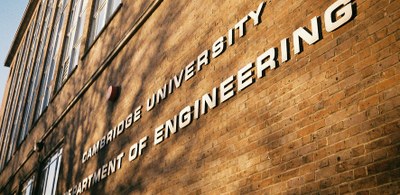
I’m studying Engineering in the University of Cambridge under the JPA scholarship. In my free time I play the guitar (as an amateur), read, and help out with my school’s Christian Fellowship. I have no pet dragon.

What was included in the application process to your university?

The main things I had to do were
1) decide to apply to Cambridge,
2) fill in a (quite tedious) online form called the COPA,
3) sit for an interview and
4) do some written tests – the TSA (Thinking Skills Assessment) and a short essay on Engineering.

What did you include in your personal statement?

My personal statement consisted of a brief introduction explaining why I wanted to study Engineering, followed by a few paragraphs on some loosely Engineering-related things that I did, and lastly a bit about my extracurricular activities in school.

When I wrote my personal statement, I had really done very little that was directly related to Engineering, so I had to find some rather creative ways to link the things that I had done to the subject. Nothing I did was really spectacular, so I mainly tried to show (and kindle!) my inward enthusiasm for the subject.

I wrote 80% of my personal statement in one 1-hour sitting, to get it over and done with, like ripping off a band-aid. The rest consisted of minor tweaks here and there. My lecturer was unsatisfied with it, but in the end I submitted it anyway, thinking that any rewrite would probably not be much better (I have friends who rewrote the entire thing several times). I read my personal statement recently, and I think my lecturer was right – it wasn’t very good, so I think it would be best not to enclose it. It’s a good thing Cambridge also has your interview to go on!

Did you have to take any tests outside your normal course for your application?

The only test I did besides A-Levels was IELTS. Cambridge asked for a relatively high grade, an average band score of 7.5 with all of the individual components having a score of 7.0 or higher. English is my first language. I didn’t go for any classes, but I did go online and find out the format of the test, as well as borrow some example questions from friends who did go for classes. I ended up getting an average of 8.0, with the writing section dangerously close to forcing me to redo the paper at 7.0.

If you have trouble with English, try to find an IELTS class. Some colleges, like KDU (IELTS classes in KDU: http://www.kdu.edu.my/school-of-pre-university/english-language/149-ielts-preparatory-course) and KYUEM provide them. If you can’t find one, try to find past papers and answers online or from a friend.

How was the interview session ?

The interview was by far the most interesting part of my application, and also the most distressing. The questions were fairly simple maths and physics ones, and the interviewer mainly wanted to test my understanding of basic concepts (which was sometimes lacking, but he was nice about it). The room had only me and a lone interviewer in it. The interviewer was quite friendly, though he dived almost immediately into the interview questions. He drew diagrams and equations on sheets of paper, then asked me questions based on them.

If I answered correctly, he would probe deeper into my understanding (“Why do you say that? What makes you think this way?”). If I answered wrongly (which happened more often than not!), he would guide me to the correct answer and see if I could follow. After 30 minutes of being corrected, I left the interview room more or less certain I wouldn’t be getting through (which goes to show sometimes you’re mistaken about your mistakes!). The only preparation I did was go to this website: http://i-want-to-study-engineering.org/. It’s set up by the Cambridge University Engineering Department, so there’s no better place to go.

What do you think contributed to your success of your application?

 I must say I am not sure what it could have been. As I have already indicated, my personal statement was nothing special (and devoid of any work experience or special projects) and my interview certainly could have gone much better, even considering the fact that they are not looking for first-time right answers. My answer to the written test that I did was similarly average. One thing I can say is that Cambridge asked for the UMS scores of my first few exam modules, and I had done very well.

What advice do you have for future applicants?

I suppose if there’s one thing to be learned from my experience, it’s this: you may not think you are a spectacular student, and you may not have done much related to your subject. It’s fine. If you want to go for it, just try; you may be surprised (as I certainly was!). Be warned though, while the application process itself is not really stressful, it becomes stressful once you invest yourself in it and put in the time and effort. When I decided to apply to Cambridge, I was quite nonchalant about it, but as time went by I got more and more invested, and more and more worked up, until the interview became a kind of shadow looming over the year. Try not to let it get to that. Getting into Oxbridge is not everything.


AndrewAndrew Foong is a JPA scholar pursuing Engineering in the University of Cambridge. He has a profound love for cookies, especially chocolate ones.

IMU Malaysia Medicine Application

IMU Building 2

Image Source

1. What was included in the application process to IMU?

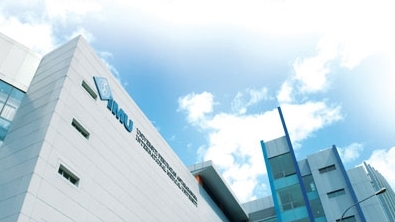
Apply online thru www.imu.edu.my. No personal statement is required although we need to sit for the IELTS.

2. What are some of the activities that you participated that you think helped your application?

I was a member of the Pre-Medical Society in Taylor’s College Subang Jaya. Participating in activities organized by the society gave me a chance to be exposed to people who are less fortunate. I was also a member of the St John Ambulance of Malaysia. I learned a lot on handling emergency cases, and had the chance to talk to medical personnels.

3. How was the interview session?

The interview session was quite tense and awkward because the interviewers kept on looking at each other when I answered their questions. Be prepared to be bombarded with a lot of questions on why you want to be a doctor. The last question is usually on your critical thinking.

The question I got was:

“Will you accept gifts (eg: BMW car) from your patient’s family member as a token of gratitude?” Don’t be surprised when your interviewers ask you, “what about a small card or a fruit basket? ”I nearly fainted trying to tell them my points.

4. What do you think contributed to the success of your application?

ECAs should be able to help you a lot on answering the questions. Do well academically (at least AAB for A Levels) if you’re planning to apply for the PMS (Partner Medical School) programme.

5. What advice would you give to future applicants?

Good luck and have fun! You may find examples of the critical thinking questions online. My friend who is a final year Medical student told me that IMU seldom change their critical thinking questions. All the best!


imageedit_14_6684298470Melanie Hew is a joyful girl who enjoys bringing happiness to people. She will be pursuing Bachelor of Biomedicine in the University of Melbourne. She hopes to be a paediatric cardiologist in the future.

Economics Personal Statement 2

Muhammad Azzam bin Mohd Yani is currently studying at the London School of Economics (2013-2016) under sponsorship from the Securities Commission. This Economics personal statement got him the opportunity to pursue Economics at other universities besides LSE including: University College London, University of Warwick, University of York and University of Exeter.


Reading “Economics at crossroads” by Matt Bishop fuelled my curiosity and efforts to understand more about economics. The US government still have not managed to reduce unemployment significantly despite countless measures. This implies that more effort is needed to fully explain such economic behaviour and there are many instances economists failed to agree on a common solution to an economic problem. I hope to be able to offer my own ideas and perspective in the field of economics. I am grateful that the Securities Commission of Malaysia had awarded me a fully funded scholarship to pursue an Economics degree in the United Kingdom. This scholarship will help me to achieve my distant dream to be a renowned economist.

Being passionate about world issues and current affairs, I have engaged in numerous forums and discourses. I went to a Model United Nations Conference last year as a delegate of the United States to discuss about the current developments in the US and also Eurozone. We discussed in detail of the US implementation of the Wall Street Reform and stressed on the importance of restoring public confidence in the financial sector. In addition to that, we analysed deeper into quantitative easing used by the US and other countries to weigh the risks and advantages of this measure. My participation in intellectual discourses has tremendously improved my knowledge of world politics and economics. Not only that, the conferences also prompted me to explore different contexts of economies and learn more about international relations.

My favourite subjects in A-Level which are Further Mathematics and Statistics illuminated me on how hypothesis testing is being done which will be of great help in making conclusions about the relationship between variables in economics. Studying Mathematics and also Further Mathematics in A-level have given me a solid foundation to embark on econometrics. Professor Dipak Basu’s book on “Economic theories, models and application” illustrated the importance of mathematics in economics through various applications in real life such as determining inflation and interest rate targets. I have also leveraged the use of social media such as Twitter and YouTube as a new learning platform where I can access to introductions of Game Theory, Coase Theorem and other economic ideas.

It is quite intriguing to learn about the different schools of thought such as the neo-classical and Austrian economics. The nature of this field which welcomes room for debates and dissenting views excites me. I have participated in many debate competitions including two major debate events, the Australasian Intervarsity and Asian Universities Debating Championship. Participating in economic debates is always exhilarating and trains me to do extensive researches, polish my persuasion skills, and sharpen my critical thinking. It is imperative for me to understand the complexity of important economic issues such as keeping debt-ridden countries afloat within the EU and many more. My fondest memory of debating is being able to win an economics debate against a team from Monash University, Australia which had won numerous world and regional debating championships. Debating also gives me the opportunity to socialize with fellow debaters from all over the world.

Another hobby of mine which is to spend long hours on chess games enhanced my strategic decision making and problem solving skill.  I was once ranked 19th place at national level.  I had also participated in the University Of New South Wales International Competition for Mathematics. I was grateful to be awarded the best student in my school and also the “Additional Mathematics Award” for two consecutive years.  I took part in the “World Food Day” program in my college to pack and distribute food packages to the needy in developing nations. During my pastime, I enjoy swimming and ice skating.

Hence, I am highly motivated to perform at my best in the United Kingdom.


DISCLAIMER: The personal statements on this site are strictly meant as a starting point to give an idea of how successful personal statements look like. There is no surefire formula to writing good personal statements. COLLEGELAH IS STRICTLY AGAINST PLAGIARISM OF ANY KIND. UCAS employs a plagiarism check system that checks applicants’ work against other published writing so please DO NOT PLAGIARISE.

Mechanical Engineering at Oxford

sddefault

Image Source

Intro

Hello! I am Chow Foo You from Kampar, Perak. I completed my A-levels at Taylor’s College Subang Jaya. With the aid of the JPA scholarship, I am pursuing Engineering Science at Magdalen College, University of Oxford this October.

For your information, I chose a double Maths combination for my A-level course, and the combination comprises Mathematics, Further Mathematics, Physics and Chemistry. In order to get to know about the university application process, I attended talks organized in my college and surfed through relevant websites.

UCAS

First of all, you must apply through UCAS (Universities and Colleges Admissions Service) for all UK university admissions. One of the sections in UCAS is the Personal Statement, and it plays a vital role in your university application. For this section, I recommend you to take your time in writing it. Do not rush it as you do not rush for your future. It is a piece of essay that is about you. Illustrate your passion towards the subject you choose. How to stand out from others? The answer is simple. Be original! However, you can always refer to lots of personal statements available on the web (or here on CollegeLAH of course!).

After completing your first draft, do ask other people such as friends, lecturers and MABECS staff to proofread for you. This process takes a long time. Therefore, start early for better preparation. You can even start now by jotting down some points on your notepad.

Admissions Test and Interview

From the 5 universities that I applied to (University of Oxford, Imperial College London, University College London, University of Manchester and University of Edinburgh), the only university that asked for admissions test and interview is University of Oxford.

The admissions test I sat for was the Physics Aptitude Test (PAT). You have to register yourself at a centre which provides this test. For my case, I sat for it at Taylor’s College. The test is free of charge but the centre where you sit for this test may charge an administration fee.

I really faced a hard time when sitting for the PAT as my Further Mathematics A-level examination was exactly on the same date. After struggling with the Further Maths paper, I had to deal with my PAT right after that, though there was a 30-minute short break in between.

As for the Oxford interview, there are two options that you can choose from. The first one requires applicants to travel all the way to Oxford to attend the interview. The second one, a Skype interview, would be better either to avoid the hassle or to save money.

I was interviewed by two interviewers and the session lasted 30 minutes. Three questions were thrown to me one after another. The first question was about sketching graph which involved simple calculus. An equation was given and it was obviously a negative exponential graph. However, due to my nervousness, I simply drew an exponential graph without any thinking. The interviewer asked me: “Why do you draw like this? Do you have any proof?” At this point only I realized my stupidity. Immediately I asked myself to calm down and asked for permission to do it again. Finally, I got the correct answer and the interviewers were happy with me. The lesson of the story: do not panic!

The second question was about circular motion and the third was about conservation of energy. These two questions involve real life situations – a rotating marble and a dam. Throughout the interview process, when you are stuck in a situation, you can actually ask for guidance. The interviewers are willingly to guide you. They do not expect you to know everything. They just want to look for your potential. They would like to make sure that you can fit into the tutorial system at Oxford which is basically a discussion-based learning process.

So, here is my story and I hope it does give you a little insight into the UK application process. If you have any inquiry, you can always contact me. This is my email address: fuyoh94@ymail.com. Good luck!


imageedit_8_2035837508

Chow Foo You,the mathematical genius is going to further his Engineering Science in the University of Oxford under the JPA scholarship. He can travel around the Europe with his Adidas. However, with his pair of super minute eyes, we have no idea how would he view all the beautiful sceneries in England later.

FELDA Global Scholarship

adv 2014

There were 2 stages in the Biasiswa FELDA Global application process.

1st Stage – Written Test

The first stage was held a few weeks after submitting the application. There were many of us – around 50 candidates. Thus, it was very challenging as there were too many competitors.

There were a few sections in the test. The English test tested the candidates’ listening skills. There was also a knowledge test where we were asked to write essays of 1500 words and above about FELDA programs for young generations and our suggestions on what to do to help the future generations.

2nd Stage – Interview

After shortlisting the candidates, only 15 of us made it through to the 2nd stage. For this stage, we had to demonstrate our speaking skills as well as our personality to be accepted for the scholarship.

The interviewers asked us about our family backgrounds and how we could contribute to the country, especially to FELDA once we return from tertiary studies. I was also required to give my opinions about Malaysia during the period of time and about the Malaysian education system. Plus, they asked me about FELDA’s program for younger generations.

It was very challenging because we had to face the Chairman of FELDA with his other assistants and the result was up to the 7 interviewers in the room. The feeling was beyond explanation – sometimes nervous, sometimes excited.

There were some criteria that I had fulfilled to be awarded the scholarship. Firstly, my exam results helped. Secondly, my extra-curricular activities. Although I did not join many activities, I had high achievements in one particular activity. They also looked forward to my participation in FELDA Programs for the younger generations.

To prospective Biasiswa FELDA Global applicants, I would advise them to:

  1. Get the best results possible in SPM (of course),
  2. Be active in school activities (you do not need to join many clubs, instead be active in the club that interest you the most),
  3. Get some basic knowledge about what FELDA is all about, including their programs and achievements. You may gather a lot of information from FELDA’s official  website, or receive monthly FELDA news in Utusan Malaysia where you will learn about the activities held by FELDA,
  4. Be mentally and physically prepared for the interview and test,
  5. Portray a great personality to impress the interviewers.

imageedit_6_2131964262

Mohamad Hafiz is a FELDA scholar who had just completed his American Credit Transfer Program at INTEC last June. He pursues his study in Mechanical Engineering at State University of New York, University at Buffalo. Our greatest weakness lies in giving up. The most certain way to succeed is always to try just one more time – Thomas A. Edison.

Bank Negara Kijang Scholarship

Bank-Negara-Malaysia

What is the Kijang Scholarship?

The Kijang Scholarship is one of the two overseas scholarships offered by Bank Negara Malaysia (BNM) (also known as the Central Bank of Malaysia) aimed towards SPM graduates, making it one of the many generous institutions that offer scholarships at this level. Applicants are able to request to be sponsored to study at the UK, USA or Australia at university level to read one of a certain few disciplines – Economics, Actuarial Science, Law, Accounting & Finance and Mathematics. These specific subjects are chosen because BNM is a Central Bank, thereby requiring its human capital to be proficient in these fields in order to regulate the economy effectively.

What is the difference between Kijang and Kijang Emas?

While this article will be on the Kijang Scholarship predominantly, some obvious differences between Kijang Emas and Kijang will be made clear here. In terms of grade requirements, Kijang Emas is exclusively for straight A+ students while 8A/A+ is the requirement for Kijang. The difference in criterion stems from the terms of the scholarships themselves. While the Kijang Scholarship limits itself to the 3 countries and 5 disciplines mentioned earlier, Kijang Emas permits its holders to pursue any discipline in any country. However, applying to Kijang Emas doesn’t guarantee you assessment for the Kijang Emas; if BNM thinks that your application is more suitable for Kijang, you may be shifted. In contrast, I have never heard of the opposite happening thus far.

Is there a bond that comes with the scholarship?

There is a service bond for holders of the Kijang Scholarship – 2 years of work with BNM for every year of sponsorship. This means that getting sponsored for 2 years of A-level plus 3 years in the UK means 10 years of bond. The plus point is that you get job security in a Central Bank. This is, I believe, explicitly stated in the BNM scholarship webpage. In comparison to other scholarship bodies in the financial or governance sector e.g. Maybank, Sime Darby and JPA which all have bonds of between 4-5 years, Kijang Holders have to serve a far longer bond period. Kijang Emas scholarship recipients, however, are not bonded to BNM, though they are called to contribute to Malaysia, also for double the period of the sponsorship.

How is the assessment process?

There are two major stages in which your suitability for the scholarship is assessed.

The first, of course, is the online application. Right when SPM results are released i.e. early March, the BNM website will commence its scholarship applications, of which links can be found on their website. It is imperative that you do not apply to the wrong scholarship given that there are scholarships for undergraduate level and beyond as well, in which you may have proven your lack of competence if you do so. The online application is relatively simple: just key in whichever details they ask for e.g. personal details, SPM grades, co-curricular achievements etc. I have heard that applicants have to write short timed essay at this stage (I did not have to in 2013, but heard that 2014 applicants had to). Whether it is true or not, if you truly know what you want to apply for and why, plus if you are a competent student, you will fare well.

Your co-curricular achievements will definitely help in making you stand out from the myriad of applicants, all of whom have stellar grades. Perhaps by coincidence, but a significant portion of people that make the cut all the way until the end and eventually attain the scholarship itself, are debaters. A more intuitive observation was that people who get shortlisted have at least national-level achievements. I, for one, had an international-level achievement, about two national-level achievements, amidst several state and district-level achievements plus 8A+, 1A in SPM. It is imperative that you excel in co-curricular activities while in secondary school rather than going full bookworm. If you haven’t, you are probably not going to make it, unless your application seems strong even without it.

If you are one of the lucky ones amidst a huge pool of competent applicants all across Malaysia, your second stage would be the 3 day 2 night Kijang Academy which will be held at Lanai Kijang and Sasana Kijang. I have no way of assuring that this will be the length of the Academy at the time this article is read. It is usually at this stage where people realise how sophisticated the Central Bank can be. You will be staying at Lanai Kijang, their residential building while a majority of your assessment will be in Sasana Kijang, the futurist glass building equipped with cutting edge technological gadgets and a huge library. There will be good food for the famished.

So what is this Kijang Academy?

If you have hundreds of equally competent applicants on paper, how do you choose a handful of scholars? The solution would be the usual – interviews, group tasks etc. This is where Kijang Academy occurs. However, the Kijang Academy is designed in such a way that it is impossible to fake it through. Who and what qualities they are looking for are never known explicitly. So my advice at this stage for you prospective applicants would be to be yourself at your best and be a humble person.

Stage 1

The first stage during my year was an essay on the first night of our stay. Questions were generally personal i.e. your qualities, studying attitudes etc. My inference was that this task aims at showcasing your thought process, reasoning, structure and effective communication. It is imperative that one writes concisely; verbosity hinders communication. They want to know more about you rather than to see you show off your flowery, bombastic and glorious language mastery.

For my case, it was done in a relatively short period of time (not exactly short if you reflect on it after a year of A level) in a ballroom sort of hall.

Stage 2

The second stage begins on the following day in Sasana Kijang. Do note that this may be drastically different by the time you are reading this article as scholarship assessment methods change over time at their discretion. This stage consists of several group-based assessments – interviews and tasks. You will be put into groups of approximately 10.

The first portion of the group stage was intuitively an ice-breaking session. I was required to introduce another member of the group while she did the same for me. The setting was designed to make everyone less stressful or tense and know each other more for the remaining of the group stages. So for strategic purposes, get to know everyone in your group well; perhaps knowing their strengths will do.

The second portion of the group stage, if my memory doesn’t fail me or if nothing changes, was an interview done under the disguise of a series of role-play tasks. We were supposed to give talk shows presuming that we are experts of our desired fields of studies. By desired, I mean the disciplines you applied through the system. Essentially, it means that they want to know even more about why you applied for your desired subject of choice under a less pressured situation.

The third portion of the group stage was a obligatory group task as per what other scholarship bodies also do – a group presentation based on a business problem i.e. to come up with a solution for a situation portrayed within 30 minutes of discussion/preparation within your group. The presentation would last approximately 10-15 minutes in extension to Q&A by the assessors. Fret not about your knowledge in business jargons as the questions are designed to be fair to everyone regardless of pre-existing knowledge on business. It aims at exposing how you function as part of a team. Keep in mind that this is not a game for dominance by anyone; your purpose is to contribute towards a working solution as a team. If you, in any way, decide that being “shiok sendiri”, shutting out others or being a dictatorial leader is a good way of working as a team, all the best!

The fourth and final portion of the group stage was a creative group work, in which most will find this part the most memorable, enjoyable and stress-free. You will be using limited resources e.g. limited amount of papers, tapes and sticks to build something within an hour. We were tasked with building a tower. Creativity counts here as well; hence, artistic members of the group will be of great use here. With the creativity cap removed, my group produced a futurist twin tower ultrapolis. My advice for this part is the same as the previous paragraph: you are part of a team striving for a creative solution, so do your part and contribute effectively.

The Break Announcement

At the beginning of the Kijang Academy up until now, there will be about a hundred of applicants per batch. Intuitively, they are not going to interview everyone personally if they can cut down some by this stage, which is exactly what happens. The assessors will be able to identify who may secure the scholarship and who definitely won’t by the end of the group assessments. Only those who may secure the scholarship by the judgment of the second stage stay onto the next stage – the individual interview and presentation. The announcement is done differently in my year than in the following year. However, the main characteristics stay – a list of students will be announced and be told elsewhere that they have been dropped out of the selection process. Either that or those who make the break will be told elsewhere.

Stage 3

The final stage of assessment consists of two parts – the individual presentation and the interview. By this stage, approximately half of the applicants would have been dropped out, leaving every group with on average 4-6 members. There doesn’t seem to be any quotas of participants making it to this stage as some teams have significantly more or less members at this stage.

The first portion of the final stage begins such that you are given 15 minutes to prepare a presentation based on one of the questions from a list. There are general questions similar to SPM-level questions and more external knowledge-based questions. Most interviewees went for the general questions. Do note that while all of the applicants prepare together, not everyone gets interviewed immediately after. This does not mean that you are allowed to make edits after 15 minutes of preparation to your flipchart. When it is your turn, you will be asked to present whatever you have for about 10 minutes plus 5 minutes of Q&A session by the assessors. Effective communication, reasoning and making sense is still the key here.

The second and ultimate portion is of course the interview itself, which may be rather lengthy. Mine, for one, lasted almost about an hour. In practice, your interviewers want to know more about what they have learned about you in the previous stages e.g. why your chosen course, why Bank Negara and of course, showcasing through your ECAs/school life why you are suitable for the scholarship or even working in Bank Negara as a whole. Essentially, they want to be sure that you are suitable for the scholarship. There is no point awarding a scholarship to a student who won’t fit into working at Bank Negara. The criteria of assessment remain difficult to decipher, my advice remains the same – be yourself at your best.

What happens after Kijang Academy?

This is arguably even more stressful than the assessment itself if you make it thus far. You have to wait for almost 3-4 weeks before you get the decision from BNM. There is only so much you can do at this stage, go on with interviews from other scholarship bodies, continue college education or get on with life as usual. If you are awarded the scholarship, you will receive a phone call from BNM telling you the discipline you are sponsored to pursue; you will also be told of the country in which your undergraduate studies will take place, hopefully. There are people who do not attain their first choice, presumably that the assessors think that their second choice suits them more. By words, you can decide to either accept or reject the scholarship through phone.

There will be a day dedicated to briefing you and your parents about the scholarship terms and preparatory colleges (KTJ, KYUEM or Taylor’s), probably about a week after you get the call from BNM. On this day, you will be briefed on the scholarship contract just like how legal firms and banks normally would.   Make sure that you get as much clarifications as you can on the terms; your following 1 or 2 years in the prep colleges will be directly affected by them. After which KTJ, KYUEM and Taylor’s will brief you on their schools/colleges.

What to do after being awarded the scholarship?

If you are awarded the scholarship, it means you have attained a privilege to have free overseas education, arguably a dream everyone would have. Don’t let it go to waste. Keep in mind that attaining the scholarship is just a stage but retaining the scholarship is another. The universities which you are allowed to apply to are extremely competitive ones, which is rather intuitive because who would want to sponsor stellar students to average overseas universities on par with local universities. This means that you will have to study even harder to get your places in the overseas universities. In your preparatory colleges/schools, life will be even more hectic than in secondary school with more academic content and co-curricular activities. My ultimate advice would be to prioritise smartly; the Bank sent you to whichever place you end up in to study, not to flunk your grades because of anything.


imageedit_4_4122498761Suah Jing Lian is currently a Bank Negara Malaysia Kijang Scholar who’s pursuing his A-level at Kolej Tuanku Ja’afar and hopefully Economics in the UK. He has a penchant for Baroque music, particularly Bach’s partitas, and debating, which he claims provides sparks to his life. People claim that he looks and speaks in an intimidating way but not really, he’s one of the most eccentric people you will ever meet.

Pharmacy at University of Nottingham Malaysia

malaysia7

Image Source

The application process to study pharmacy course (MPharm) at University of Nottingham Malaysia Campus (UNMC) includes a personal statement and a reference letter from your referee. An interview will also be held before they give you a conditional/unconditional offer.

I believe that the personal statement is what applicants are always worried about. It is always a devil in the job since it does not only require academic-related content but also non-academic-related content such as what inspires you, why you are interested in pharmacy, and so on. But don’t worry, UNMC’s personal statement only requires applicants to tell them why you have chosen to study the course that you have applied for, what made you choose UNMC and what your future plans are. You only have to answer their questions in essay form with not more than 4000 characters. The personal statement is actually a reflection of yourself, so a simple essay with short, brief sentences will do! The most important thing is for the reader to understand the messages you are trying to convey!

On the other hand, do not worry about your reference letter. All you need to do is give one of your lecturers the reference form, which can be found on the UNMC website, and they’ll do the rest for you. (: Do also take note that your lecturer might need your CV or any relevant documents in order to write the reference letter.

I was notified to attend the interview session 2 months later. They have introduced a new interview system this year. We were given some short briefings regarding the MPharm course and given a campus tour. The 12 of us were then divided equally into 2 groups and were assigned to different sections of the interview.  My first session was actually a group activity where we were each given several cards with different information, and all we needed to do was solve a mystery together. It turned out pretty fun and it actually calmed me down. Though they informed us that it’s just a group activity, in my opinion it was to evaluate our soft skills. Thus, do your very best, and that will do!

My next interview session was divided into 6 stations. In the beginning, we were all assigned to different stations. Each station had a time limit of 5 minutes, and we had to move to our next stations when the whistle was blown. The questions asked were not the typical questions such as why you want to study pharmacy, etc. Instead, the questions all revolved around Mathematics, Chemistry, Biology and general knowledge regarding the pharmaceutical field. Though what I had prepared for my interview was about the soft skills I had that make me eligible to be a pharmacist, this actually helped me in answering certain questions. The interviewer will eventually lead you to get the answer so always keep calm so that you are able to think well.

Overall, that’s it for you to get a place in UNMC to take up MPharm. I would like to say that the early bird catches the worm, so apply earlier if you are interested! Also, utilize your free time to plan your personal statement well. Do believe in yourself, and all the best!


imageedit_2_8280296411Chong Kai Qian is a JPA scholar currently pursuing her pharmacy degree at University of Manchester although she also received an offer from University of Nottingham Malaysia.

JPA Program Khas Korea, Jepun, Perancis, Jerman

images

After submitting my application online, I was called for a one-day assessment in 2012 where we had a group interview and two group discussions.

The group interview focused on questions related to policies implemented by the government, such as the Government Transformation Program (GTP) and Economic Transformation Program (ETP). Even if you are not sure about the answer, give it a try instead of being silent as they would want to access your ability to communicate effectively.

Both of the group discussions were conducted in the same way but in different languages – Malay and English.  In my Malay group discussion, we were shown a picture which was about “Isu pembuangan kanak-kanak”.  We had to discuss among ourselves, note down the points on a piece of Mahjong paper and present it to the interviewers.

In the English session, we were shown a picture of P.Ramlee and the questions were regarding how P. Ramlee could improve the sense of belonging among youth in the country.  It was very tough and we ran out of points.  Most of us were talking about something else out of the topic but I guess they also judged us based on our ability to talk  instead of the content itself. Don’t hesitate to share your ideas during the group discussions as we were evaluated while we were working in the groups.

I think your performance during the interview is more important than your past achievements.  Of course having good results and a good curriculum vitae will be an added advantage if they are distinguishing between two students with equal performance during the interview.

I would advise SPM students to put in more effort in their studies (you need six A+ and above for the Korea and Japan program and 8A+ and above for the France and Germany program).  They would also request for photocopies of certificates of all the activities that you have participated in. You should also have the mental preparation to learn a whole new language that will be your medium of instruction in your university. Last but not least, learn more about the current policies implemented by the government.


imageedit_4_5455558426Robert Tieng Shiaw Wee will be pursuing Chemical Engineering in the University of Manchester under the JPA Scholarship although he was also offered the JPA Program Khas Korea Scholarship in 2012. He is a crazy badminton fan and has treated badminton as part of his life, trying to imitate the superb skills from the videos watched but still his skill is just so so. Being born to be a shy person, he may require some time to befriend with strangers and eventually becoming buddies!