Biomedical Science Personal Statement

This Personal Statement was part of this student’s sucessful application to study Biology in Imperial College London, Natural Sciences in University College London and Durham University as well as Genetics in University of Edinburgh.


What happens if chloroplasts are injected into your bloodstream? How can a human breathe underwater? What happens if you jump into a hole drilled through the earth’s core? These are some of the intriguing questions asked by my younger brother. These are not questions which answers can be found in textbooks so I have to rely on logical reasoning to answer him. Of course, these questions are impractical in reality but I enjoy trying to solve the unsolvable. After a period of intense questioning, I myself developed this peculiar habit of asking why and what. I consider this to be my greatest strength because it allows me to look at science from a different perspective. History shows us that the biggest discoveries are not those with the biggest answers but those with the biggest questions.

Most people will define science by its three main subjects; biology, chemistry and physics. However, my view of science is that there are no rigid boundaries separating the subjects. Learning only one of the subjects is inadequate because those subjects are related in a thousand and one ways. For instance, the chemical composition of purines and pyrimidines is what allows the precise replication of DNA. Even mathematics can be found reappearing in nature as the Golden Ratio. Throughout my studies, it has always been a thrill to be able to apply concepts I learnt from one subject in another. Not only does this enable me to understand the subjects better, it gives me an immense satisfaction of being able to connect them; like same-coloured tiles of a Rubik’s cube coming together.

My particular interest in biology has leaded me to do a hospital attachment. I witnessed a gastroscopy and a biopsy being done to test for H. pylori. One branch of biology which intrigues me more than the others is genetics. Genetics is more than just the study of genes; it explains how one’s phenotype arises from the complex relationship of its genotype with its environment. The idea of nurture vs. nature and which has the upper hand in determining an organism’s characteristics appeals to me. Darwinism and Mendelism complement each other so beautifully and the unification of both theories is something I want to learn to greater detail. Genetics immediately caught my attention when my high-school teacher taught us about DNA replication and transcription. The way free nucleotides which have no sense of order at first, could suddenly line up next to the exposed DNA strands in a precise arrangement is simply elegant; order from chaos. When I read The Violinist’s Thumb by Sam Kean, I stumbled upon transposons. Further research left me in awe because these “jumping genes” further prove that something as inanimate as DNA could do as much as something living, if not more. The way transposons work raises many questions, so I am eager to learn more about it at a higher level. I even requested for an interview with a local geneticist to find out more but I am still waiting for a reply.

During my schooling years, I consistently top my batch in exams and was awarded with numerous top-in-subject awards especially in maths and science subjects. I was also named the Top 50 Best Scorer in Malaysia for the Malaysian Certificate of Education (SPM). I took part in many maths and science competitions to try a different approach in learning these subjects. As a result, I found out that I enjoy the challenges set by the competitions and gained a lot from them. An example of my achievements is I was awarded a High Distinction in the National Malaysian Chemistry Quiz. I also emerged second for the KDU’s Maths and Science Competition. Badminton and squash is my forte and I took part in tournaments. Debating was also a passion of mine in secondary school and it had taught me to think critically and analytically, which are important assets in the science field. I gained leadership experience by being the Assistant Head Prefect and I was also the Vice Captain for my school’s Blue House.


DISCLAIMER: The personal statements on this site are strictly meant as a starting point to give an idea of how successful personal statements look like. There is no surefire formula to writing good personal statements. COLLEGELAH IS STRICTLY AGAINST PLAGIARISM OF ANY KIND. UCAS employs a plagiarism check system that checks applicants’ work against other published writing so please DO NOT PLAGIARISE.

Gamuda Scholarship Application

2014-1764x700

There are 4 stages in Gamuda Scholarship application.

Stage 1

Application forms are screened to filter those with poor academic records and weak personal statements.

Stage 2

They won’t inform you about the phone interview, but just call you up without any notifications. I was quite shocked because I was in the midst of something when I received the call.  Luckily, the staffs were very friendly and my call lasted for 15-20 minutes. I would say that those who can’t speak fluently, can’t express themselves or can’t answer the questions properly will be eliminated this stage.

Stage 3

This workshop and group assessment emphasised on interpersonal skills, leadership and critical thinking. In the first session, we were asked to answer a set of questions.  There were 10 MCQ questions based on world knowledge (ie. what’s the world’s longest waterfall) and 5-7 subjective questions to test our knowledge about Malaysia (ie. Who’s the Sultan of Malaysia (Full name required), who’s the Minister of Transportation). We also had to produce 2 essays, one of them on Gamuda – “What do you know about Gamuda”. We could select the second essay question from the 3 topics given, and I wrote about public transportation in Malaysia.

In the second session, groups were formed and we had to solve a situation.  For example, what should I do if all my team members are involved in a plane crash in Antarctica.  You will have to make decisions and all your team members must agree with it.

I think you will have a great advantage if you are a leader during the group discussion as the facilitator will notice you. However, be sure that you are packed with skills, or else they will easily notice your disadvantages as well. My group facilitator gave me good comments, which I think helped me to get through to the last stage.

Stage 4

There was an IQ test, which I found pretty simple, as well as an interview session.  Unlike the phone interview and group assessment, it was not a session to learn more about me (they did not even ask me to introduce myself).

You will be given a topic to talk about as they would like to gauge your critical thinking abilities.  Everyone had different topics, some were asked to compare the education system in Malaysia and the UK, some had the chance to discuss the MRT in Malaysia vs Singapore among other topics.

I think my fluency in expressing my points and my ability to point out critical points helped my application the most.  I would advise future Gamuda scholarship applicants to be confident about themselves, study up all the current projects of Gamuda in Malaysia and internationally.  Train how to express your points quickly and accurately as long speeches do not mean that they are better.  Don’t beat around the bush. I prepared for the scholarship assessments by getting in touch with current affairs and subscribed to news regarding Gamuda one month before the interview.


This student will be pursuing his degree in Mechanical Engineering under the Gamuda Scholarship at the University of Nottingham Malaysia.  He’s always packed with intense passion in engineering, and is interested with any non-living object that moves.

Law at University Malaya

law_building2

Image Source

Tell us a little bit about yourself. Where are you going, and are you under a sponsorship? What courses and which universities did you apply to?

Hello there! I am a National Scholar who’s going to read law at Universiti Malaya.

What was included in the application process to your university?

Basically, the application process is completed through the UPU portal. You just have to key in your info as required.

Link to the UPU portal: http://upu.moe.gov.my/web/

Is there anything specific to your application (supplements, etc)? If yes, how were they?

No supplements involved.

What did you include your personal statement/essay(s)?

No personal statement for local university applications.

Did you have to take any tests?  If so, how did you find the test? How did you prepare for it? In your opinion, what are some of the tips & techniques to get a good score in the tests?

Yes, I had to take the MUET (Malaysian University English Test) and do self-revision with books available in the market. It is a good way to test your level of English as compared to the SPM because this is a totally different system which analyses your listening, speaking, reading and writing skills. If your English is good in certain areas of the test but not all, you just have to work on them.

About the MUET: http://en.wikipedia.org/wiki/Malaysian_University_English_Test

MUET registration: http://webmpm.mpm.edu.my/muet/

How was the interview session (if any)? What were the questions asked (if you still remember). Was it a group or individual interview? How was the atmosphere? Was it one-sided with the interviewer asking only or was it a discussion? Was it friendly, tense, awkward etc? How did you prepare for the interview?

Yes, there was an interview session. It would be absurd if I can still remember the interview questions at this point of time. It was an individual interview. The atmosphere depends on the interviewee him/herself. Not everyone will experience the same atmosphere, be it excitement, anxiety, suspense or whatever one might feel at that time. The interviewers for my batch were friendly people, that’s all I would say, as there were so many of us having different interviewers for different faculties. There is no particular recipe in preparing for an interview. You just have to keep calm, be yourself, and carry on with the interview – that’s how I felt.

What do you think contributed to the success of your application? What are some of the past experiences/ ECA/ work attachment/ academic achievements that you included in your personal statement/ essays/ interview/ test?

All I can say is that I thank the Senate for accepting me.

What advice would you give to future applicants?

My advice: Just do it. It is the same for a job or anything else that you want to do in the future.


Erique Phang Li-Onn

Erique Phang Li-Onn is a commerce student who is heading to Universiti Malaya, Kuala Lumpur to read law under the National Scholarship by JPA. He is an insane otaku who attaches himself very closely to the spiritual world.

Penangite Guide to Studying Medicine at Cambridge

2011-09-22-09-32-52-2-up-to-half-of-uk-cambridge-graduates-work-as-gener

Image Source

Tell us a little bit about yourself.

Hello there, my name is Ming and I’m from Penang. I studied at The International School of Penang (Uplands) for my entire secondary school, ending with the International Baccalaureate for my sixth form studies. The next step is Cambridge, where I’ll read Medicine and graduate in 2020. I haven’t ever been under a scholarship and won’t be under one at Cambridge as far as I know.

What was included in the application process to your university?

Well, like any other applicant to the UK, I had to go through UCAS, which means a predicted grade from the school, a personal statement of 4,000 characters and a boatload of information they requested. Then as a medical applicant, I had to sit for the UKCAT, an aptitude test for admissions to most medical schools in the UK. On top of that, as a Cambridge medical applicant, I had to sit for the BMAT, which (as far as I know) is an aptitude test only for medical admissions to Imperial, UCL and Oxbridge in the UK.

I had the option of writing additional essays for Cambridge on COPA, which is the application portal for Cambridge (basically doing UCAS a second time). I chose not to write additional essays because I knew I wouldn’t be able to write something of good quality within the short time I had.

How did you write your personal statement?

The personal statement has been described to me (by an applicant to the USA, might I add) as “mechanical” and “formulaic” although it is meant to be unique and personal, as its title suggests. Perhaps applicants to both the USA and UK may think that because they write touchy feely essays for Commonapp about how their life was shaped and all. In my opinion, you do need some structure to your personal statement, but you also need to make sure it doesn’t sound computer generated. I chose to include why I want to do Medicine, how I’ve shown to have passion for it and the skills required for it (and thus elaborating on my extra-curricular activities), and how my previous experiences in the field have affected me.

Did you perform any attachment before applying?

Attachments and internships are important not just for your CV and application, but to find out if you actually like what you think you’re interested in. I (rather obviously) chose to do a few attachments at a hospital, watching surgeries, shadowing consultants, observing in Accident and Emergency etc. I found that I didn’t particularly like surgery and that I’m rather interested in oncology, which I think was useful for me. If I could go back a few years, I would also do some care work, like volunteering at a home for the aged, as such things are quite common for medical applicants and are useful to talk about at interviews.

What ECAs did you participate in?

Leadership and organisation is something all universities and subjects appreciate. You want to be able to stand out in a crowd of thousands. I’d say stick to your strengths, wherever they may lie, and be the best at whatever it is. Don’t force yourself to do something you don’t like because you want a nicer CV. You might hate it, and you might not do as well. For me, notable ECAs included music (orchestra), sports (basketball and badminton), leadership (Student Council), charity (founding a volunteer/charity organisation in my school), public speaking (Model United Nations), organisation (Student Council committee, organising an MUN conference, organising events for the charity organisation). So there you see I did things I like, and thus had the passion to excel at each.

How did you prepare for your admission tests?

I sat for the BMAT and UKCAT. Aptitude tests are generally difficult for me because my thought process is rather slow and my reading is yet slower. My tip is to just do lots and lots and lots of practice. A week before my UKCAT, I realised I was on track to get 50% (poor is an understatement), and so I put everything on hold and just did UKCAT for that entire week and ended up in the 98th percentile – I suppose it paid off. Don’t stress yourself out like that, learn strategies and do lots of practice early, using the ton of books available out there.

How were the medicine interview sessions?

I had three interviews in total, one for Cambridge, one for King’s College London and one for Southampton University. King’s and Southampton gave me very standard medical school interviews, asking questions such as “why do you want to be a doctor?” and “why not be a nurse or someone else in the medical profession?” At King’s, there was one interview; at Southampton, there was one group interview and one individual interview; and for Cambridge, I was interviewed in Malaysia and thus had one individual interview.

In each case, I tried to make the interview a discussion, which didn’t work at Southampton, but worked to an extent with Cambridge and King’s. This made things a lot less awkward and tense as I was much more able to connect with my interviewers. Most of them were friendly except those I encountered at Southampton, perhaps because they were medical practitioners while the rest were academics.

To prepare, I read up on medical news, be it advancements or ethical case studies (which are quite important). I also practiced some interview questions in a mirror to take note of my facial expressions and how to change them to reflect more positively on myself. I don’t think the latter helped me very much though.

What do you think contributed to the success of your application?

I believe universities look for individuals who add to and improve the standing of their schools. As such, you should look into the course you are applying to and the university you are applying to in order to know what sort of people they are looking for. In my case, it was a well-rounded, passionate and compassionate communicator and scientist, and so I included experiences and achievements that (I felt) showed/helped develop these qualities. I essentially moulded all the activities mentioned above to fit these and included the more significant and recognised ones.

What advice would you give to future applicants?

START EARLY! I think that’s the most important thing. Resources will be different for everyone, so starting early will give you the time to look up all the things you need to be the best applicant possible. If you’re stuck, look to forum sites like ‘The Student Room’ as you are almost definitely not alone in your struggles. Good luck!


imageedit_12_8589795891Lai Ming Yi is a Penangite heading to the University of Cambridge to read Medicine. He is interested in leadership, management and all things frisbee, and can be frequently found in hawker centers on the streets of Penang.

Chemical Engineering at Cambridge University

teachinglab7026

Image Source

1. What was included in the application process to the University of Cambridge?

For all UK universities, you need to apply via UCAS. I believe you all are quite familiar with it. If you really have no idea what it is, here is the link you can follow. However, there are a few things I want to share about the UCAS application:

  • There is no ECA achievements section in the UCAS form. Unlike normal (pre-university) scholarship application forms which allow you to enter your ECA achievements, leadership experience etc, UCAS doesn’t have this section. Therefore, please do include some IMPORTANT ECAs in your personal statement (PS). However, don’t overload your PS with ECAs because your teacher advisor might have included most of them in your reference.
  • For the education section, you can choose to put your grades OR UMS score. If you have impressive marks in your AS or IGCSE, you can choose to enter your score instead of grade.

For Cambridge international applicants, you have to complete an extra form called COPA. This is much more complicated compared to UCAS. You need to fill in your UMS marks for each subject and module you have taken. There is a myth saying that Cambridge will only accept you if you achieved 90+ in every AS module. I personally don’t think this is true because I achieved less than 90 in a few modules anyway. Then, there are another four short essays in COPA. The first one is an optional personal statement (1,200 characters). So, this is the time for you to say why you particularly want to go to Cambridge or a specific college. The next question is: Do you have any specific career plans? (300 characters). The third one is: How have you kept up your interest in the subject you have applied for? (300 characters). And the last one: Is there anything else you would like us to know (600 characters). For me, I put all the things I couldn’t put in my personal statement in response to these questions like my extra interests, hobbies, readings, thoughts etc. After COPA, there is the SAQ. This is pretty simple if you have done your COPA. Just one reminder here: Do send your SPM transcript (original and translated version) here because I didn’t know I needed to do that until the last day.

2. What did you include in your personal statement?

This is the most time-consuming part. I still remember that I included everything from reasons to study chemical engineering, internship, research review, suggestions to current technology, my subject combination, readings and thoughts, ECAs and leadership experience, to hobbies and interests, language abilities, voluntary work, etc. for my first draft, as suggested by this link: http://www.thestudentroom.co.uk/wiki/Writing_Your_Personal_Statement. Therefore, my first draft had nearly 4,000 words instead of 4,000 characters. Only after that did I start cutting down on my word count, based on the criticisms and advice from teachers, friends, and some chemical engineers. Basically, the last version started with my reason to study chemical engineering and my internship experience, followed by some readings and thoughts, and my ‘mini research’. I then continued with the competitions that I took part in, leadership experience, and charity work. However, I didn’t include the reason for my A-level subject combination. Here are some extra tips for PS:

    • Use full chemical names instead of short form. Water instead of H2O because the UCAS form will read it as H2O and it will look quite messy.
    • Don’t be too ambitious because eventually you can’t cover everything.
    • If you have had the chance to share your thoughts with some university lecturers, it will be nice to put them in.

3. How was the interview session?

I had my interview in Taylor’s College. It was basically like some sort of discussion. The interviewer was quite friendly. He brought me to the interview room and started with the question “why do you want to apply for chemical engineering?” Then he continued by asking technical questions. There were basically three questions, and the interview lasted nearly 40 minutes.

First, he said, as a chemical engineer, you need to deal with scaling up the experiment. He then pointed at the beaker in front of me and told me there is a chemical reaction happening inside the beaker: X+Y → Z. where X, Y and Z are all liquid and this reaction will occur at 60 degrees Celsius. So, as a chemical engineer, what should be your consideration to produce 1 tonne of the product Z? 

First, I commented on the material of the reactor. (This is where SPM chemistry became important – all the alloys and composite materials); then he asked me how I’m going to heat and maintain the temperature at 60 degree Celsius. Since it is 1 tonne, we can’t just simply use water bath or Bunsen burner with thermometer (laboratory methods). I suggested to use an electric heater with a thermostat and stirrer. My internship helped me a lot in this part. I assumed that the reaction uses a catalyst, and hence classified the catalyst as being either an inorganic catalyst or a biological enzyme. I explained the difference in the method used to maintain the temperature for both kinds of catalyst. (I wouldn’t say much here, but the tip is that enzyme is super sensitive to temperature.) I then showed how the electronic circuit should be set up to allow the temperature to stay roughly constant. (It is just a simple op-amp circuit!) He then continued asking me on how to separate the products from the reactant. Fractional distillation was my answer, given that their boiling points are different. I also mentioned chromatography but I didn’t elaborate because he said we were running out of time. Then, he passed me a sheet of maths questions. If I am not mistaken, there was roughly 10 questions in that sheet and all were just normal A-level math questions. At first, I tried to explain aloud how I came up with the answers to the questions. However, he told me: ‘just shut up and continue doing it, you don’t have to explain to me.’ “Oh, Sh*t!” I was thinking; it was so different from what my seniors told me (they told me that I should be interactive and thinking aloud all the time). So, I did the rest of the questions in awkward silence. After that, I told him that I wasn’t sure if my solution was correct, and he just said ‘just do whatever you can.’ I was shocked and just passed up my answer sheet. After that, he told me ‘since we are running out of time, I will ask you a last question. Don’t worry, it is just a short question.’

He then put some geometrical shapes on the table while saying ‘In hot countries like Malaysia, petrol containers are designed to prevent the petrol inside from overheating, so from all the shapes I put on the table, which shape do you think is the best to keep the petrol inside from overheating?’ The shapes he put were: a cube, cuboid, sphere, cylinder, cone, and pyramid.

I thought about it for a while and explained how heat is transferred from hot to cold when in contact (Zeroth law) and how it is the same as diffusion of oxygen across amoeba cell. (I also don’t know how I came up with this answer, but the amoeba randomly came to my mind) and I explained how the amoeba increases the diffusion of oxygen and carbon dioxide across the cell by increasing the ratio of surface area to volume. So to minimize the heat being absorbed, we should decrease the ratio of surface area to volume. I then said that I believed the sphere is the one with lowest ratio because when we get cold, we tend to position our body like a sphere in order to prevent heat from being lost (the air-con inside the meeting room is freezing cold as well, and that might’ve been the reason why I came up with such a solution). Of course, I continued my answer by showing that the sphere is the answer mathematically. However, I told him that, while the sphere might the BEST shape,  it is nevertheless not the most PRACTICAL one, as I noticed that he was attempting to make the sphere stand on the table. I then explained my observation on how hard he tried to fix the position of the sphere and continued with the inertia and transportation problems, before ultimately coming up with a final answer, where I said that the cylinder is the most PRACTICAL answer. After that, he told me that he didn’t expect me to come up with the solution this way. I panicked (and maybe my facial expression showed that too) but he told me that it was a compliment. (I was glad and of course relieved to hear that!) He then moved to his bag, took out his Macbook Air and showed me a picture of a spherical petrol container. He told me that he had seen spherical containers in China, and explained how they built the supporters to support them, and also how they are transported. The interviewer ended by asking about my IELTS results (because I left it blank in my COPA and UCAS) and told me that I MIGHT need to sit for it.  (PS: I didn’t have to sit for it in the end because my offer didn’t have an IELTS requirement!) So, I prepared for my interview by reading and doing an internship. They helped a lot in my interview, and the questions they ask you might be the ones you have come across in your internship! Reading and watching videos as well as taking online courses are very helpful as well. Personally, I loved the experience of applying to Cambridge. Links for some online courses: http://ocw.mit.edu/index.htm https://www.coursera.org/

4. Did you have to take any tests?  If so, how did you find the test?  How did you prepare for the test?  In your opinion, what are some of the tips & techniques to get a good score in the tests?

The admission test was a horrible experience for me. It was a day after my interview and was held at Sunway College. I took the TSA (Thinking Skills Assessment). It is a 2-hour test with 2 sessions:

  1. 1 .5 hours multiple choice questions on thinking skills. There are 25 questions that are mathematics and logic based, and 25 critical readings questions.
  2. 5 hour essay related to the course you applied to. For chemical engineering via engineering, you have to choose a topic out of 6 topics provided.

Ideally, I planned to use 45 minutes for mathematical questions and another 45 minutes for critical reading. I started with all the maths and logic questions because my critical reading was not as good. However, the logic questions were quite long and complicated. After attempting all the maths questions, I checked my watch. Half an hour left. I had wasted 1 hour just for the maths and logic questions. I panicked, and tried my best to answer the rest of the paper, which asked about assumptions, flaws, strengths, weaknesses etc. (they should be quite similar to AS Level Thinking Skills, I heard).  In the end, I only managed to attempt another 13 questions. I tried my best to simply fill in the answers but I was only able to fill in few because the essay task started immediately after the MCQ. Basically, I didn’t even have time to just fill in the answers. In the end, there were only 46 questions with answers. For the essay, I chose the topic which went something like ‘in order to solve real-world problems, scientists are not alone, engineers are essential.’ I wrote about how engineers are involved in the development of hydrogen fuel cell, solar panels, food technology, but at the same time how they created problems like making bombs, etc. I personally think reading magazines like New Scientist, BBC Knowledge, and Scientific American did help me a lot in constructing this essay. Reading books related to renewable energy, the environment, and the history of the development of science and technology might help too. I managed to write 1.5 pages for this essay. Try not to be one-sided. (I believed debaters should have no problems in this.) After the admission test, I was quite sure I wouldn’t get into Cambridge. I regretted that I didn’t practise a lot for the TSA MCQ. Therefore, I advise you guys to not overlook it. For practice, you can try this book. It is quite expensive, so try to look for it in your college library. This book has three practice sets (if I am not mistaken) and I only finished one. Explanations for the answers are included, so it is quite helpful. Don’t panic if you didn’t get everything correct because I was informed that the average score for successful candidates is about 35/50 and mine was definitely lower than that. If you need extra practise, you can try A-level Thinking Skills papers 1 and 3.

5. What advice would you give to future applicants?

Personally, I loved the experience of applying to Cambridge. Even though it might be more complicated than applying to other UK universities, I really learned a lot through this application process. Therefore, I hope you all will apply to the University of Cambridge not just for the sake of getting in, but for the learning process as well.

  1. Be prepared for the admission test (TSA)
  2. Don’t be upset if you can’t answer all the questions or get the correct answer for every question because they don’t expect you to get all correct in order to be accepted. (I think)
  3. Don’t be upset if you get rejected. I have a lot of friends who I thought were better than me but got rejected. Therefore, getting rejected doesn’t mean you are not as good; it may just mean you are not as lucky!
  4. Don’t waste too much time in choosing your college by looking at the admission rate because you might get pooled and then accepted by another college anyway.

I hope you guys find this useful!


The author, who chooses to remain anonymous, is a Bank Negara Scholar who will be reading chemical engineering (via engineering) in the University of Cambridge. He can be easily found with a big water bottle (Tupperware) and please save him if he falls into water because he doesn’t know how to swim even though he has told you he does.

Securities Commission Scholarship

The Securities Commission (SC) is the sole regulating body of the Malaysian derivatives and equities markets, which most of us commonly refer to as the stock market. Largely as part of the SC’s efforts in recruiting and retaining the brightest and sharpest Malaysian minds as members of its workforce, the SC has been offering and granting scholarships to deserving young Malaysians, mostly SPM-leavers and aspiring undergraduates. As mentioned, there are a few types of scholarships offered by the SC including those for Pre-University studies and undergraduate studies at local universities and overseas institutes of higher learning. Due to the very nature of the work conducted at the SC, the scholarships are offered to those interested in Economics, Actuarial Science, Accounting, Finance as well as Law.

For the purposes of this article, I can only offer insights into the Pre-University scholarship selection process as that is the one which I was fortunate enough to receive. Normally, the application process is open to SPM-leavers shortly after the announcement of the SPM results. The window for application is rather short, roughly one week, so applicants should have all the required documents ready to be scanned and sent to the SC including certified true copies of their SPM results, mandatory essay, extra-curricular activity certificates and parents’ salary slips. Applicants should have a minimum of 8A’s, though it is always best to refer to the SC’s website. Perhaps the million-dollar-question at the very beginning of the application process is that pertaining to extra-curricular activities. The best thing to do here is to specify a handful of your most treasured achievements throughout school life. This will not only allow you to focus your discussion on your deepest passions during the interview, but will also make it easier for the officer at the SC to read through your application. Frankly, five or less astounding achievements at state or national level which fit into half a page will leave a much better impression than five pages of trivial class or school level quizzes and games, especially when the officers at the SC have around 4000 applications to go through. To further back up this claim, at the scholarship awards ceremony, the SC highlighted every new scholar’s very best achievement rather than reading out a list five pages long. I myself was the Managing Director of my school’s mini-company under the Young Entrepreneurs programme, one of my contemporaries was a national level synchronised-swimmer, and every one of our fellow scholars was not to be outdone. In short, list five or less of your best achievements. As long as you believe in it, it will show when you are asked during the interview sessions without conscious effort and that will definitely leave a good impression.

For those who make it past this preliminary screening, the first stage of the selection process is a three-to-one interview at the SC’s main office in Bukit Kiara. Like any formal interview, the interviewee should dress smartly in office attire, carry one’s self in a professional and confident manner and never rush. Besides equipping one’s self with the information to answer generic interview questions like “tell us about yourself” and “why did you choose your chosen field?”, interviewees should take extra care in the minor details of self conduct such as walking into the interview room with a level head, taking a seat only after being invited to, maintaining only the best of manners and putting on a genuine smile (when appropriate!). Generally, exuding a positive aura will set one apart from the rest of those in the interviewee pool, in addition to being able to answer all the basic questions truthfully and confidently. Being interviewed by a panel of three interviewers can be daunting but thankfully the SC staff are very friendly people but interviewees should always treat them with utmost respect.

After waiting for a week or more, those who made it to the second stage will be required to attend a group evaluation session. Once again, in a bright and comfortable room in the SC’s main building, six interviewees will constitute a group where they will be given a few tasks to be solved. One example from my personal experience was when we were given the task of planning a basic framework for worldwide health and education plans. Each person had his or her own idea; some thought equal education opportunities was the ideal, others thought it as unfeasible, and there were those who thought specialised education by region or expertise was more efficient. Of course, this was all just a simulation. Regardless of the task, the distinguishing factor here is being able to contribute one’s ideas in a professional manner while respecting the opinions of others, being the informal leader without overshadowing anyone else and being outspoken without hogging the limelight. Whatever you do, never engage in a fight. Be willing to make reasonable compromises while still pushing for your own ideas as that will make you the better individual.

At the third stage of the selection process, applicants can finally take a breather as they are only required to complete an online psychology test from the comfort of their home. There is no secret here – just answer the questions truthfully as it is quite obvious when someone is trying to fabricate their results in a psychology test. Primarily, the questionnaire looks to analyse what seem to be the work ethics and habits of would-be scholars. After all, scholars will become employees of the SC after completing their tertiary education. Have faith in your good values and they will show in the test.

The fourth and final stage is a bit of a surprise. Those very few applicants left at this stage will be called for an interview with the SC once again, but this time with their parents. Rumours that circulated around that time were that the remaining applicants were almost guaranteed an offer for the scholarship. During the interview, the nature of the questions seemed to reinforce those rumours as the questions were being asked along the lines of “if you were granted the scholarship, will you fulfil your bond of 8 years with the SC?” and other similar questions. However, rumours are just that and there are still those who were filtered out of the selection process. A good tip at this final step would be to continue portraying the humility and manners which have gotten you this far while still being confident and outspoken.

To sum everything up, manners, a reasonable level of confidence, passion and professionalism are traits that will serve one well throughout the adventure of applying for any scholarship. On the night before an interview, the most vital thing to do is to get enough sleep so that you can perform at your peak when it matters. Rehearsals are good but do not overdo it and no amount of rehearsal can beat a fresh mind that is ready for anything the interviewers may ask. Oh, and never lie about anything whether in a face-to-face interview or in a written test as interviewers can sense when a person is trying to blow his or her achievements out of proportion or making false claims. The selection process may vary slightly from year to year, but I do hope this article helps you anticipate and prepare for the common pathway in scholarship applications. On a more personal note, good luck to all of you who rise to the challenge of applying for a scholarship!


imageedit_6_3948456831

Alif Azlan Leong will be furthering his studies at University College London under the Securities Commission Scholarship. Although his profession will be in Economics, he has a wide range of interests from music to fitness and even cooking.

LSE Economics Application Q&A

LSE-mosa

Image Source

1. Tell us a little bit about yourself. Where are you going, and are you under a sponsorship (if applicable)?

The course I applied for was BSc Economics.

2. What was included in the application process to your university?

The application process was really easy, all I had to do was the personal statement. After that it’s just filling up my details on UCAS.

3. Were supplements required as part of your application?

Thankfully, supplements or anything additional weren’t needed for the application.

4. What did you include in your personal statement?

In my personal statement, I talked about how my passion for economics came about. It’s important to support your claim too by telling them things you have read or have done related to this field. It wasn’t easy trying to identify how I suddenly had an interest in the subject, so I had to dig real deep to find the truth. And then there were lots of economic issues that I was already into so I wrote about them. After that, I told them about what I like doing and my extra co-curricular activities. I wrapped up my personal statement with a sweet last sentence.

5. Did you have to take any admission tests?

Economics courses at most universities (including mine) don’t usually required any sort of test to be taken.

6. How was the interview session (if any)?

Fortunately, I did not have an interview session.

7. What do you think contributed to your success of your application?

I think being truthful about my interest was the element that contributed most to my success. I did not have any work attachments, nor did I have any amazing ECAs or academic achievements to write about. It was just me writing about my interest. Also, I think relating my life experiences to economics was really important. I literally had to go around town just to gain inspiration from events happening around me and then I related these to economics.

8. What advice do you have for future applicants? Is there anything else that you would like to share?

If you are applying, be sure to be honest and really down to earth in your application. Having lots of PS drafts are normal, I did so many drafts before submitting. Also, if English isn’t your first language, it can be tough putting your ideas to words, so don’t be afraid to get some help for that.


The writer will be studying economics at LSE and will be sponsored under JPA. Also, the writer LOVEs making up and imagining meaningless but funny stories with his/her friends. The writer is also single. 😉

Of Robes and Long Dining Tables, of Fireplaces and Scholars.

CI-in-the-sun

Image Source

Besides being THE most prestigious university in the world, Cambridge has been my dream. A dream that never was. I mean, me? Surely, there must be more qualified candidates around the world.

So there I was, scrolling through Cambridge’s entry requirements after receiving my AS Level results. Imagine my joy when I found that I met the minimum entry requirements. But that was only the first step of a long and arduous journey.

Personal Statement

THE personal statement. Quite possibly the most formidable step of the UCAS application. (Interviews aside, of course.) What on earth do you write? How do you get someone to take notice? Well, it might be a good idea to grab hold of some successful samples online, just to have a brief idea of what to include. Generally, the outline would be: catchy introduction and why you chose your subject; what you’ve done that demonstrates your passion towards the subject; your extracurricular involvements and the type of skills they inculcate. But of course, you already know the drill.

  • I like Physics/Chemistry/Biology. No, no, no. Be a little bit more subtle.
  • If you’re going to start your personal statement with some cliched quote from Darwin, Stephen Hawking or Albert Einstein, forget it. At least use a slightly obscure quote that no one else ever uses. It might pass you off as slightly more intelligent than the other candidates.
  • If you’re going to mention the New Scientist or Cosmos magazine, please be a little more original. At least every other (if not all) Natural Sciences personal statement includes a mention of those articles.
  • If you have no idea what to write, grabbing a few books off the suggested reading list or watching public lectures related to your subject might be good starting points.
  • Demonstrating how the activities you’ve partaken in qualifies you for a Science degree undoubtedly requires some creativity. Being a club member improves your team-working skills, and that will help when you’re in a research team, for example. Well, if you’re involved in a remotely interesting club (like Geography), that would hone your patience, which is ABSOLUTELY essential when carrying out experiments.
  • But do try getting yourself involved in international science competitions, volunteering for science fairs, attending public lectures and writing about them in your personal statement subsequently. They would vastly increase your chances of getting noticed.

Interviews (Or not)

Next go hours, days and months sitting before the computer screen, waiting for that all-important email. Certain colleges require that you send in copies of your written work prior to your interview (essays, assignments etc.). But don’t worry if you don’t have any – just send them an email to explain. I didn’t have any either.

As the interview would likely be centred on your personal statement and whatever else you wrote on your COPA, it would be helpful if you familiarize yourself with whatever you wrote. Say, if you wrote that you like evolution, read a few books about it so that you are ready for whatever the interviewer throws at you. They’ll probe you just to check that you actually know what you wrote about, but that’s about it. The other questions will likely be about A level topics, specifically, the modules you wrote about in your COPA.

There will also inevitably be a section on drawing graphs, so just be prepared to draw a graph for a given equation and explain why it should be like this or that, etc. Oh, while I’m at it, just think aloud. It’s good entertainment for the interviewer as he/she tries to figure out your thought process and deliberate on whether you’re teachable. My interviewer was actually trying to teach me about proteins during the interview session. There will also be paper and pencil laid before you, so feel free to use them if you need to illustrate your thoughts.

The good thing about Cambridge interviews is that you don’t need to smile and put on a whole bubbly, cheerful personality. Just be yourself (in the truest sense of the word). One interviewer once said that what distinguishes offer-holders from non-offer-holders is the sparkle in their eye. Be really passionate and treat the interview as a tutorial session.

If you were having your interviews in Malaysia, there will be a TSA assessment followed by an essay question a few days after the interview session. It would be worth going through “Thinking Skills” by John Butterworth and AS Level Thinking Skills past papers. As for the essays, they would likely be on stuff that you have learnt during your A levels. You might find some sample questions on college websites (I think Magdalene College has it).

That’s about it for applying, I guess. Good luck and may you achieve your dreams!


This student will be pursuing Biology in University of Cambridge, although she has also received an offer from Imperial College London. The aforementioned student has chosen to remain anonymous for fear of invoking the anger of Geography students.

Great Eastern Supremacy Scholarship Q&A

Screen Shot 2014-09-09 at 11.44.30 PM

1. How many stages were there in your scholarship assessment?

Basically you would just have to submit your application. I did mine by post because I had no scanner! I didn’t even know whether it arrived or not, but given that I’m a scholar now, I guess it did!

You would have to write an essay, and then go for an interview, then for an activity filled day. Note: there are no IQ questions or those funny diagram stuff.

2. Can you elaborate on what happened in each stage?

a) If it was an interview, what were the questions asked?

I’ve been to a couple of interviews and I’ve got to say that I enjoyed this the most. They don’t ask about their own company – they are not so vain. They don’t brag about themselves, and they don’t put you down. But you would have to know the basic things, for example: why you chose that course and some of your personal views. Don’t worry: they don’t ask about international affairs, or politics. This also means that the arrows are all pointed at you. You are under the spotlight and you better know yourself because if you don’t, you will cry. YOU WILL CRY. You have been warned.

b) If it was an assessment camp, what were the activities conducted?

There is no assessment camp, but there will be a day filled with activities testing your group-work and god knows what else they are looking at. This will be the last stage if you’ve managed to survive the assessment and the interview. It would not be wrong to say that you’ve just got to be yourself. Somehow it felt as if the whole thing was structured so you will continually shed some light on yourself and your personality. There is no hiding here.

c) If it was a group discussion, what was the topic and format?

They have a fetish about public speaking. The topics are randomly chosen out of a goldfish bowl. The problem with top scorers nowadays, is that most of them cannot talk. It’s not their fault but this is how we were brought up. So, if you have stage fright… don’t worry, there is no stage, just a lot of people staring at you.

d) If it was a test, what were the types of questions?

No tests, just essay writing. No tips, just write your heart out. Don’t fake it, they will know. There’s a lie detector test later when they read your essay out loud and confirm the details that you’ve written. Just joking.

e) If you need to submit an essay, what was it about and what did you include in your essay?

Again, the essays are random topics. Just develop yourself with maturity and maintain that. Personally, I’ve used simple English with zero quotes or proverbs or whatever things you might have prepared for SPM. You would most probably have to write twice. The first one within a week from the application deadline, and the other would be spontaneous. Oh yeah, bring a pen along with you for the interview if you make it there. Trust me, you will need it.

3. Could you elaborate the environment, atmosphere and feelings in each stage?

They love you. Honestly, they really love you. They adore you. They don’t skimp on taking care of you. The food is great. They do not serve you take-away food. Rather, they bring you to restaurants. Even when they cater the food, it is delicious hotel-grade servings. Best of all, everyone there will be nervous. You would find some sucking up to the persons in charge, some socially active butterflies, and some like me, going after the food.

4. What do you think you did right to get the scholarship?  What do you think helped your application the most?

a) What are some of the past experiences/ ECA/ work attachment/ academic achievements that the reviewers were most interested about?

I think I had the worst qualifications. There were athletes, geniuses, hot girls and handsome guys. So what helped my application the most was that I was just being myself and nothing more. Speak clearly with your own values. Don’t be afraid to show them who you are. You might just be the one they are looking for. Don’t worry about feeling inferior. Just remember that everyone there is just as scared as you.

5. What advice would you give to future Great Eastern Scholarship applicants?

Don’t miss the deadline and bring a pen along. Most importantly, enjoy the food and hospitality! There might be some people who intimidate you, so stay away from them. Don’t worry about fitting in there. Be comfortable and be yourself. The toilets are clean if you need to puke.

6. How did you prepare for the scholarship application? Any useful resources?

Rise up and be the best. The world is yours. Or at least pretend so.


imageedit_4_4389576781

Tiew Kai Xiang is a Great Eastern Supremacy Scholarship holder currently pursuing his study in Advance Tertiary College. He’s single and available.

Application to Cambridge for Mathematics

DAMTP_location_image_1Image Source

When people find out that you are planning to read Mathematics at university, they will usually give you funny looks and say, “Wow, you must love Maths very much!” or “Are you going to be a Maths teacher?” To all my fellow potential maths applicants out there, brace yourself, as this will be something you have to deal with for a very, very long time.

Hi, I’m Ong Shin Yin. I was previously from Catholic High School, PJ and TCSH. I was a KPM bursary scholar and I just received an unconditional offer from University of Cambridge.


 Cambridge Mathematics Interview

As quoted from the University of Cambridge website, “interviewing contributes to our assessment of applicants’ academic potential and suitability for the course chosen – whether they have the potential to study it to a very high level, engage with new ideas and think conceptually, and how they will respond to the teaching methods used at Cambridge,” and “gives applicants the opportunity to expand on the written elements of their application and show us how they think about their subject; and to demonstrate their passion for and commitment to their subject, and their ability to think critically and independently.”

For the University of Cambridge, you can opt to be interviewed in Malaysia or the UK. The interview fee for students opting to be interviewed in Malaysia is GBP130 (as of the time of writing).

Dr. Stuart Martin interviewed me. I received the details about the interview approximately two weeks before the actual date through email, which included the interviewer’s name, date, venue and time. The interview lasted about 30 minutes, though it might vary a bit between different applicants. However, a long or short interview is by no means any indicator whether you do well or not. But in case you want to know, my interview was slightly longer than usual.

I arrived at the waiting room along with my friend. After a while, Dr. Martin came out and called my name. I greeted him and he led me into a room, which consisted of only a table and two chairs. He introduced himself and made himself clear: he was there to observe how I think and whether I will fit in to Cambridge’s supervision system. Then he asked me some ice-breaking question such as: Why Sidney Sussex? How do you find your current A-level college, lecturers and college mates? For the first question, it would be better to show him that you have done more research than merely looking at application statistics and the Tompkins Table.

I was given 3 problems to solve during the interview and, guess what, 2 of them were actual MAT past year questions! However, during that time I had not looked at MAT questions yet; I only realized after I started preparing for MAT as part of my Imperial College London application. To be honest, the interviewer will not be impressed if you can solve the problem immediately. He/she will think that you have seen the problem before and give you another problem instead. “Thinking out loud” is very important during an interview so that the interviewer knows how you approach a problem and he/she will guide you from there.

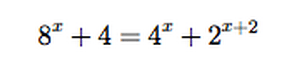
1st question is actually a very easy question.
Screen Shot 2014-09-08 at 1.35.16 PM

(MAT 2007)

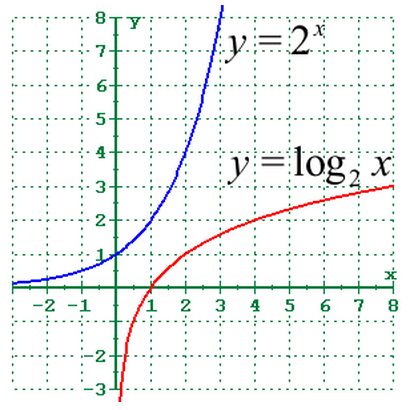
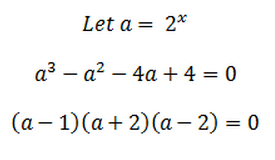
What I first did was I tried to express all the terms in the equation as powers of 2, and then I could not proceed anymore. At first, I was explaining while writing the solution in front of my interviewer then I paused and stared at the question (probably not the best way to show that you can’t proceed). Dr. Martin then gave me a hint: try expressing in terms of 2^x. Then it dawned upon me what this question is all about. I managed to express the equation as a cubic equation in terms of 2^x and found the factors of the equation by considering trivial cases (substitution).
Screen Shot 2014-09-08 at 1.37.28 PM

Last but not least, the interviewer asked me to justify why 2^x cannot be -2 even though -2 is also one of the factors of the cubic equation. This can be easily explained by using the graph below.
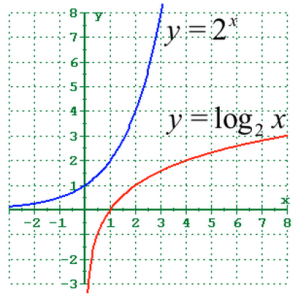
Screen Shot 2014-09-08 at 1.40.31 PM

2nd question was a Number Theory problem.

Given a group of 6 consecutive positive integers, does there exist positive integers A and B, where A is a product of 3 positive integers in the group and B is the product of the other 3 positive integers, and A=B?

If you have learnt the basics of Maths Olympiad before, this question may seem easy.

I figured out it would be better to use proof by contradiction. First I used Pigeonhole Principle by stating that in any group of 6 consecutive positive integers, there must be exactly 2 integers that are multiples of 3. Hence assuming that there exist such A and B, if one multiple of 3 is the factor of A then the other one MUST be the factor of B. Similar reasoning for multiples of other prime numbers (such as 5) will lead to a contradiction.

However, this question almost got me into trouble with the interviewer because I was solving it too fast – he thought I’d seen this question before. So I explained to him that I’ve done quite a number of Maths Olympiad problems before, especially number theory questions; I even asked him whether he would like to give another problem to me, but he said it was okay.

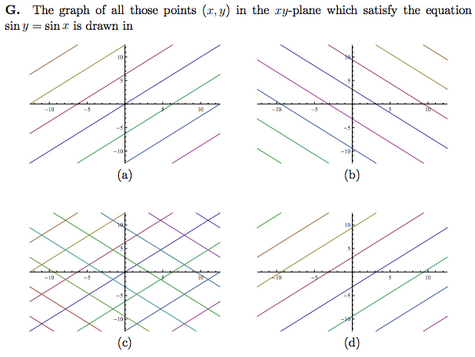
3rd question: Sketch the graph sin y = sin x

Of course, during the interview the options below were not available, but this is apparently a past MAT question.
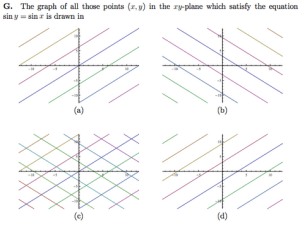
Screen Shot 2014-09-08 at 1.42.32 PM

(MAT 2009)

I did not have much time left, so what I managed to do was I stated that the graph y = x and y = π – x are possible solutions. I totally forgot about the periodicity of sine graph during the interview; if not this question can be solved within a few minutes. In the end, time was up and the interviewer asked me to solve this question at home. By the way, the answer is C.

Lastly, the interviewer told me that the average applicant solves one problem during the interview. He also gave me advice on how to prepare for the Mathematics written test (compulsory for students opting to be interviewed in Malaysia).

General advice:

  • Stay calm even if the problems seem tough (it’s not meant to be solved at first sight!)
  • You might want to practise talking in mathematical terms
  • Be open-minded and prepare to learn new things – the interviewer is there to teach you, not make you look stupid or scold you if you don’t know
  • Show that you love the subject – show that you are passionately curious
  • They want to see whether you are teachable – respond well to their hints!
  • Be you!

I’m no maths genius or expert, and my advice might not suit everyone. Follow at your own risk!


Mathematics Admission Tests

Unlike other subjects, if you want to read Mathematics at a top university in the UK, then sitting for an admission test is almost unavoidable. This is because getting A* in Mathematics and Further Mathematics is too mainstream. Just kidding. The true reason is that universities think that getting A* in Mathematics and Further Mathematics is not a good indicator whether a student has the ability to thrive in an undergraduate mathematics course.

There are two main admission tests: Mathematics Aptitude Test (MAT) and Sixth Term Examination Paper (STEP).

Mathematics Aptitude Test (MAT)

MAT is mainly used by University of Oxford and Imperial College London for all its mathematics undergraduate courses. You can find the list of courses requiring MAT here: http://www.admissionstestingservice.org/images/84616-courses-requiring-mat-2013-rebranded-.pdf. Note that students who are applying for different joint courses are required to attempt different problems. More information can be found here: https://www.maths.ox.ac.uk/prospective-students/undergraduate/how-apply/mat

The MAT is set with the aim of being approachable by all students, including those that do not take Further Mathematics A Level (or equivalent).

You will usually take MAT during early November, and it acts as a preliminary round for Oxford to shortlist interview candidates and for Imperial to give out offers.

Personal opinion:

I find that MAT questions are rather unpredictable and they are less straightforward but as soon as you are able to pick up what the question really wants, the rest should be fine. Having a Maths Olympiad background is a massive advantage for this exam as some of the questions (especially the “weird” ones) will seem familiar to those who are experienced in solving Maths Olympiad problems. The weird questions would require more insight rather than algebraic skills; it may take you a bit of time to “play” around with the question before you notice some sort of trend/pattern hidden in the question.

How I prepared:

Finish the past year papers. Time yourself while doing every single paper to get used to solving problems under exam conditions. Trust me, it will be very likely that you will underperform during the exam (not trying to jinx it) due to stress, nerves, distracting invigilators etc. Hence, you should aim to perform way better than the average score among successful applicants during your mocks, so that you can make room for certain mistakes during the actual exam.

Sixth Term Examination Paper (STEP)

STEP is used by the University of Cambridge as the basis of conditional offers. Other universities such as University of Warwick, University College London will also ask candidates to take STEP as part of their offer. Detailed information is available here. Students who do not have a conditional offer that requires STEP are encouraged to take STEP too as it will prepare them well for their undergraduate degree. Note: Imperial College London may ask a candidate who is unable to take MAT or a candidate who took MAT but achieved a borderline score to take STEP.

You will usually take STEP during end of June, after your A2 exams. Note that you will only be required to take it if your offer states that you must achieve certain grades in certain papers, let’s say 1,1 in STEP II, III.

Personal opinion:

As compared to MAT, STEP requires A LOT MORE effort and preparation rather than just raw talent (unless you are some sort of genius). Since STEP has 13 questions (8 pure, 3 mechanics, and 2 probability and statistics) and marks for only the 6 questions with the highest marks will be counted towards the final mark, it would be advisable to devise a strategy which will work best for you (since 6 months is really not enough as you have to juggle your A2 exams as well). Some people I know focused entirely on pure questions, but if you think you are strong in Mechanics or Statistics, do not overlook them, as there might be some easier questions among them. However some knowledge required might not be taught in your A-level/IB syllabus; hence you have to self-learn them.

How I prepared:

I started attempting STEP II papers at the beginning of semester 2 of A-levels, just to get a taste of it. It helped because if you are opting to be interviewed in Malaysia in October, you will have to take a 2-hour written test in addition to your interview. The test consists of 10 compulsory short problems and 6 long problems from which you only have to choose 2. For the long problems, they tend to be really similar to STEP II problems; hence I was able to solve them.

After I received my conditional offer from Cambridge, I started preparing seriously by working through past year papers. The Student Room is a good place to interact with like-minded students who are on the same boat as you and it also has an archive of the past year solutions for the earlier STEP papers. Most of the time I prepared for the exam independently. I only asked for help from my seniors once, and I also received some sample solutions from a lecturer in TCSJ.

STEP may seem difficult at first and you may need hours just to solve one problem, but do not, let me emphasize – DO NOT – read the solutions before solving the problem. Reading them will not help you at all because you may miss out the opportunity to go through the thought process before reaching the solution. Don’t worry: the more problems you solve, the more you will get used to it (and hopefully it’ll get easier!).

General advice:

  • Keep a clear and calm mind
  • Even if you don’t know how to solve the question entirely, writing something that shows progress will help a bit
  • Do not waste your time on one single question for too long
  • Practise, practise, and practise!

May the odds be ever in your favour.


Links which you may find useful: 

  1. http://www.study.cam.ac.uk/undergraduate/apply/interviews/
  2. http://www.thestudentroom.co.uk/wiki/How_to_choose_a_Cambridge_College
  3. http://nrich.maths.org/4717
  4. http://www.cut-the-knot.org/do_you_know/pigeon.shtml
  5. http://www.admissionstestingservice.org/for-test-takers/step/preparing-for-step/
  6. http://www.cumas.org/wp-content/uploads/2013/07/OUTREACH-Booklet-2014-2015-Pages-High-quality.pdf
  7. http://www.thestudentroom.co.uk/showthread.php?t=2403970

imageedit_2_4256308563

Ong Shin Yin is a JPA scholar who will be pursuing a Mathematics degree at University of Cambridge. A fan of Quora and rock music, Shin Yin is determined to eventually discover the right career for her. She hopes to be more than just a name or a face in the crowd.